
Hemiphacidiaceae fungi
Hemiphacidiaceae
Description
Symptoms
Initial infection often manifests as the yellowing of needles, which gradually turns into a dull brown color as the tissue dies off.
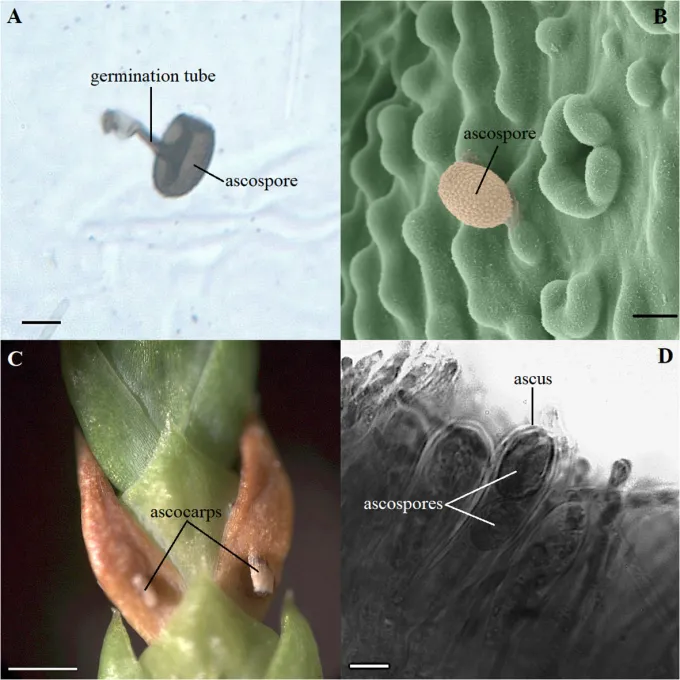
Small, dark-colored fruiting structures (apothecia) become visible on the surface of the needles once the fungus has matured within the plant host.
Needle shedding is a hallmark symptom, leading to thin and sparse foliage on branches, significantly diminishing the aesthetic value of the tree.
In humid conditions, mycelial growth may appear as a fine, pale layer on the affected needles, preceding the full development of reproductive structures.
Dieback of individual twigs or branches can occur if the fungal infection is allowed to progress unchecked over multiple growing seasons.
Pathogen
Hemiphacidiaceae is a family of ascomycetous fungi that act as specialized plant pathogens, primarily targeting various coniferous species in forest and nursery environments.
The fungi in this family are characterized by the production of fruiting bodies called apothecia, which emerge from the host tissue to release spores into the environment.
These pathogens are highly adapted to the specific physiological conditions of conifers, often showing a host-specific preference for certain needle tissues.
The life cycle is synchronized with the seasonal development of the host, allowing the fungus to maximize its chances of infection during favorable periods.
Pathogenesis involves the colonization of the needle epidermis and internal tissues, which progressively disrupts the normal cellular functions of the conifer.
Conditions for development
High humidity and prolonged periods of leaf wetness are the primary environmental drivers for the germination and spread of Hemiphacidiaceae spores.
Moderate temperatures during the spring and autumn months provide the optimal window for the fungi to infect healthy host tissues.
Poor air circulation within dense plantations or nurseries traps moisture, facilitating the rapid transition of the fungus from one plant to another.
Trees that are already under physiological stress, due to drought, nutritional deficiencies, or poor site conditions, are significantly more susceptible to infection.
Infected fallen needles remain a persistent reservoir for the pathogen, ensuring its presence and recurrence in the landscape year after year.
Why it matters
Hemiphacidiaceae fungi cause significant damage in nursery settings, where they can lead to widespread losses of young seedlings and saplings.
The reduction of photosynthetic capacity due to needle loss stunts the growth of trees, delaying maturity and affecting wood quality in timber plantations.
Severe infestations can lead to the long-term decline of forest stands, making them less resilient to environmental changes and other biotic stresses.
The disease effectively lowers the aesthetic quality of ornamental conifers, making them unsuitable for landscaping purposes without intensive treatment.
By weakening the host, these fungi pave the way for secondary infections and attacks by wood-boring insects, further endangering the life of the tree.
Protection
Effective management focuses on creating unfavorable conditions for the pathogen, such as proper plant spacing to improve ventilation and sunlight exposure.
Sanitation is a critical control strategy; collecting and destroying fallen needles prevents the buildup of the fungal inoculum in the soil.
Fungicide applications, particularly those containing copper or systemic active ingredients, are essential for controlling active outbreaks.
Integrated pest management (IPM) practices should be employed to monitor tree health regularly and apply treatments only when necessary.
- Planting conifer species that demonstrate natural resistance to local pathogens.
- Maintaining optimal soil health and fertilization to boost the tree's internal defense mechanisms.
- Pruning and removing infected branches early to limit the spread of spores.
Discussion
No discussions yet — be the first.