
Helvella leucomelaena
Helvella leucomelaena
Description
Symptoms
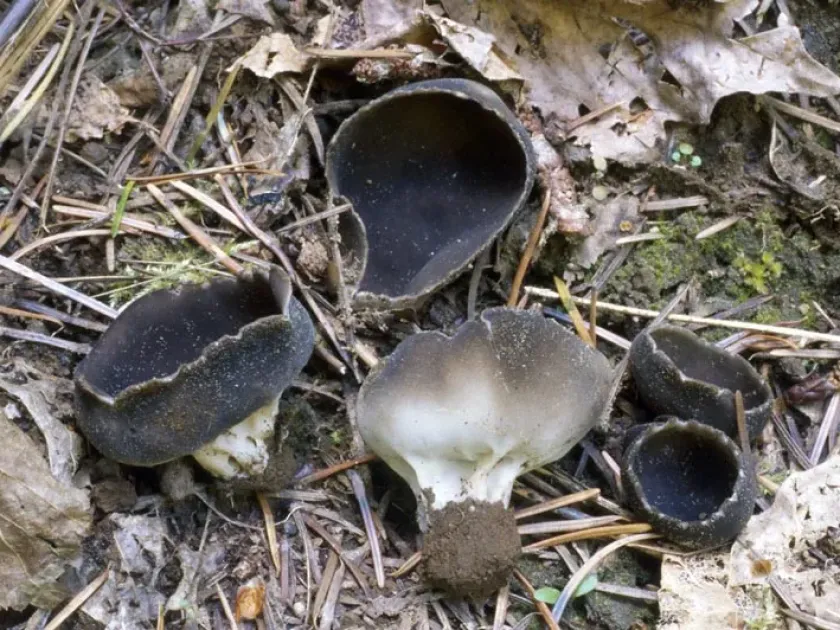
The primary visual indicators of the fungus are its distinct cup-shaped fruit bodies that emerge from the forest floor or pine needles.
The hymenium, which is the inner surface of the cup, is typically dark grey to black, contrasting with the lighter, whitish exterior.
These fungi often grow in clusters, appearing near the bases of trees where the accumulation of organic debris is highest.
The texture of the cup surface can be wrinkled or folded, which is a common morphological feature of the Helvella genus.
Due to their small size and cryptic coloration, the fruit bodies are often difficult to spot until they reach maturity or appear in large numbers.
Pathogen
Helvella leucomelaena is a species of fungus in the family Helvellaceae, belonging to the division Ascomycota, known as cup fungi.
This fungus typically forms mycorrhizal associations with coniferous trees, thriving in specific forest soil conditions.
It is not classified as a plant pathogen, but rather as a saprotrophic organism that plays a role in the decomposition of organic matter.
The fruit body of the fungus is characterized by its cup-shaped appearance, often appearing in early spring in forest environments.
Biologically, it reproduces via spores that are dispersed by wind, allowing the fungus to colonize suitable habitats where moisture and substrate are present.
Conditions for development
Helvella leucomelaena prefers moist environments and is commonly found in areas with high humidity and moderate temperatures.
It thrives in soils rich in organic matter, particularly those covered with coniferous leaf litter, which provides a suitable medium for mycelial growth.
The fungus is often found in sandy or well-drained soils, typically appearing during the spring season as temperatures begin to rise.
Prolonged exposure to dry conditions inhibits the formation of fruit bodies, making this fungus most active during periods of regular spring rainfall.
It favors open forest edges where the soil temperature can warm up sufficiently to trigger the reproductive cycle of the fungus.
Why it matters
Helvella leucomelaena does not pose a direct threat to agricultural crops or tree health, as it is primarily a decomposer in forest soils.
In nursery settings, it may occasionally compete with young tree seedlings for limited soil nutrients, though it rarely causes significant damage.
There is a concern regarding human consumption, as many Helvella species contain toxins that can cause gastrointestinal distress if ingested.
Its presence is generally seen as an indicator of a healthy, organic-rich forest floor rather than as a nuisance requiring active eradication.
Massive colonization of a small area might indicate an accumulation of rotting wood or debris, which could be visually undesirable in managed environments.
Protection
Active control measures are rarely necessary for Helvella leucomelaena because it does not act as a destructive pathogen for cultivated plants.
General cleanliness and the removal of excessive woody debris in nurseries can prevent the fungus from establishing a strong presence.
Improving soil drainage and preventing waterlogging are effective ways to make the environment less hospitable for fungal fruiting bodies.
Physical removal of fruit bodies before they mature and release spores can help manage the population in controlled landscape settings.
- Regular clearing of leaf litter.
- Proper soil management to prevent compaction.
- Maintenance of clean planting sites.
Discussion
No discussions yet — be the first.