
Helvella elastica
Helvella elastica
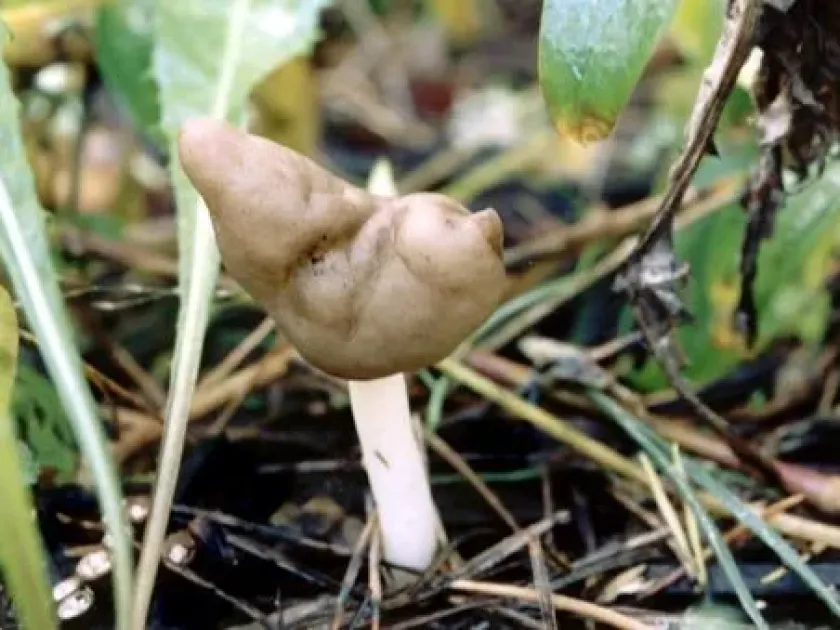
Description
Pathogen
Helvella elastica, commonly known as the elastic saddle, is a species of fungus in the family Helvellaceae. It is critical to note that this fungus is not a plant pathogen and does not cause diseases in agricultural crops.
Biologically, it is classified as a saprotroph, feeding on decaying organic matter in the soil or forest leaf litter. It does not interact with the living tissues of crops and has no mechanism to invade or infect plant cells.
The mycelium resides in the soil horizon, where it contributes to the decomposition of forest debris. It does not form structures associated with plant diseases, such as lesions, wilts, or rot on cultivated plants.
The fungus is characterized by its distinct saddle-shaped cap and a slender, smooth stem. These morphological features are typical for woodland species, reflecting its ecological niche in natural soil environments.
Agronomists should recognize this as a non-threatening forest species. There is no evidence suggesting it acts as a vector for viruses, bacteria, or other plant-damaging organisms.
Conditions for development
The development of Helvella elastica is closely linked to high soil moisture and the presence of organic debris, such as leaf litter. It typically thrives in damp, shaded environments, commonly found in deciduous or mixed forests.
The optimal temperature range for the growth of fruiting bodies is between 12°C and 20°C. It is most frequently observed following periods of sustained rainfall during late summer and autumn.
It prefers soils rich in organic matter. Intense agricultural activities, including mechanical tillage and the application of fertilizers or fungicides, create conditions unsuitable for its survival.
Airborne spores facilitate the spread of the fungus. However, due to its specialized ecological requirements, it rarely colonizes areas that are maintained under conventional agricultural management.
The presence of this fungus is often an indicator of high soil biological activity and a healthy forest micro-ecosystem, rather than a sign of poor field sanitation or plant disease.
Why it matters
There is no economic damage associated with Helvella elastica in agriculture. It does not reduce crop yields, damage roots, or affect the quality of agricultural produce in any way.
On the contrary, it plays a beneficial role in the carbon cycle by breaking down woody and leafy organic matter into nutrients that can be eventually recycled back into the soil.
The only hazard associated with this fungus is the presence of toxins in its fruiting bodies, making it unsafe for human consumption. It is strictly a biological component of the environment, not a pest.
Farming operations, such as planting and harvesting, are entirely unaffected by the presence of this fungus in surrounding woodland areas or hedgerows.
Agronomists can safely ignore the presence of this fungus when developing pest and disease management plans, as it poses zero risk to crops.
Protection
Since Helvella elastica is not a plant pathogen, there are no control measures recommended or required for its management. The use of chemical fungicides against this species is strictly unnecessary.
Maintaining standard field practices, such as clearing debris from farm edges and ensuring proper soil drainage, is sufficient to keep the field environment clear of this fungus.
If fruiting bodies appear in adjacent areas, they do not require intervention. They are natural indicators of soil moisture levels and are part of the local forest biodiversity.
No technological guidelines for crop protection include this species as a target for eradication. Chemical control efforts would be a waste of resources and could potentially harm beneficial soil microflora.
The best approach is proper identification. By understanding that this fungus is not a disease, farmers can avoid unnecessary anxiety and focus their resources on real agricultural threats.
Discussion
No discussions yet — be the first.