
Heliocybe sulcata
Heliocybe sulcata
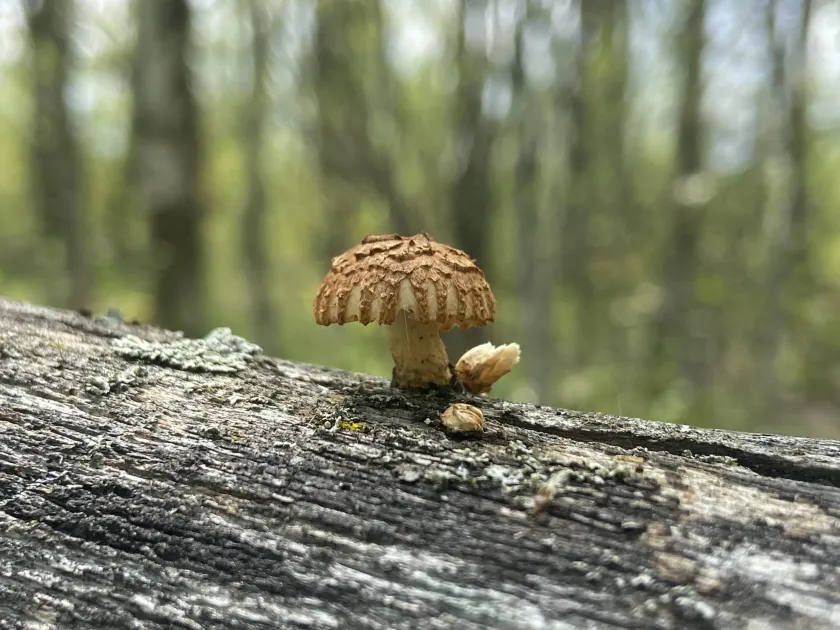
Description
Symptoms
The primary symptom of infection is the development of funnel-shaped mushrooms on the bark or wood of the host tree.
These fruiting bodies are easily identified by their radially sulcate (grooved) surfaces, which is a diagnostic feature of the species.
Internally, the wood undergoes structural degradation, showing whitening and a loss of density due to fungal enzymatic activity.
Advanced stages of decay result in a fibrous or stringy texture, making the wood extremely fragile and prone to crumbling.
Dark zone lines may appear within the infected timber, acting as physical barriers or boundaries within the rotting wood matrix.
Pathogen
Heliocybe sulcata is a specialized basidiomycete fungus known for its role as a wood-decay pathogen in coniferous ecosystems.
This fungus primarily targets lignin and cellulose within the woody tissues of trees, causing a characteristic type of white rot.
As a member of the Lentinaceae family, it functions as both a saprotroph on dead wood and a facultative parasite on stressed trees.
The biological cycle of this fungus involves the production of distinct fruiting bodies that release spores for wide dispersal.
Scientific research classifies it as a significant agent in the natural decomposition process of forest woody debris.
Conditions for development
Optimal growth of Heliocybe sulcata is observed in moist, cool forest environments with high humidity levels.
The fungus thrives in shaded areas where moisture persists on woody surfaces for extended periods, favoring spore germination.
Mechanical injuries, such as bark tears or broken branches, serve as primary entry points for fungal hyphae to enter the host.
High population density in coniferous stands creates a microclimate that promotes the survival and spread of the pathogen.
Seasonal fluctuations, particularly wet autumns, provide the necessary conditions for the fungus to expand its mycelial network.
Why it matters
The economic impact of this fungus is significant due to the loss of commercial timber quality and structural integrity.
Decayed trees are highly susceptible to windthrow, which poses a safety risk in managed forests and recreational areas.
The degradation of wood properties renders infected logs useless for construction or industrial pulp production.
As the disease progresses, it can lead to the widespread mortality of affected tree clusters if not managed properly.
Reduced forest productivity and long-term decline of stands are critical consequences of unchecked fungal colonization.
Protection
Sanitary management is the most effective approach to control Heliocybe sulcata by removing infected trees from the stand.
Forest managers should minimize tree damage during silvicultural operations to limit exposure to airborne spores.
Routine pathological surveys are recommended to identify early signs of fungal fruiting bodies on tree stems.
Prompt disposal of infected woody material outside the forest site is essential to prevent the spread of the pathogen to healthy trees.
Maintaining a balanced forest ecosystem with appropriate tree spacing helps create conditions that discourage the rapid spread of decay fungi.
Discussion
No discussions yet — be the first.