
Heliocybe
Heliocybe
Description
Symptoms
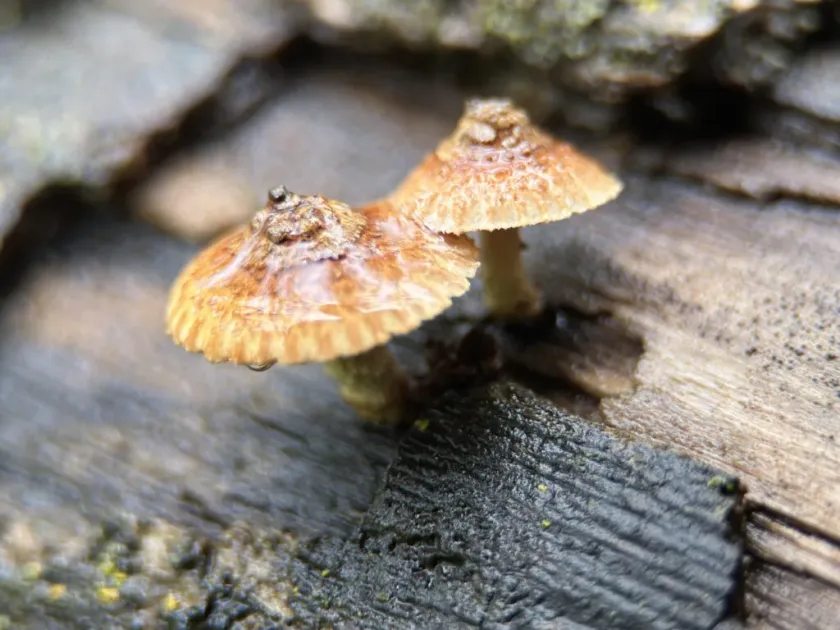
The most visible sign of an infection is the emergence of fungal fruiting bodies on the trunk, branches, or root collar of the host tree. These bodies are often distinct and serve as a warning of advanced internal colonization.
The wood tissue undergoing decay displays a shift in color, typically turning lighter, whitish, or yellowish as the fungus strips away the pigmented lignin. This is a classic symptom of white rot decay.
In terms of texture, the wood becomes soft, stringy, and fragile. A knife or tool will easily penetrate the affected areas, and the wood may crumble when pressure is applied.
Canopy symptoms often include yellowing, wilting, and premature leaf drop. The disruption of vascular tissues by the fungal mycelium prevents efficient water and nutrient transport to the upper parts of the tree.
Over time, the tree may develop internal cavities. A hollow or muffled sound when the trunk is tapped is a reliable indicator of extensive internal decay that threatens the tree’s stability.
Pathogen
Heliocybe is a genus of fungi belonging to the order Polyporales (or related families within Basidiomycota). In agronomy and forestry, these fungi are recognized as significant pathogens responsible for white rot, which degrades the structural components of wood.
As a xylotrophic organism, the fungus utilizes specialized enzymes to break down lignin and cellulose within the host's wood tissues. This metabolic process leads to the loss of structural integrity of the affected plant material.
The life cycle involves the production of fruiting bodies, which serve as the reproductive phase. These structures release spores into the environment, which are then dispersed by wind or insects to initiate new infections on susceptible hosts.
Heliocybe acts as both a necrotrophic and facultative parasite. While it often colonizes dying tissues, it has the capacity to infect healthy trees through wounds, effectively becoming a primary pathogen in compromised forest ecosystems.
Research into this fungus highlights its ability to thrive in diverse woody substrates, making it a persistent challenge in maintaining the health and longevity of arboreal species.
Conditions for development
High moisture levels are essential for the survival and spread of the fungus. Trees in humid environments or areas with poor drainage are significantly more susceptible to infection.
Optimal growth occurs within moderate to warm temperature ranges. During these periods, the rate of mycelial colonization of the woody tissue is at its peak, accelerating the spread of the disease.
Mechanical injuries are primary portals of entry. Frost cracks, sunscald, pruning wounds, and damage from machinery create ideal environments for spores to germinate and establish themselves within the host.
Dense, overcrowded planting configurations hinder air movement and light penetration, creating a microclimate that promotes fungal spore accumulation and infection in surrounding trees.
Accumulated dead wood or logging debris on the ground provides a continuous inoculum source, ensuring that the pathogen remains present in the environment for years.
Why it matters
The primary threat posed by this fungus is the loss of structural strength. Trees colonized by the pathogen are prone to sudden stem breakage or limb failure, posing risks to nearby structures and humans.
From an economic standpoint, the infestation significantly reduces the timber value. Infested wood is often structurally unsuitable for construction or high-quality furniture, leading to massive financial losses.
The physiological stress caused by the infection makes the host tree highly attractive to secondary pests, including wood-boring beetles, which further accelerate the decline of the tree.
In urban forestry and landscaping, the infection often necessitates the complete removal of specimen trees, which can negatively impact the aesthetic and ecological value of the area.
If left unmanaged, the fungus can decimate entire stands, turning healthy forests into hazardous zones that require extensive and costly remediation efforts.
Protection
Sanitation is the cornerstone of management. Infected trees should be removed and destroyed (often through burning or deep burial) to eliminate the reservoir of spores and prevent spread.
Proper wound care is critical. All pruning cuts and accidental injuries to the bark must be treated immediately with appropriate sealants to prevent the entry of fungal spores.
Regular monitoring of tree health is vital to detect early signs of decay. Early detection allows for corrective action, such as thinning or selective pruning, to improve the vigor of the remaining trees.
Improving the growing conditions, including proper fertilization and irrigation, strengthens the tree’s natural defenses and ability to compartmentalize potential decay.
Where high-value trees are at risk, prophylactic treatments with authorized systemic fungicides can be applied to protect against spore germination in vulnerable wounds.
Discussion
No discussions yet — be the first.