
Helicosingulosis
Helicosingula
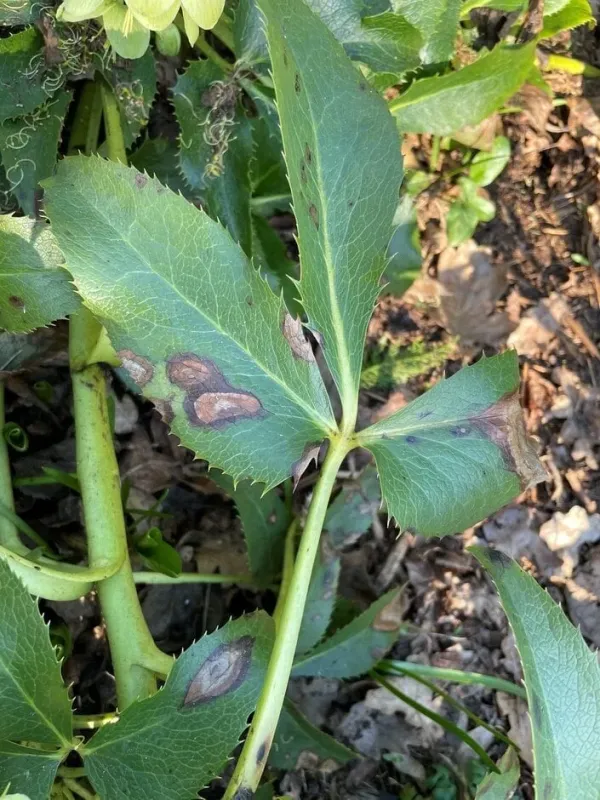
Description
Symptoms
Symptoms of Helicosingulosis typically begin as small, chlorotic spots on the leaf surface. Over time, these spots expand and turn necrotic, often developing a defined border that distinguishes them from physiological yellowing.
A key diagnostic sign is the formation of a fine, hair-like fungal growth on the underside of the leaves or within necrotic spots. These growths, which contain the spiraled conidia, may appear iridescent under certain lighting conditions.
Affected leaves tend to wither and roll up, eventually dying off if the infection progresses unchecked. When the disease impacts the stem, it leads to structural weakness, causing the plant to droop or fail to reach its full height.
In cases of severe infection, reproductive organs such as flowers and developing fruits may be prematurely aborted. This leads to a marked reduction in yield and a potential loss of crop quality, as the seeds might not fill properly.
Root systems may also be compromised in advanced stages, indirectly affecting the plant's nutrient uptake. The progression of the disease is usually hierarchical, starting from the lower foliage and gradually moving upward through the plant canopy.
Pathogen
Helicosingulosis is a plant disease caused by the fungal pathogen Helicosingula. This genus is known for its distinctively spiraled conidia, which are a defining characteristic for its identification under a microscope.
The fungus acts as a parasite that infects the epidermal tissues of susceptible plants. It utilizes specialized enzymes to degrade plant cell walls, allowing the hyphae to penetrate deeper into the host tissue and establish a nutritional base.
The disease persists in the environment primarily through infected plant debris. The fungal spores, known as conidia, are highly resistant to environmental stress and can survive in the soil or on crop residues until the next growing season.
Dissemination of the pathogen occurs mainly through wind-borne transport and splash dispersal during rainfall. These mechanisms allow the fungus to spread rapidly across large fields, particularly when wind patterns are favorable for spore transport.
The biological lifecycle of Helicosingula is adapted to thrive during periods of moderate temperatures and high humidity, allowing the fungus to rapidly multiply and complete its reproductive cycle during the vegetative growth phase of the host plant.
Conditions for development
The development of Helicosingulosis is highly dependent on ambient moisture. High relative humidity (above 80%) combined with prolonged leaf wetness is essential for the germination of fungal spores and subsequent infection of the plant tissue.
Moderate temperatures ranging from 15 to 22 degrees Celsius create an ideal window for the fungus to grow. Outside of this range, the pathogen's growth rate typically slows, though the spores remain viable for significant periods.
Dense crop stands create a unique microclimate that traps moisture and limits airflow. This lack of ventilation is one of the primary drivers of disease outbreaks, as it keeps foliage damp for longer periods than in well-spaced fields.
Nutritional status of the plant plays a role in susceptibility. Plants suffering from an imbalance of nutrients, especially those with excessive succulent growth due to nitrogen over-application, are significantly more prone to attack.
Field history is a critical factor for prevalence. Continuous cropping of susceptible varieties without adequate crop rotation allows the pathogen to accumulate in the soil, significantly increasing the risk of early-season infection.
Why it matters
The primary harm caused by Helicosingulosis is the significant reduction in photosynthetic surface area. This results in stunted plant growth and a reduction in the accumulation of biomass, which is a major contributor to yield loss.
Product quality is severely compromised, rendering crops less valuable or entirely unsalable. Necrotic tissue on fruits and vegetables serves as an entry point for secondary decay organisms, leading to post-harvest rot.
Economic losses are compounded by the high cost of intensive chemical control measures. Frequent fungicide applications are often required to contain an outbreak, which adds to the operational costs for the agricultural producer.
Furthermore, the disease can cause systemic physiological changes in the plant, potentially leading to the accumulation of metabolites that make the forage or crop unsuitable for animal or human consumption.
Long-term field management is affected by the presence of the pathogen, as farmers may be forced to abandon certain high-value crops for several seasons to allow the soil-borne infection pressure to decline naturally.
Protection
The most effective strategy for managing Helicosingulosis is the use of integrated pest management (IPM) practices. Prioritizing resistant or tolerant cultivars is the most sustainable approach to long-term control.
Cultural practices, such as optimizing plant spacing and density, help ensure proper air circulation and reduce leaf wetness. Proper sanitation, including the removal or deep incorporation of crop debris, is essential for reducing the inoculum load.
Chemical control involving fungicides should be applied preventatively or at the very first signs of symptoms. Using systemic products ensures better coverage and protection of developing tissues against new infections.
Biological control agents, such as specific strains of beneficial bacteria or fungi, are increasingly used to suppress the population of Helicosingula. These alternatives provide a lower environmental impact while maintaining effective suppression.
- Rotate crops with non-host species every 3–4 years.
- Use certified, disease-free seed and treat it with fungicides.
- Maintain balanced soil fertility to improve overall plant health.
- Implement rigorous field scouting to detect outbreaks early.
- Ensure adequate drainage to prevent water stagnation in the field.
Discussion
No discussions yet — be the first.