
Hebeloma birrus
Hebeloma birrus
Description
Symptoms
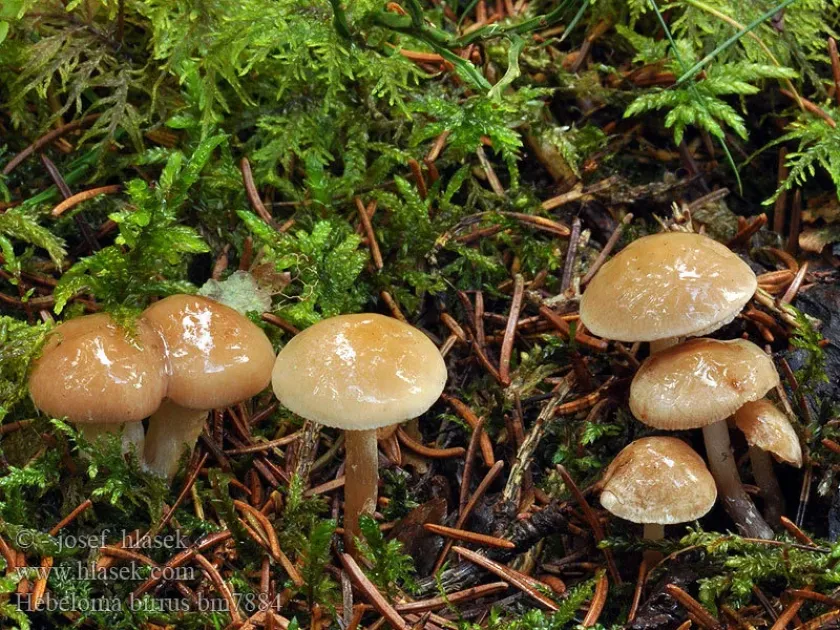
The fruiting bodies of Hebeloma birrus appear as typical mushrooms, often found in clusters during the autumn months in damp environments.
The cap is convex to flat, colored in various shades of reddish-brown or ochre, often exhibiting a sticky or viscid surface when wet.
The gills underneath the cap are initially pale but transition to a characteristic rusty-brown color as the spores mature and are dispersed.
The stipe (stem) is generally pale and sturdy, often decorated with small fibrils or a whitish powdery appearance, which helps in field identification.
It possesses a distinct scent, often noted as slightly radish-like, which is a common characteristic shared by many species within the genus Hebeloma.
Pathogen
Hebeloma birrus is a species of fungus in the Hymenogastraceae family. It is crucial to emphasize that this organism is not a plant disease or an agricultural pathogen.
It typically functions as a saprotroph and mycorrhizal partner, living in symbiosis with woody plants or decomposing organic matter in forest soils.
The mycelium grows within the soil profile, contributing to the decomposition of cellulose and other complex organic compounds in the ecosystem.
Unlike true plant pathogens, it does not infect, damage, or kill host plant tissues, and it does not reduce crop yields in agricultural settings.
Taxonomically, it is distinguished by specific features of its cap, gills, and microscopic spore characteristics, separating it from harmful plant-attacking fungi.
Conditions for development
This fungus thrives in cool, moist environments and is most frequently observed appearing after periods of autumn rainfall.
It has a strong preference for soil conditions rich in decomposing organic matter, such as leaf litter, twigs, and bark remnants in woodland edges.
Soil pH levels and the availability of woody tree roots are significant factors that dictate the establishment of its mycelial network.
Humidity is the critical factor for the emergence of fruiting bodies, as the mushrooms require ambient moisture to complete their development cycle.
The dispersal of spores is highly efficient, relying on wind currents to transport them to new, nutrient-suitable substrates within the vicinity.
Why it matters
Hebeloma birrus causes no harm to agricultural crops, ornamental plants, or vegetables; it is strictly a non-parasitic soil-dwelling organism.
The presence of this fungus is generally a positive biological indicator of healthy soil activity and the breakdown of natural forest debris.
The only potential nuisance caused by this fungus is aesthetic in nature, as fruiting bodies can appear on manicured lawns or in landscaping beds.
There is no economic damage associated with this species; therefore, no crop losses or reduction in plant vitality occur due to its colonization.
However, it is important to treat it as inedible, as many mushrooms in this family may contain toxins that are harmful if ingested by humans or animals.
Protection
Because it is not a plant disease, there is absolutely no need to apply fungicides, pesticides, or other chemical treatments for its control.
Good soil management practices, such as removing excess debris and ensuring proper drainage, will naturally reduce the occurrence of fruiting bodies.
If mushroom clusters become unsightly in a garden, manual removal of the fruiting bodies is the most effective and eco-friendly control measure.
Maintaining a dry surface layer on garden beds and lawns can make the environment less hospitable for the emergence of new mushrooms.
Educational awareness is key to preventing unnecessary panic regarding this fungus and avoiding the misuse of chemical products in the landscape.
Discussion
No discussions yet — be the first.