
Harposporium
Harposporium
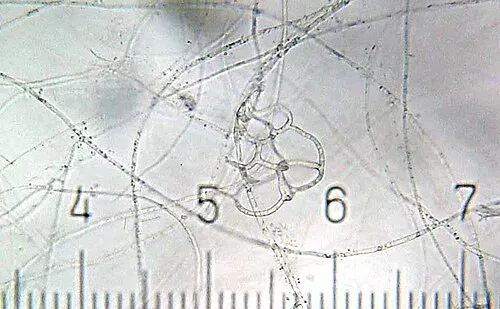
Description
Pathogen
Harposporium is a genus of fungi belonging to the order Hypocreales, widely recognized for its predatory lifestyle. These fungi are specialized nematophagous organisms that naturally inhabit soil environments.
Unlike parasitic fungi that attack plants, Harposporium species primarily target microscopic nematodes. They utilize sophisticated mechanisms to trap and consume these soil-dwelling worms.
The biological cycle begins when sticky spores adhere to the nematode's cuticle or are ingested by the host. Once attached, the fungus penetrates the host's body and begins to digest its contents.
These fungi serve as important natural controllers within the soil web. Their presence helps keep nematode populations in check, protecting crop roots from excessive damage.
Different species of the genus employ various adhesive structures to capture hosts, making them highly efficient predators in diverse agricultural soil types.
Conditions for development
Soil moisture is the primary environmental factor influencing the growth of Harposporium. Sufficient hydration is required for the fungal spores to germinate and for the host nematodes to be active.
Temperature range is another critical factor, with moderate conditions between 15°C and 25°C being ideal. Extreme heat or freezing temperatures may induce dormancy in fungal structures.
The presence of organic matter provides a stable environment for the fungus to persist. Compost and crop residues contribute to a rich microbial community that supports the activity of these predators.
Aerobic soil conditions are essential for the respiration of the mycelium. Poor drainage or soil compaction limits the movement of both the predator and the prey, hindering their biological function.
Soil pH levels should generally be near neutral to support fungal vitality. Fluctuations in acidity can affect the enzymatic activity necessary for the fungus to penetrate the cuticle of its prey.
Why it matters
Harposporium is not a plant pathogen and does not cause harm to agricultural crops. Its classification within agricultural systems is that of a beneficial biological agent.
The fungus operates solely as a predator of nematodes. It poses no risk to the health of humans, livestock, or domestic animals as it is not an infectious agent for non-invertebrate species.
There is no economic damage associated with the activity of these fungi. In fact, their absence in a field is more likely to cause problems due to unchecked nematode population growth.
Negative impacts on these fungi only occur when synthetic pesticides are overused. Broad-spectrum fungicides can significantly reduce the beneficial microbial population, leaving plants vulnerable.
Overall, the presence of Harposporium is a positive indicator of a healthy and balanced soil ecosystem, contributing indirectly to higher crop yields and plant vigor.
Protection
Control measures are not applicable to Harposporium because it is considered a beneficial organism in sustainable agriculture. Promoting its growth is a target of modern agronomy.
Sustainable agricultural practices, such as reduced tillage and the use of organic soil amendments, are the best ways to foster healthy populations of these nematophagous fungi.
Integrated Pest Management (IPM) strategies favor the survival of such beneficial microbes. Avoiding excessive chemical inputs preserves the natural predators that protect crop root systems.
Cover cropping and crop rotation provide the necessary organic substrates for the long-term maintenance of the fungal biodiversity in the field.
Future agricultural innovations focus on using these fungi as biological control agents. Mass production and application of fungal spores are being researched as a replacement for chemical nematicides.
Discussion
No discussions yet — be the first.