
Haptoglossa heterospora
Haptoglossa heterospora
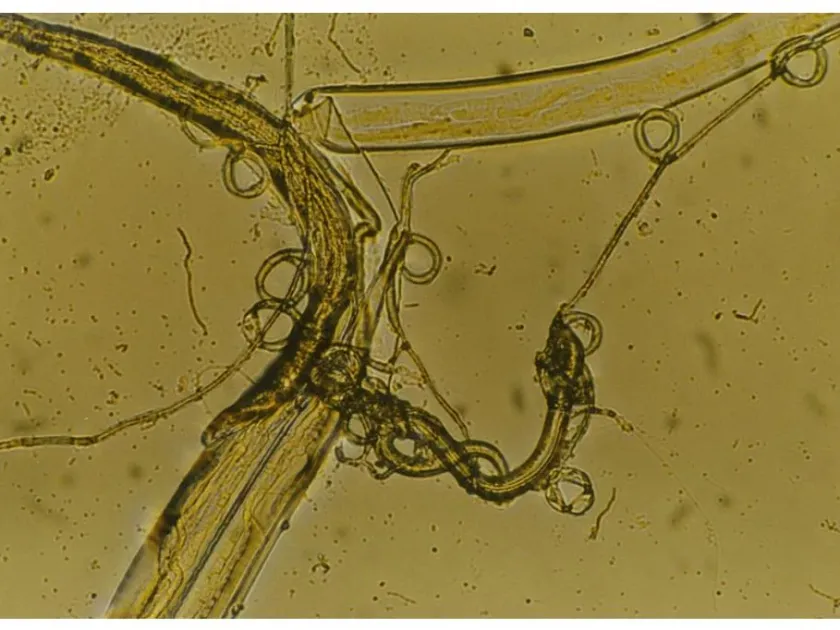
Description
Pathogen
Haptoglossa heterospora is a fascinating species of endoparasitic oomycete fungi. It is widely recognized in soil science and plant pathology for its specialized role as a natural predator of soil-dwelling nematodes.
This fungus acts as an obligate parasite, which means it requires a living host to complete its lifecycle. Once it successfully infects a nematode, the fungus develops internally, eventually consuming the host entirely.
The infection mechanism is highly specialized. The fungus produces unique structures known as "infection apparatus" or "guns," which actively eject spores upon physical contact with a nematode host.
After the penetration of the host's cuticle, the fungus forms a thallus that branches throughout the nematode's body. Eventually, it produces new infective spores that are released into the environment to continue the cycle.
Research into this organism highlights its vital importance as a regulator of nematode populations within agricultural ecosystems, contributing to natural biological control.
Conditions for development
The development of Haptoglossa heterospora is heavily influenced by soil moisture levels. High humidity in the soil matrix is essential for the effective germination of spores and the formation of infection structures.
Temperature plays a crucial role in the lifecycle of this fungus. Moderate temperatures, typical of the active growing season, provide the optimal environment for the proliferation of the fungal population.
Organic matter content in the soil is another significant factor. Soils rich in organic materials support a diverse microbial life, which provides a stable environment for the persistence of fungal spores.
Soil pH levels should remain within an optimal range to allow the proper function of the fungal infection apparatus. Acidic or overly alkaline conditions can disrupt the survival of these microorganisms.
The dispersal of the pathogen throughout the field is primarily mediated by the movement of soil water and the mechanical activity associated with agricultural soil preparation.
Why it matters
It is important to note that Haptoglossa heterospora does not pose a threat to plant tissues. Instead, it is highly beneficial as it targets harmful plant-parasitic nematodes that damage root systems.
The primary "damage" caused by this fungus is the destruction of nematode populations, which effectively protects the roots of various agricultural crops, including vegetables and grains.
By reducing the density of parasitic nematodes in the rhizosphere, the fungus ensures that crops can absorb water and nutrients more efficiently, which leads to improved plant vigor.
If the population of the fungus is suppressed by synthetic chemical treatments, the risk of nematode infestation increases significantly, as the natural biological control mechanism is disrupted.
Therefore, the presence of this fungus is considered an indicator of a healthy, suppressive soil environment capable of defending crops against underground pest pressure.
Protection
The goal for farmers is to preserve the population of Haptoglossa heterospora rather than eliminate it. This requires an integrated approach to soil management.
Reducing the use of broad-spectrum soil fungicides is essential, as these chemicals can indiscriminately kill beneficial endoparasitic fungi along with the pathogens they target.
Encouraging natural biological diversity through the use of compost, manure, and cover crops creates a robust environment where these beneficial fungi can thrive and effectively manage nematode levels.
Conservation tillage practices help maintain the integrity of the soil structure, ensuring that the fungal network remains undisturbed and active throughout the root zone.
- Maintain balanced soil moisture;
- Minimize chemical fungicide application;
- Incorporate organic amendments;
- Monitor nematode population density.
Discussion
No discussions yet — be the first.