
Haptoglossa
Haptoglossa
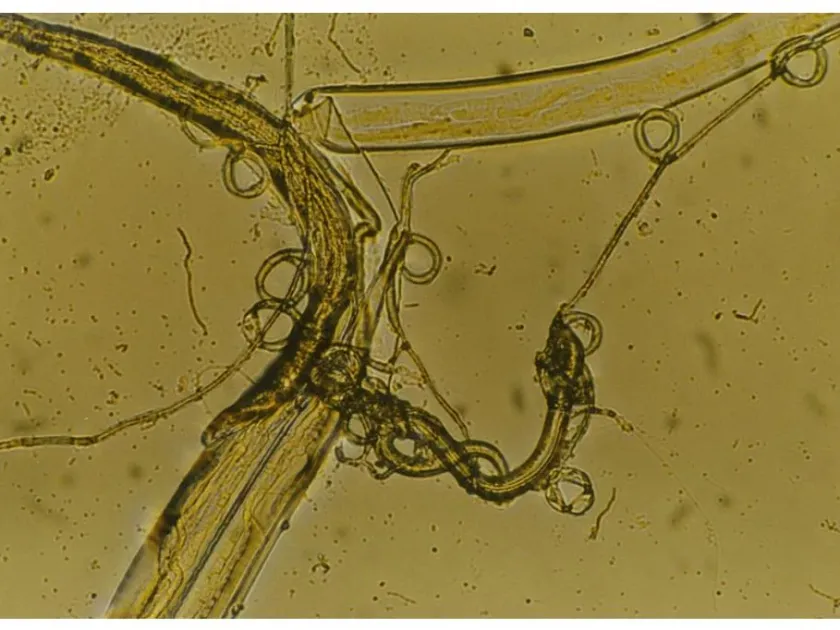
Description
Pathogen
Haptoglossa is a genus of predatory oomycetes that act as endoparasites of microscopic soil invertebrates, such as rotifers and nematodes. These organisms are not plant pathogens and do not cause diseases in crops.
The fungus utilizes a unique mechanism of infection involving the discharge of specialized cells onto the cuticle of the host. Once the host is penetrated, the fungus develops an internal mycelium that consumes the host from within.
The life cycle of Haptoglossa includes the formation of motile zoospores that require sufficient soil moisture for movement and host detection.
From an agronomical perspective, Haptoglossa serves as a beneficial biological agent that helps manage soil-borne pest populations naturally.
The study of these fungi is essential for understanding the natural suppressiveness of soils and developing sustainable agricultural practices.
Conditions for development
Soil moisture is the most critical factor for the activity and spread of Haptoglossa. High humidity in the soil pore space facilitates the movement of zoospores toward their targets.
Temperatures that favor the metabolic activity of soil invertebrates also promote the infection process of the fungus. Most Haptoglossa species thrive in temperate environments with adequate organic matter.
Organic amendment integration provides a favorable niche for these fungi to persist even when host populations fluctuate. This stability is vital for long-term pest management.
Neutral soil pH levels are generally considered optimal for the biological processes of the fungus, ensuring the efficiency of its infection structures.
Good soil aeration is necessary to support the respiration and overall health of the microbial community, including predatory fungi.
Why it matters
Haptoglossa causes no harm to agricultural plants. It does not infect plant tissues, roots, or foliage, making it a harmless neighbor in the rhizosphere.
The presence of this fungus is actually a sign of a biodiverse and healthy soil ecosystem. It works continuously to reduce the burden of parasitic nematodes on crop roots.
There are no recorded instances of Haptoglossa negatively impacting yields or crop quality. Its ecological role is strictly limited to the predation of micro-fauna.
Agronomists view the reduction of predatory fungi as a loss of natural soil health, often caused by poor land management practices.
Therefore, Haptoglossa is classified as a beneficial organism in the context of plant pathology and integrated pest management strategies.
Protection
Control measures for Haptoglossa are unnecessary because it is a helpful organism. The focus of management should be the preservation of its natural habitat.
The reduction of broad-spectrum fungicides is the primary way to protect Haptoglossa populations. This ensures that the soil retains its natural defense mechanisms against nematodes.
Improving soil fertility through composting and organic matter application encourages a thriving community of beneficial microbes, including Haptoglossa.
Proper crop rotation practices contribute to a balanced soil ecosystem, which helps sustain populations of predatory fungi over several growing seasons.
- Minimize the use of synthetic fungicides.
- Enhance soil organic content.
- Maintain adequate irrigation management.
Discussion
No discussions yet — be the first.