
Hainesia borealis
Hainesia borealis
Description
Symptoms
The most characteristic signs of infection are the appearance of necrotic spots on the foliage. Initially, these spots are small and may be chlorotic, but they often expand into irregular lesions with darker margins.
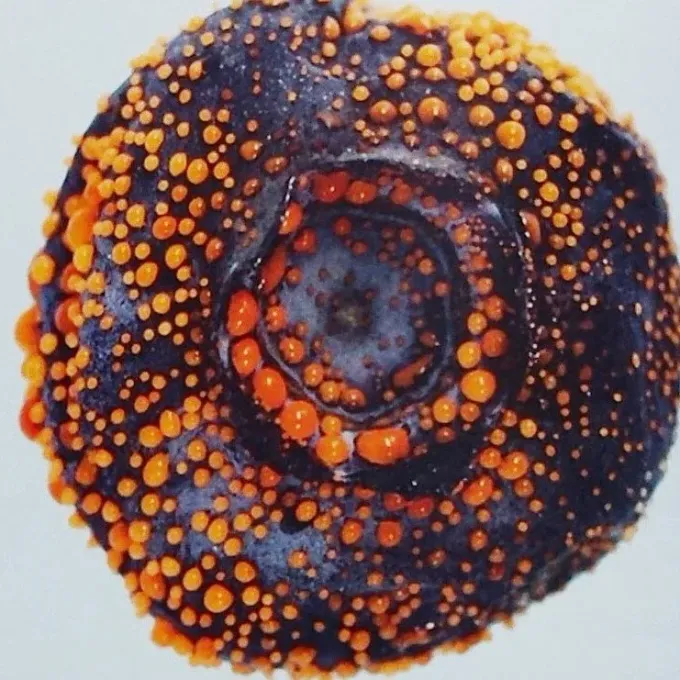
In high humidity, small, light-colored or pinkish pads (acervuli) appear on the surface of the lesions. These represent the active sporulation of the fungus, making the infection visible and easier to identify in the field.
As the disease progresses, lesions can merge, leading to extensive tissue death. If the infection reaches the stem or petiole, it can cause girdling, leading to premature wilting and collapse of the leaves or entire branches.
Young plants are particularly vulnerable, and systemic infections in early stages may lead to stunting or complete seedling death. Leaf drop is a common symptom in chronic cases where the disease remains untreated.
Diagnostic field identification is based on the pattern of necrosis and the observation of sporulation pads. Accurate diagnosis is essential for distinguishing this disease from other similar leaf spot pathogens.
Pathogen
Hainesia borealis is a fungal pathogen classified within the group of anamorphic fungi. Its life cycle involves the production of acervuli — small, cushion-like structures that emerge through the plant epidermis to release spores.
The fungus produces hyaline or slightly pigmented conidia, which act as the primary inocula for disease spread. These spores are easily disseminated by wind, splashing rain, or physical contact with contaminated tools and machinery.
This pathogen is capable of overwintering in soil or on infected plant debris as dormant mycelium. This survival mechanism allows the disease to persist in a field even after the growing season has ended, posing a risk for future crops.
Biological research indicates that Hainesia borealis often acts as a stress-related parasite. It primarily colonizes host tissue that has been weakened by environmental factors, nutrient deficiencies, or mechanical injuries.
Upon infection, the fungal mycelium penetrates the host cell walls and colonizes intercellular spaces. The pathogen secretes enzymes to degrade plant tissues, facilitating its further colonization and reproduction.
Conditions for development
Hainesia borealis thrives in environments with high ambient humidity and moderate temperatures. The optimal range for fungal growth and sporulation is between 18°C and 24°C.
Prolonged wetness on leaf surfaces, caused by rainfall, heavy dew, or overhead irrigation, is critical for spore germination. Such conditions significantly increase the likelihood of rapid disease transmission across a field.
Poor agricultural practices, such as high planting density, can create a humid microclimate within the crop canopy. This environment prevents proper ventilation and allows the fungus to flourish unchecked.
The presence of unremoved infected plant debris provides a continuous source of inoculum for the next crop. The fungus demonstrates high resilience to temperature fluctuations, ensuring its survival in the soil.
Plants subjected to physiological stress are much more susceptible to the pathogen. Proper management of soil nutrition and water supply can help mitigate the risk of infection by keeping the plants in a healthy state.
Why it matters
The primary harm caused by Hainesia borealis is the reduction of the leaf area available for photosynthesis. This loss directly impacts the plant's metabolic capacity, resulting in lower biomass production and crop yield.
In addition to yield loss, the infection can severely damage the quality of the harvested product. Fruits or foliage marred by necrotic spots often lose market value and may be rejected for processing or sale.
Systemic damage to stems disrupts the vascular system, inhibiting the transport of water and nutrients. This structural damage makes plants more susceptible to lodging and secondary attacks by other opportunistic pathogens.
Economically, this disease leads to increased production costs due to the need for monitoring and multiple fungicide applications. In severe scenarios, entire harvests can be compromised if environmental conditions favor the pathogen.
Weakened plants are not only unproductive but also serve as focal points for further spread of the infection to adjacent fields. Controlling the disease early is crucial to prevent widespread outbreaks.
Protection
Effective management begins with robust crop rotation practices. Avoiding the cultivation of susceptible hosts in the same field for consecutive seasons helps break the infection cycle of the soil-borne mycelium.
Sanitation is a cornerstone of control: all infected plant remnants must be removed or buried deeply to eliminate inoculum sources. Regular field scouting allows for the early detection and removal of diseased plants.
Chemical control involving broad-spectrum fungicides can be effective when applied preventively. It is important to rotate products with different modes of action to prevent the development of resistant fungal strains.
Agronomic practices that improve canopy ventilation are essential. Proper spacing between plants and weed control help reduce microclimate humidity, making conditions less favorable for fungal proliferation.
- Selection of resistant or tolerant cultivars.
- Use of high-quality, certified pathogen-free seeds.
- Cleaning and disinfection of farming equipment.
Discussion
No discussions yet — be the first.