
Gyrodon
Gyrodon
Description
Symptoms
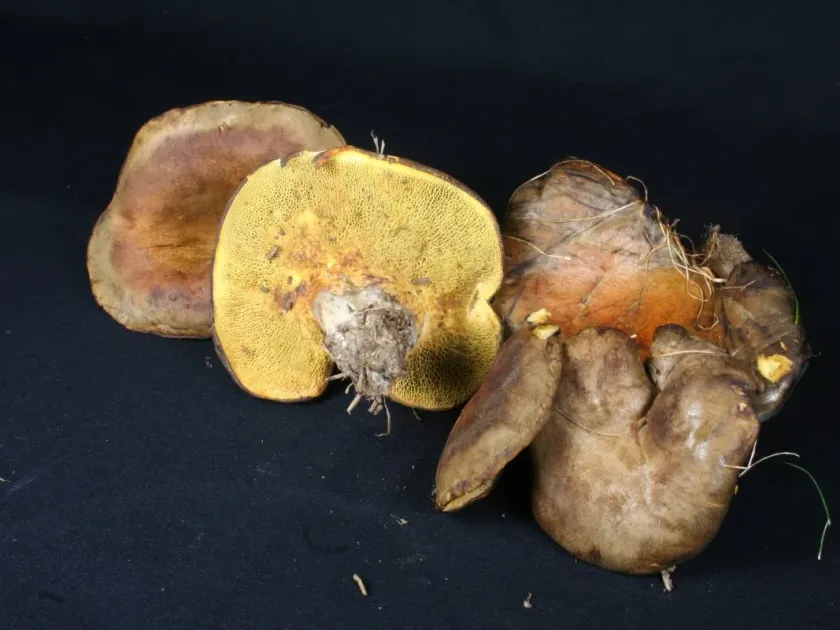
The genus Gyrodon consists of fungi belonging to the family Gyrodontaceae. Their fruiting bodies typically exhibit a fleshy cap, often displaying colors ranging from yellowish to various shades of brown and ochre.
The primary diagnostic feature of the genus is the tubular hymenophore, which often decurrently descends onto the stem. In young specimens, the pores can appear as irregular, labyrinth-like patterns.
The stem of these fungi is usually solid and robust, sometimes positioned eccentrically in relation to the cap. A notable characteristic is the tendency of the flesh to slightly bruise or turn blue/greenish upon exposure to air, which helps distinguish it from other species.
Spore prints for these mushrooms are generally olive-brown or ochre. The cap surface can be slightly viscous or sticky when moist, a feature typical for mushrooms thriving in damp woodland conditions.
These mushrooms typically grow individually or in small clusters within leaf litter. They do not typically form large mats, but they are recognized by mycologists as part of the forest floor ecosystem.
Pathogen
It is crucial to clarify that Gyrodon is not a plant pathogen. It is a genus of mushrooms that primarily exists as a saprotroph or in mycorrhizal symbiosis with trees.
The genus does not possess phytopathogenic capabilities, meaning it does not cause disease in agricultural crops, vegetables, or fruit trees. It plays a neutral or beneficial ecological role.
In mycological terms, Gyrodon is studied for its ecological interactions, particularly with alder trees. There is no evidence linking this genus to any form of plant infection or crop damage.
Confusion often arises when individuals misinterpret natural biological features of fungi as symptoms of disease. However, in the context of plant pathology, this genus is completely benign.
Consequently, Gyrodon is not subject to agricultural quarantine measures or pest management protocols. It is a component of natural biodiversity rather than a risk to plant health.
Conditions for development
The development of Gyrodon fruiting bodies is strictly dependent on soil moisture levels and the presence of suitable tree hosts, such as alder (Alnus). They prefer floodplains and areas with consistently damp soils.
The genus thrives in environments rich in organic matter and humus. A stable, undisturbed soil structure is essential for the mycelial network to persist and produce fruiting bodies periodically.
Optimal growth typically occurs during the summer and autumn months, provided there is sufficient rainfall and moderate temperatures. Prolonged drought inhibits their development.
Ecological factors, such as the maintenance of riparian zones and the preservation of natural drainage patterns, are vital for the continued presence of these fungi in the environment.
Propagation occurs naturally through spore dispersal via wind and water. The mycelium gradually establishes itself in the root zones of host trees, contributing to the healthy functioning of the woodland soil.
Why it matters
Gyrodon causes no harm to agricultural production or forestry operations. As a non-parasitic organism, it poses no threat to the vitality of cultivated or wild plants.
On the contrary, the mycorrhizal relationship between many Gyrodon species and trees is beneficial, as it helps host plants increase their water and nutrient uptake efficiency from the soil.
The potential for harm is non-existent. Any perception of "damage" is usually a result of misidentification where common fungal processes are incorrectly perceived as plant pathology.
Economic interest in this genus is minimal, as it is not a commercial crop and is not a factor in yield reduction for any agricultural sector.
In summary, Gyrodon is a harmless element of nature that does not require management, control, or mitigation by farmers, agronomists, or land managers.
Protection
There are no specialized control measures for Gyrodon, as it is not a pest or a disease-causing organism. Implementing control actions would be unnecessary and ecologically counterproductive.
In the field, it is important to correctly distinguish between pathogenic fungi and those that serve as part of the natural forest ecosystem to avoid the excessive use of fungicides.
No preventive measures are required. If a presence of these mushrooms is noted in a garden or field, they do not indicate a disease problem and can be left as part of the natural soil biota.
Chemical intervention is strongly discouraged. Using pesticides against non-harmful fungi disrupts the soil balance and can negatively affect the environment without providing any agronomic benefit.
For any signs of suspected tree illness, consult a professional pathologist to confirm the actual cause, as natural fungal growth should never be confused with infectious diseases.
Discussion
No discussions yet — be the first.