
Gypsoplacaceae
Gypsoplacaceae
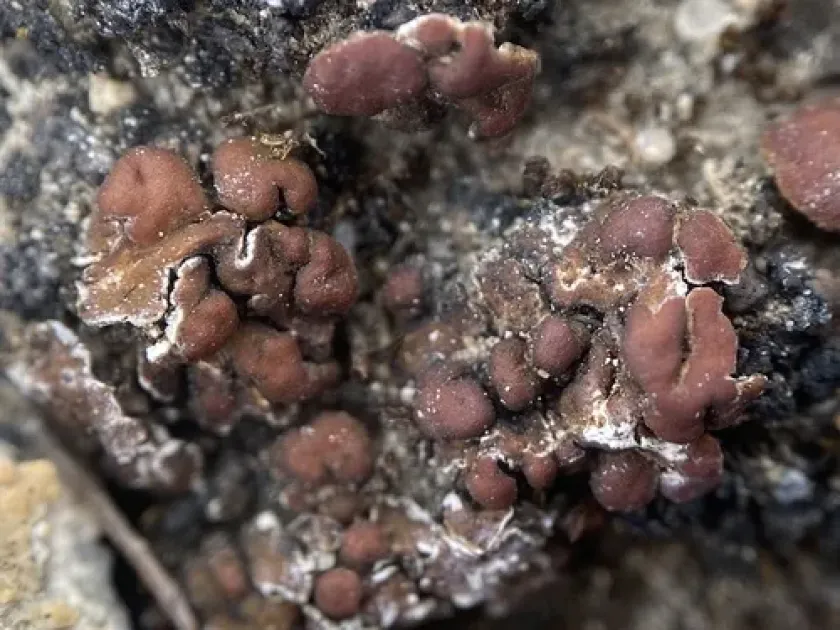
Description
Pathogen
Gypsoplacaceae is a family of lichen-forming fungi within the order Acarosporales. It is important to note that these organisms are not plant pathogens and do not cause diseases in agricultural crops.
These lichens consist of a fungal partner (mycobiont) and a photosynthetic algal partner (photobiont). They are highly specialized organisms adapted to unique geological environments.
The morphology of this family typically features crustose or squamulose thalli. Their reproductive structures, known as apothecia, are often partially embedded in the substrate.
In the field of agronomy, they are considered harmless organisms. They play a role in soil formation and weathering processes rather than acting as parasites or pathogens.
Identification of these species requires a professional mycological approach, as they are often confused with other crustose lichens in the field.
Conditions for development
The primary habitat for members of the Gypsoplacaceae family is gypsum-rich soil or gypsum rock outcrops. They are well-adapted to high concentrations of calcium sulfate.
They thrive in arid and semi-arid environments where competition from higher plants is extremely low. Strong solar radiation is usually required for their development.
These organisms are highly resistant to desiccation. They remain dormant during dry periods and resume metabolic activity when moisture becomes available.
Spore dispersal occurs through wind, allowing them to colonize remote geological sites. They are typically found in undisturbed, exposed mineral surfaces.
Their presence is often an indicator of the underlying geological composition rather than a sign of poor field sanitation or agricultural mismanagement.
Discussion
No discussions yet — be the first.