
Gymnotelium
Gymnotelium
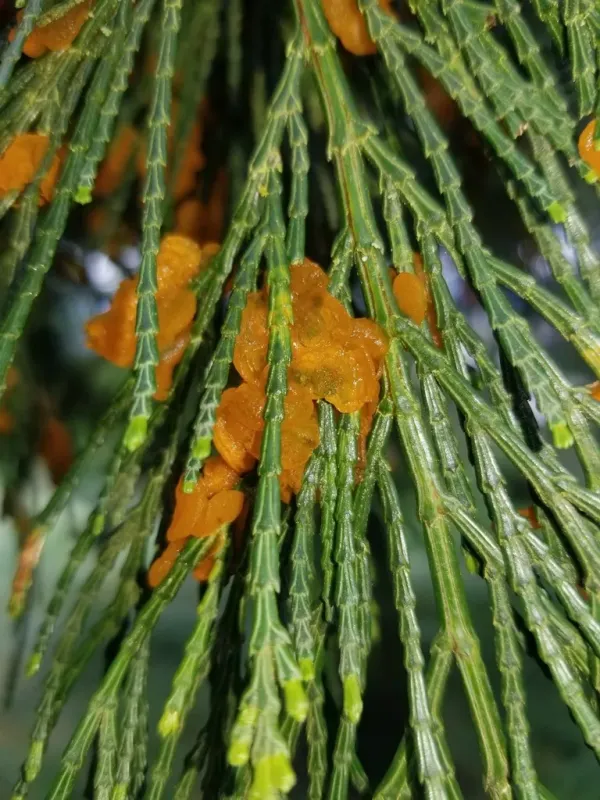
Description
Symptoms
The initial symptoms of Gymnotelium infection appear as small, chlorotic spots on the leaf surface. As the fungus matures, these spots evolve into raised pustules containing masses of spores.
These pustules are often bright orange, yellow, or reddish-brown. The color is characteristic of rust diseases and indicates the massive production and release of fungal spores into the environment.
Severe infections lead to visible deformation of leaves and stems. As the infection progresses, affected tissues may become necrotic, causing leaves to curl, yellow, and drop prematurely.
Early-stage infection symptoms may be mistaken for nutrient deficiencies; however, the presence of powdery spore masses is a clear indicator of a fungal pathogen.
In advanced cases, the impact on the plant's architecture is significant. Distorted growth patterns and stunted development are common consequences of widespread fungal colonization.
Pathogen
Gymnotelium is a genus of rust fungi belonging to the division Basidiomycota. These pathogens are obligate parasites, meaning they are entirely dependent on host living tissue for their survival and reproductive cycle.
The biological cycle of the fungus is characterized by the production of various spore stages. The pathogen typically penetrates the host through stomata or directly through the epidermal cell walls using specialized structures.
Inside the plant, the fungus develops an extensive mycelial network. This network extracts nutrients directly from host cells, disrupting normal metabolic and physiological processes within the plant tissue.
The fungus can survive adverse environmental conditions by forming durable teliospores. These spores serve as an overwintering mechanism, allowing the pathogen to persist in plant debris or soil.
Genetic diversity within the genus allows these fungi to adapt to different host species and regional climates. Understanding the life cycle of Gymnotelium is critical for effective disease management in agriculture.
Conditions for development
The development of Gymnotelium is heavily reliant on environmental moisture. High relative humidity and prolonged leaf wetness, such as dew or rain, are essential for spore germination.
Optimal temperatures for the fungus typically range between +15 and +22 degrees Celsius. Within this thermal range, the pathogen can complete its reproduction cycles very rapidly.
Poor ventilation in dense canopy structures or greenhouse settings creates a microclimate that traps moisture. This stagnant, humid air is highly conducive to the spread of fungal spores.
Plants under physiological stress, often due to improper irrigation or unbalanced fertilization, are more susceptible to infection. Weakened immune systems make hosts vulnerable to successful fungal invasion.
The presence of abandoned crop residues serves as a primary reservoir for the pathogen. Failure to implement strict sanitation practices ensures the annual recurrence of the disease.
Why it matters
Gymnotelium causes substantial harm by depleting the plant's carbohydrate reserves. The fungus competes for nutrients, significantly reducing the amount of energy available for vegetative and reproductive growth.
Reductions in the photosynthetic area, caused by leaf damage, lead to diminished crop yields. Furthermore, the quality of the harvested produce is often compromised, reducing its market value.
Secondary infections are a frequent consequence, as necrotic lesions provide entry points for opportunistic bacteria and other fungi. This creates a complex disease scenario that is harder to treat.
In perennial crops, the disease reduces overall winter hardiness and long-term vitality. Repeated infections can eventually lead to the decline and death of branches or entire plants.
Financial losses occur not only from reduced yield but also from the increased cost of fungicide applications and management efforts. Early detection is vital for mitigating these economic impacts.
Protection
Sanitation is the first line of defense; removing and destroying infected plant material significantly reduces the local inoculum level. This practice is crucial for breaking the disease cycle.
Selecting and planting resistant crop varieties provides a sustainable method for managing rust diseases. Breeding programs continue to prioritize resistance to fungal pathogens like Gymnotelium.
Fungicide applications are recommended when early symptoms are identified. Systemic treatments are generally more effective, provided they are applied before the infection becomes widespread.
Improving air circulation through proper pruning and spacing can help keep foliage dry. This limits the duration of leaf wetness and creates an unfavorable environment for fungal development.
Monitoring for signs of the disease on a regular basis is essential. Integrated pest management (IPM) strategies, combining cultural and chemical controls, provide the most reliable protection.
Discussion
No discussions yet — be the first.