
Gymnopus erythropus
Gymnopus erythropus
Description
Symptoms
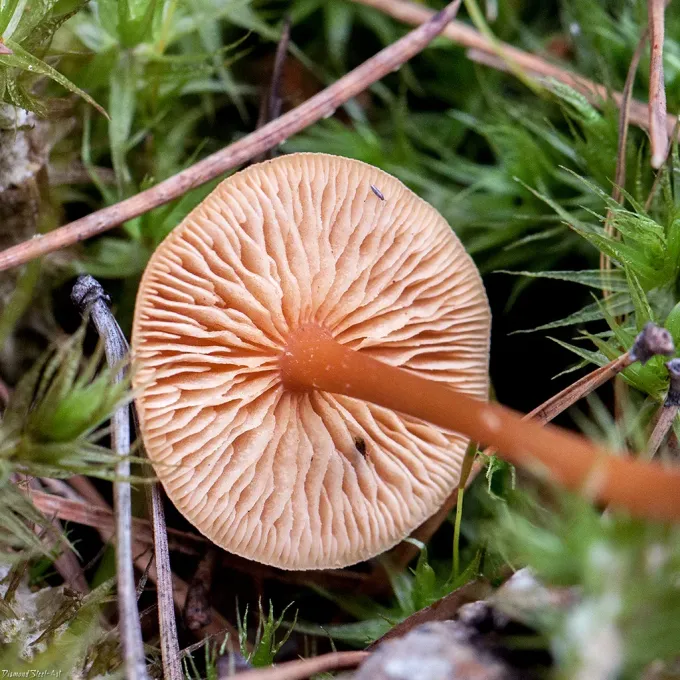
The most distinctive morphological sign of the fungus is its small brownish-red cap, which is often convex or flattened.
The stem, or stipe, is typically very dark reddish-brown, often appearing more intensely colored than the cap itself.
The gills underneath the cap are widely spaced and pale, providing a sharp color contrast with the dark stem.
Fruiting bodies often appear in clusters or tight bunches on rotting woody debris in forest environments.
Presence of dense, whitish mycelial rhizomorphs in the surrounding litter can serve as an additional diagnostic feature for identification.
Pathogen
Gymnopus erythropus, formerly known as Collybia erythropus, is a species of saprotrophic fungus belonging to the Marasmiaceae family. It is strictly a decomposer and does not act as a plant pathogen.
This fungus plays a vital role in forest ecosystems by breaking down complex organic matter such as leaf litter and decaying twigs.
Unlike parasitic organisms, it does not attack living plant tissues, making it harmless to crops and garden plants.
The fungus functions primarily through its mycelial network, which spreads through the substrate to absorb nutrients from dead material.
In the broader biological context, it contributes to soil fertility by recycling carbon and nitrogen back into the ecosystem.
Conditions for development
Gymnopus erythropus thrives in moist, shaded forest conditions where organic material is abundant on the forest floor.
The species prefers temperatures that are moderate, typically occurring during late summer and autumn after rainy periods.
High humidity is essential for the activation of its mycelium and the subsequent production of fruiting bodies above the surface.
Decaying deciduous wood is the preferred substrate for this fungus to colonize and initiate its reproductive phase.
Dry spells and low moisture levels will cause the fruiting bodies to shrivel or stop growing until favorable conditions return.
Why it matters
This fungus is not harmful to plants, crops, or agricultural production as it does not possess any pathogenic properties.
It does not deplete living plants of nutrients; rather, it performs the beneficial function of waste removal in natural habitats.
There is no risk of crop damage, root decay, or physiological stress in plants caused by the presence of this fungus.
It is not known to produce toxins that would inhibit the growth of surrounding vegetation or negatively impact soil quality.
Therefore, its role in the ecosystem is strictly beneficial, assisting in the natural process of organic decomposition.
Protection
No control measures are necessary for Gymnopus erythropus because it is not a pest or a disease agent.
If its presence is undesirable in a garden or nursery, simple sanitation practices like clearing away dead twigs and leaf accumulation are sufficient.
Improving soil drainage and removing woody debris will eliminate the specific substrate that this fungus requires to thrive.
Chemical fungicides are completely unnecessary and should not be used, as they can harm beneficial soil microflora.
Proactive maintenance of the area is the only recommended strategy to manage the appearance of any saprotrophic fungal growth.
Discussion
No discussions yet — be the first.