
Grovesinia moricola
Grovesinia moricola
Description
Symptoms
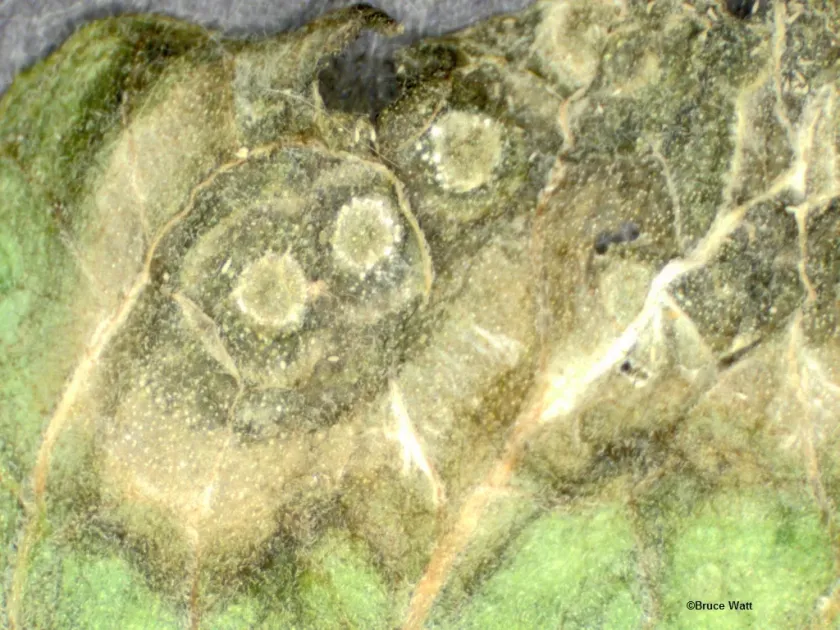
The first signs of infection are typically small, water-soaked spots on the leaves. As the disease progresses, these spots expand into larger, irregular lesions that often exhibit concentric rings.
During periods of high humidity, a characteristic greyish fungal growth appears on the lesions. This structure contains the spore-producing bodies of Grovesinia moricola.
Severely infected leaves become chlorotic, wither, and drop prematurely. This leads to substantial defoliation, which hampers the plant's ability to produce energy through photosynthesis.
Stems may also be affected, developing dark, sunken cankers. These lesions can girdle the stem, restricting the flow of water and nutrients and causing the death of distal plant parts.
- Circular to irregular leaf lesions.
- Premature leaf yellowing and shedding.
- Development of small black sclerotia on necrotic tissue.
Pathogen
The disease is caused by the fungus Grovesinia moricola, a specialized pathogen belonging to the Leotiomycetes class. It primarily targets various plant species, leading to severe necrosis of leaf and stem tissues.
The pathogen utilizes sclerotia as survival structures, which allow it to remain viable in the soil for extended periods. This dormant stage ensures the fungus can persist through unfavorable climatic conditions.
Reproduction is primarily carried out through the dispersal of conidia. These spores are efficiently transported by wind or water splashes, facilitating the rapid spread of the pathogen within the crop canopy.
The sexual life cycle involves the formation of apothecia, which release ascospores. This process contributes to the genetic diversity of the fungus, making it harder to manage with standard fungicides.
Once the spores land on a host, they germinate and penetrate the cuticle. The mycelium colonizes the intercellular spaces, secreting enzymes that break down plant cell walls to access nutrients.
Conditions for development
The development of Grovesinia moricola is highly temperature-dependent, with the most active growth occurring between 18 and 24 degrees Celsius. Temperatures outside this range may slow the infection process.
High relative humidity, typically exceeding 80%, is necessary for the germination of fungal spores. Frequent rain events and heavy morning dews significantly accelerate the infection cycle.
Poor field hygiene and high-density planting are major factors in disease outbreaks. Stagnant air and high moisture levels within the canopy provide the ideal microclimate for the pathogen.
Overhead irrigation systems can inadvertently spread the pathogen by splashing soil-borne spores onto the foliage. This practice is particularly risky when leaves are left wet for extended periods.
Plants under nutrient stress or suffering from mechanical damage are significantly more susceptible to infection. Maintaining overall plant vigor is essential to reduce the risk of successful colonization.
Why it matters
The primary harm caused by Grovesinia moricola is the substantial reduction in yield and harvest quality. Extensive leaf loss directly affects the photosynthetic capacity of the plant, stunting overall growth.
For perennial crops, the disease weakens the plant's ability to store reserves for the winter. This significantly increases the risk of mortality due to cold stress or secondary infections.
The market value of the crop is severely compromised due to the unsightly lesions and potential rot on the harvestable parts, making the produce unacceptable for sale.
Economic losses are compounded by the high cost of intensive fungicide programs required to manage the pathogen once it has established itself in the field.
Persistent soil contamination by sclerotia ensures that the disease remains a recurring threat, often preventing the cultivation of susceptible crops for several consecutive seasons.
Protection
Integrated disease management begins with strict crop rotation. Avoiding susceptible hosts in infested fields for at least three to four years can help reduce the soil-borne inoculum.
Sanitation is critical; all infected plant debris must be removed and destroyed or buried deeply to break the pathogen's life cycle. This minimizes the primary source of infection for the next season.
The use of certified, disease-free seed and planting material is the first line of defense. Where necessary, preventive fungicide applications can protect the crop during vulnerable growth stages.
Improving air circulation through proper spacing and pruning reduces the humidity within the canopy, making the environment less favorable for fungal development.
Balanced fertilization, particularly avoiding excessive nitrogen, helps maintain strong cell walls and improves the natural resistance of the plants to the pathogen.
Discussion
No discussions yet — be the first.