
Description
Symptoms
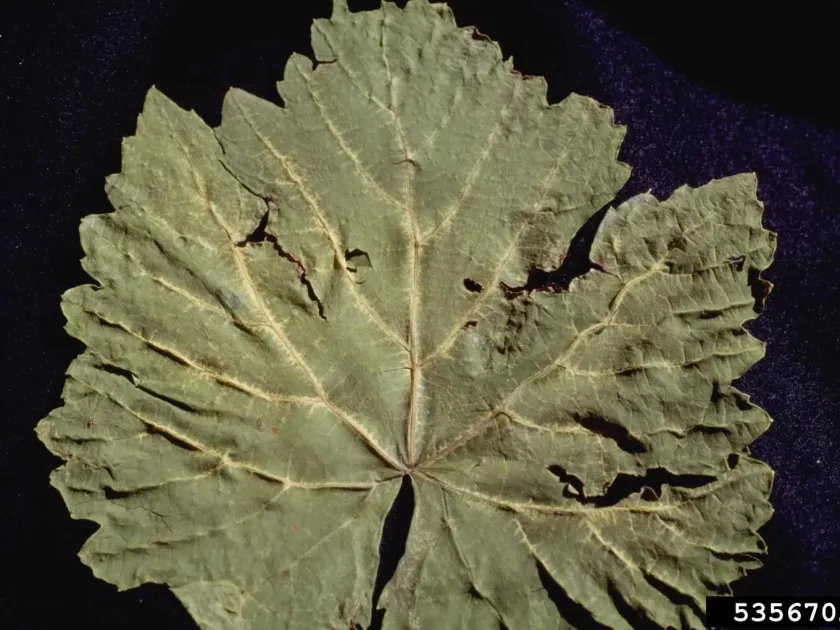
The primary symptom of the disease is the appearance of a specific pattern on the leaves, consisting of light-colored lines, bands, or zigzag markings that resemble mosaic or streaking.
During the early growth stages, young leaves often display chlorotic spotting which eventually develops into clear, defined line patterns along the leaf veins.
In cases of severe infection, the leaf blade becomes deformed, leading to asymmetrical leaves that may appear curled, crinkled, or wavy in texture.
The development of shoots is frequently stunted, and internodes become shortened, giving the vine a compact, weakened, and underdeveloped appearance compared to healthy plants.
Symptom expression can be highly variable depending on the grape variety, as some cultivars may show mild symptoms or mask the presence of the virus under high temperatures.
Pathogen
The causative agent is the Grapevine line pattern virus (GLPV), which belongs to the genus Ilarvirus within the Bromoviridae family of plant viruses.
This pathogen specifically infects the Vitis vinifera (cultivated grapevine) species and some other related plants within the Vitis genus.
In vineyard settings, the virus is primarily transmitted through the use of infected grafting material, including both rootstocks and scions from diseased parent plants.
Mechanical transmission also occurs through contaminated pruning tools or during routine green operations if equipment is not properly disinfected between vines.
A critical aspect of the virus's biology is its ability to persist in a latent form, remaining present in the perennial woody tissue without showing overt symptoms for long periods.
Conditions for development
The primary driver for the spread of the virus is the use of non-certified or infected propagating material during the establishment of new vineyard plantations.
The disease development is more pronounced during cool spring weather, which encourages the expression of the characteristic leaf patterns on actively growing vines.
Neglecting hygiene protocols during seasonal vineyard maintenance contributes to the horizontal transmission of the virus through tools used on both infected and healthy vines.
Pollen-borne transmission is an additional vector, which presents a significant risk in areas where infected and healthy blocks are located in close proximity during flowering.
The accumulation of the virus over time is facilitated by continuous cultivation on the same site without proper soil sanitation and rigorous rogueing of symptomatic plants.
Why it matters
The harm caused by the virus includes a significant decrease in photosynthetic efficiency, which hinders sugar accumulation and prevents proper hardening of the canes before winter.
Infected vines show reduced growth rates, which inevitably leads to lower crop yields and poor quality of the grape bunches produced by the plant.
Weakened plants are significantly more susceptible to environmental stressors, particularly low winter temperatures, which can lead to increased vine mortality during cold seasons.
Chronic infection drains the vine's resources, limiting its productive lifespan and often necessitating the premature removal and replacement of the entire vineyard block.
The use of cuttings from infected mother vines perpetuates the spread of the virus, causing long-term economic damage to nursery operations and vineyard businesses.
Protection
The most important control measure is the use of strictly certified, virus-free planting material that has undergone rigorous phytosanitary certification programs.
Regular monitoring of the vineyard during the spring is essential for the early detection and immediate removal of symptomatic vines to limit the spread of the pathogen.
Strict tool hygiene is mandatory, requiring the disinfection of pruning shears and knives with appropriate agents after working on each individual vine.
Preventing the introduction of infected material into the vineyard and maintaining strict quarantine buffers are key strategies in managing the virus within a vineyard estate.
Because there are no chemical treatments to cure existing virus infections, the strategy remains focused on long-term prevention, sanitation, and professional orchard management.
Pathogens and affected parts
Affects crops · 1
Discussion
No discussions yet — be the first.