
Eyespot
Gomphus
Description
Symptoms
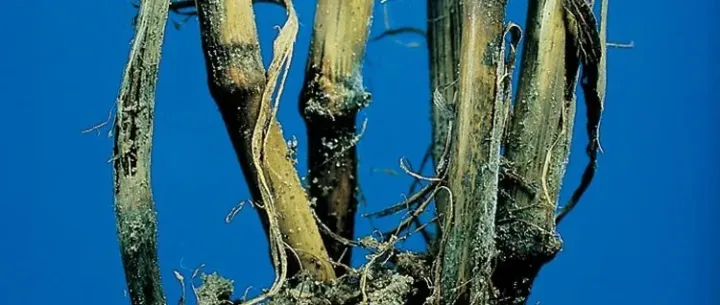
The most distinctive symptom of eyespot is the presence of elliptical, eye-shaped lesions on the lower stem sheaths. These spots typically feature a light-colored center with a dark brown margin.
As the disease progresses, the lesions expand and penetrate the stem, causing the tissue to soften and discolor. This structural damage significantly reduces the plant's ability to support its own weight.
In wet conditions, a diffuse greyish fungal growth may be visible within the lesion area. This represents the sporulating phase of the fungus, which aids in the secondary spread of the disease within the canopy.
The weakening of the stem base leads to lodging, where plants fall over randomly rather than in specific directions. Lodging usually occurs at the stem base, distinct from weather-induced lodging higher up.
Premature ripening and the presence of "whiteheads" (empty, bleached ears) are common consequences of severe eyespot, as the fungal blockage prevents water and nutrients from reaching the grain.
Pathogen
The fungus Pseudocercosporella herpotrichoides (now classified as Oculimacula yallundae and Oculimacula acuformis) is the primary pathogen causing eyespot disease in cereals. It is a soil-borne fungus that primarily infects the basal stem tissues.
The pathogen survives in crop debris for extended periods, acting as a reservoir for infection. Its ability to persist in the soil makes it a perennial threat in continuous cereal cropping systems.
The infection cycle begins when conidia, produced on infected straw, are splashed by rain onto the stems of young plants. The fungus colonizes the leaf sheaths before penetrating the stem wall.
The fungal mycelium spreads slowly through the plant tissues during the cool months of the growing season. It thrives in humid conditions, which are typical for autumn and early spring in many cereal-growing regions.
Molecular studies have identified different strains of the fungus that exhibit varying degrees of virulence, which influences the severity of the disease in different wheat and barley varieties.
Conditions for development
Eyespot development is strongly correlated with cool and moist environmental conditions. The optimal temperature range for the pathogen is between 5°C and 15°C.
Prolonged wet weather during the tillering stage is particularly conducive to infection. Rain splash is the main mechanism for the spread of conidia from the soil to the plants.
Cropping patterns that involve early sowing of winter cereals often increase the risk of eyespot, as the plants are exposed to the fungus for a longer duration during the susceptible stages.
High plant density and lush, thick canopies create a microclimate at the stem base that maintains the high humidity required by the fungus for successful infection and colonization.
Fields with a history of intensive wheat cultivation without adequate rotation show a higher incidence of the disease due to the build-up of the pathogen in the soil and on residual straw.
Why it matters
The economic damage caused by eyespot is primarily due to grain yield reduction. Severe infestations can lead to yield losses ranging from 15% to over 30% in susceptible cereal crops.
Quality reduction is a significant concern, as the disruption of nutrient flow results in shriveled, low-weight grain, which fetches lower prices and fails to meet commercial milling standards.
Lodging caused by eyespot creates substantial logistical challenges during harvest. It forces the use of slower harvesting speeds, leads to grain loss on the ground, and increases the potential for contamination.
The disease weakens the overall plant structure, making the crop more susceptible to other secondary infections and environmental stresses, which compound the overall loss in plant vigor.
Increased production costs arise from the need for prophylactic fungicide applications, which are essential in high-risk regions to maintain profitable yields.
Protection
Effective management begins with robust crop rotation. Avoiding continuous cereal cropping for at least two to three years helps break the pathogen's lifecycle by allowing crop residues to decompose.
Cultural practices such as deep tillage help bury infected straw deeper into the soil profile, where the pathogen is unable to survive as effectively due to competition with soil microbes.
Fungicide application during the early stem elongation phase is crucial. Products containing prochloraz, cyprodinil, or specific triazoles are generally effective if applied at the correct growth stage.
Utilizing resistant or tolerant cultivars is the most sustainable approach. Genetic resistance can significantly decrease the disease impact and the dependency on chemical control methods.
Optimizing nitrogen management and maintaining appropriate plant populations prevent overly dense canopies, thereby improving airflow at the stem base and reducing the humidity favorable to the fungus.
Discussion
No discussions yet — be the first.