
Gloniopsis praelonga
Gloniopsis praelonga
Description
Symptoms
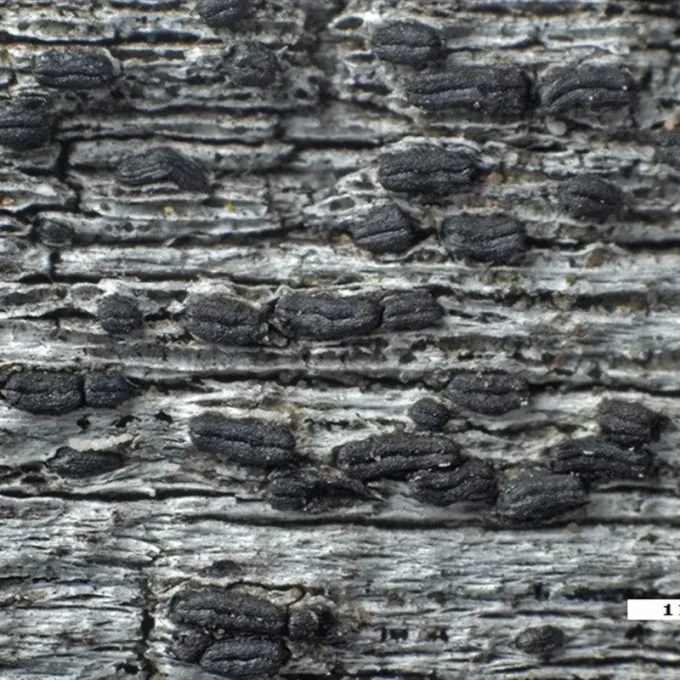
The most visible symptom of an infestation is the appearance of small, black, elongated, slit-like structures (hysterothecia) on the surface of bark or dead branches. These structures often occur in clusters, resembling small dashes or scratches.
In areas of colonization, the bark may show signs of discoloration, becoming dull, greyish, or exhibiting premature senescence. The tissue around these infection sites may lose its elasticity, leading to cracking or peeling of the outer layers.
When the fungus colonizes living tissues, it can contribute to the formation of necrotic spots. These lesions may gradually expand, potentially affecting the cambium layer and leading to the localized decline of branch segments.
A closer inspection often reveals that the fruiting bodies of Gloniopsis praelonga have a characteristic linear morphology. This differs from many other common fungi, which may form rounded or irregular pimple-like structures.
As the infection progresses, the disruption of the bark integrity allows secondary pathogens, such as wood-decay fungi, to enter the tree. This often makes the primary identification of Gloniopsis praelonga difficult in the later stages of decay.
Pathogen
The fungus Gloniopsis praelonga is a member of the class Dothideomycetes, order Hysteriales. It is primarily recognized as a saprotrophic organism that can occasionally act as a weak pathogen on stressed or weakened woody plants.
Microscopically, the fungus is defined by the production of distinctive hysterothecia. These are elongated, narrow, black structures that erupt through the substrate surface, serving as the most reliable diagnostic characteristic for identifying the species.
The life cycle of this pathogen is closely associated with the degradation of complex organic compounds such as lignin and cellulose. It persists on plant debris, utilizing it as a primary nutritional base to build up its inoculum level.
While often classified as a secondary colonizer, its biological capacity to break down woody tissue makes it a significant player in the decomposition of weakened host plants. It thrives by exploiting environmental niches that have been vacated by other organisms.
The spread of the fungus is primarily mediated by wind-dispersed ascospores. These spores are released into the air under specific humidity conditions, allowing the pathogen to colonize new areas, especially in dense or poorly maintained plant stands.
Conditions for development
High relative humidity is the most critical environmental factor for the development of this fungus. Frequent rainfall, dew, and persistent foggy conditions create an ideal moist microenvironment for spore germination and mycelial growth.
Moderate temperatures ranging from +15 to +22 degrees Celsius are optimal for the fungus. During these periods, especially in the spring and autumn, the reproductive rate and spore production are significantly higher.
Host susceptibility is greatly increased by physical stress, including mechanical injuries, frost damage, or prolonged drought. A weakened tree lacks the defensive resources to prevent the colonization of the fungus on its bark surface.
Poorly ventilated areas with stagnant air contribute to higher localized humidity levels. Such environments are highly conducive to the rapid spread of the fungus, leading to higher infection pressure in commercial orchards or forest nurseries.
The accumulation of dead wood and leaf litter serves as a continuous reservoir for the pathogen. Leaving infected pruned branches on the ground ensures that the fungus can survive the winter and re-emerge during the next growing season.
Why it matters
The primary damage caused by this fungus is the accelerated degradation of woody structures. By breaking down cell walls, the pathogen reduces the mechanical strength of branches, making them more prone to breakage under wind or snow weight.
In fruit-bearing plants, the presence of the fungus can interfere with the vascular transport of nutrients and water, which ultimately leads to a decrease in the overall vigor and yield of the tree.
Gloniopsis praelonga often acts as a precursor for more aggressive wood-decay pathogens. By creating entry wounds through the breakdown of the bark, it facilitates the invasion of fungi that cause heart rot, which can kill a tree entirely.
For nursery plants and ornamental trees, the presence of the fungus reduces the aesthetic and commercial value. Visible bark defects and necrosis make the plants unsuitable for sale or landscape use, resulting in direct economic losses.
Severe infestations require extensive pruning and removal of skeletal branches, which significantly disrupts the growth habit of the tree and requires years for the plant to recover its form and productivity.
Protection
The most effective strategy for controlling this fungus is good sanitation. Pruning out and removing dead, diseased, or dying branches from the landscape is essential to eliminate the primary sources of fungal inoculum.
Maintaining tree vigor through balanced fertilization and proper irrigation is key to disease prevention. A healthy, stress-free tree is naturally better at forming barriers against fungal invasion.
When performing necessary pruning, all exposed wood surfaces should be sealed or treated with a protective wound dressing to prevent spores from germinating on the fresh cut surfaces.
In cases of high infection pressure, the application of copper-based fungicides during the dormant season or early bud break can help reduce the spore load on the bark surface and protect vulnerable tissues.
Managing canopy density is also important; regular pruning ensures sufficient airflow, which lowers humidity levels around the stems and branches, thereby creating an unfavorable environment for fungal proliferation.
Discussion
No discussions yet — be the first.