
Gloeoheppia turgida
Gloeoheppia turgida
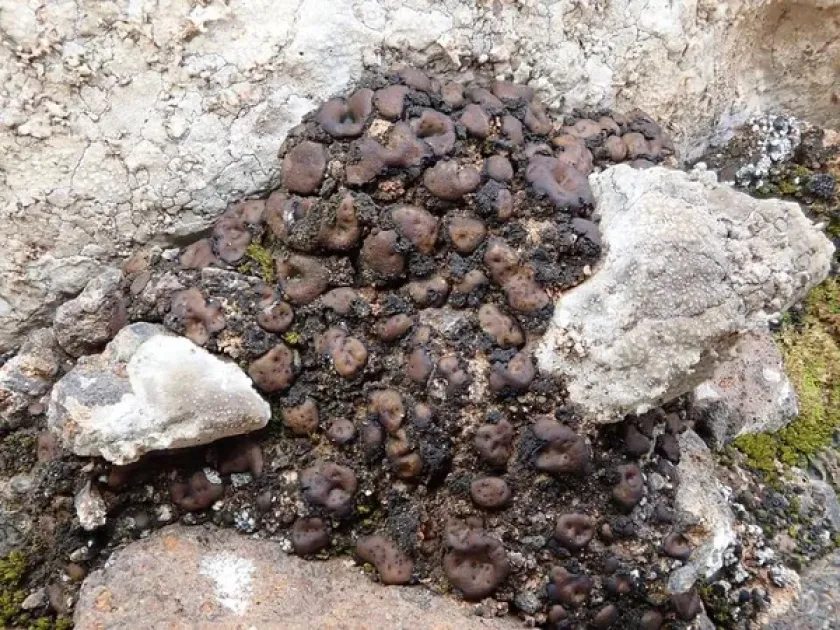
Description
Symptoms
The visual symptoms of colonization include the appearance of swollen, gelatinous, or crust-like growths on the bark of branches and main trunks.
The color of the thallus typically ranges from dark brown to olive, becoming more prominent and softer in texture during high-humidity conditions or rain.
These growths often manifest as lobed, tightly adhering colonies that can coalesce into larger patches covering significant portions of the bark.
Colonization is most frequently observed on older, rougher bark surfaces, which provide favorable niches for spore attachment and development.
Unlike necrotizing fungal diseases, these lichen colonies generally sit superficially, though they can change the texture and moisture retention of the bark surface.
Pathogen
Gloeoheppia turgida is a specific type of lichenized fungus belonging to the genus Gloeoheppia, characterized by a symbiotic association between a fungal partner and cyanobacteria.
In an agronomic context, it is categorized as an epiphytic lichen that colonizes the bark of perennial woody plants rather than acting as a classical plant parasite.
The organism reproduces through spores, which are disseminated by wind or rain, allowing it to easily find new suitable substrates on tree surfaces.
The biology of the lichen is based on a mutualistic relationship where the fungal component provides structure and protection, while the cyanobacteria provide energy through photosynthesis.
Although it does not infect the inner vascular system of the host, its presence on the bark is indicative of specific environmental conditions within the orchard or forest environment.
Conditions for development
The growth and spread of Gloeoheppia turgida are highly dependent on atmospheric moisture, as lichens require ambient humidity to maintain their metabolic processes.
Optimal development occurs in shaded, damp environments where air circulation is poor and moisture tends to accumulate on the bark for extended periods.
Dense, unpruned tree canopies limit sunlight penetration and air movement, creating a perfect microclimate for this lichen to thrive.
The presence of old, cracked, or neglected bark provides the necessary surface area for spores to germinate and establish long-term colonies.
Climatic conditions in temperate zones are generally conducive to the survival of this species, as it is well-adapted to withstand significant temperature fluctuations.
Why it matters
The primary concern regarding this lichen is its potential to harbor pests, providing a protective environment for various insects to shelter and overwinter.
Thick lichen coverage can theoretically interfere with the normal gas exchange of the bark, which may stress the tree and inhibit its physiological vigor.
Trees covered with lichens are often perceived as being in a state of low vitality, potentially becoming more susceptible to secondary pathogenic infections.
The presence of significant lichen populations indicates a lack of proper tree maintenance and sanitation, which can impact the overall health of the orchard.
For ornamental or fruit-bearing trees, the aesthetic devaluation caused by extensive lichen growth is often considered a negative factor by growers.
Protection
The most effective management strategy involves regular sanitary pruning to improve canopy aeration and increase sunlight exposure to the bark.
Manual cleaning of the bark using stiff-bristled brushes during the dormant season is a highly effective way to remove accumulated lichen colonies.
Applying copper or iron sulfate solutions to the trunk and branches can help sanitize the bark surface and inhibit the growth of lichen spores.
- Improving ventilation through thinning branches.
- Applying professional whitewash to trunks.
- Balanced fertilization to strengthen tree immunity.
Maintaining high tree vitality through consistent cultural practices and timely monitoring is essential for preventing the buildup of epiphytic growth.
Discussion
No discussions yet — be the first.