
Gibellula pulchra
Gibellula pulchra
Description
Symptoms
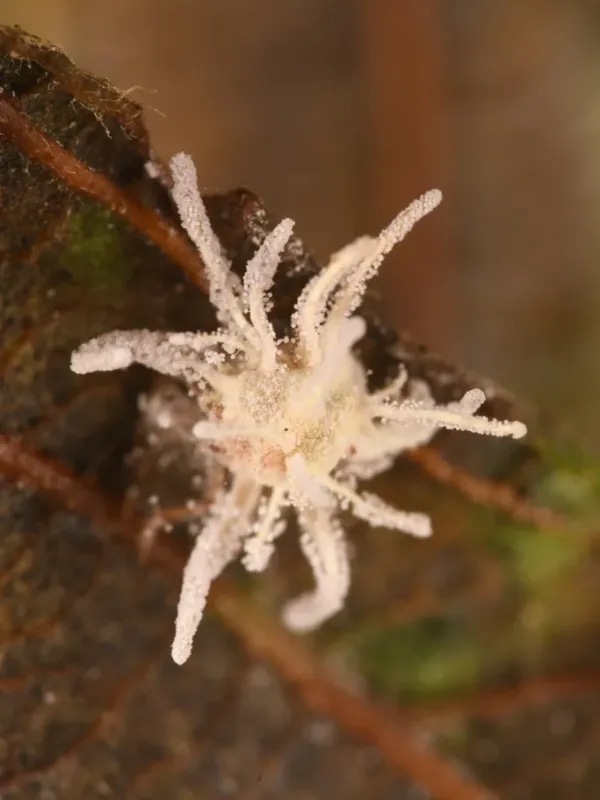
The most prominent sign of infection is a dense, white to yellowish coating of mycelium covering the deceased spider. This growth often makes the spider look like it is covered in fuzzy velvet.
The emergence of synnemata, which are long, upright spore-bearing structures, is a characteristic feature of Gibellula pulchra. These structures can be seen extending from the spider's joints or body segments.
The host usually remains fixed to the substrate, such as a leaf or stem, due to the anchoring effect of the fungal hyphae. This helps the fungus secure a position for optimal spore release.
The spider's body eventually undergoes complete mummification, as the fungus replaces the organic matter with its own structural biomass.
- White or golden-yellow fuzzy patches on the spider's body.
- Rigid, upright spore stalks (synnemata).
- Spider carcass firmly attached to the host plant surface.
Pathogen
Gibellula pulchra is a specialized entomopathogenic fungus belonging to the order Hypocreales. It is well-documented as a parasite that targets spiders rather than agricultural plants.
The fungus invades the host through the exoskeleton, utilizing specific chitinolytic enzymes to penetrate the spider’s body. Once inside, it consumes the internal tissues to fuel its rapid growth.
As a member of the Clavicipitaceae family (or related groups), it produces distinct asexual conidiophores that emerge from the spider's carcass. These structures are essential for dispersing spores into the environment.
While often mistaken for a plant disease due to its presence on foliage, the fungus is purely entomogenous. It serves as a natural biological control agent, helping to regulate spider populations in various ecosystems.
Its complex life cycle involves dormant stages that allow it to survive periods of environmental stress until favorable conditions for host infection return.
Conditions for development
High relative humidity is the most critical environmental factor for the successful development of Gibellula pulchra. Spore germination is highly dependent on ambient moisture levels.
Temperatures ranging between 18°C and 26°C are ideal for the metabolic processes of this fungus. Outside this range, the development of the fungal colonies slows down significantly.
Shaded, humid microclimates within dense vegetation or forest edges provide the necessary stability for the fungus to persist and infect new hosts.
The availability of a sufficient host population is vital for the fungus to complete its cycle. In the absence of spiders, the fungal population in the area will decline.
Direct exposure to sunlight and strong winds can desiccate the spores, drastically reducing their viability and ability to initiate new infections on spider hosts.
Discussion
No discussions yet — be the first.