
Gibellina
Gibellina
Description
Symptoms
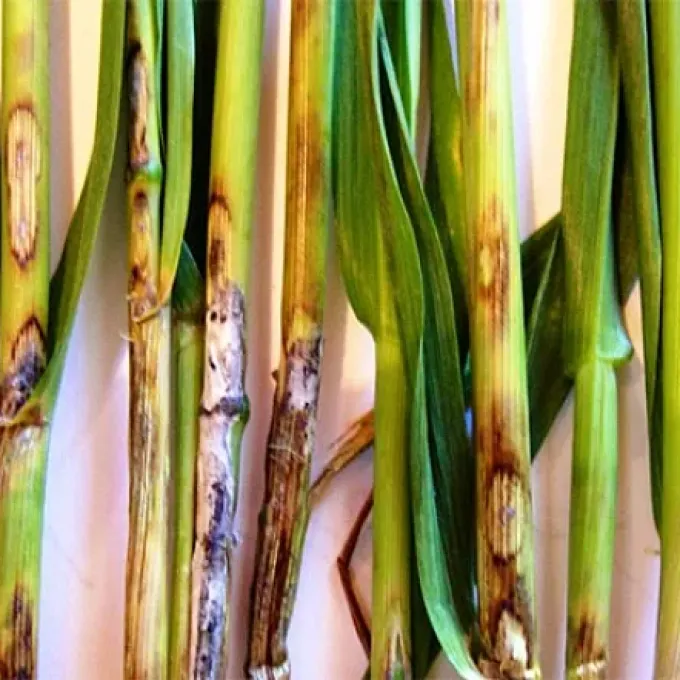
A key symptom of infection is the appearance of characteristic necrotic spots on stems and leaves, which turn dark brown or black over time.
In the early stages, a light grey bloom consisting of fungal conidiophores may appear on the affected areas. Subsequently, the tissues in these spots begin to die and wither.
When grapevines are infected, a significant weakening of the shoots is observed, leading to premature wilting and brittleness under wind or load.
In cereal crops, the disease is often localized in the basal zone or at stem nodes, which provokes lodging and disrupts the nutrition of the ear.
In severe cases, the plant loses its ability to vegetate, leading to a sharp decrease in turgor and the complete death of individual parts or the entire plant.
Pathogen
Gibellina, caused by the fungus Gibellina cerealis, is a specific infectious disease that affects mainly cereal crops and grapevines. This pathogen belongs to the group of ascomycetes that form fruiting bodies within infected plant tissues.
The pathogen's life cycle is closely linked to plant debris, where the fungus survives during unfavorable periods. The infection can spread through spores carried by air currents or through contact with contaminated material.
The biology of Gibellina cerealis is focused on parasitizing stems and leaves, where the mycelium penetrates epidermal layers. The pathogen efficiently utilizes host plant nutrients to promote its own sporulation.
A key characteristic of this pathogen is its ability to survive for long periods in the soil in the absence of a host. This makes disease management a complex task for agronomists.
Research indicates that the pathogen can adapt to various climatic zones, which increases its potential range of spread across agricultural landscapes.
Conditions for development
The development of Gibellina is favored by periods of high humidity and moderate temperatures ranging between 18–24 degrees Celsius.
Dense plantings and a lack of proper aeration in vineyards create an ideal microclimate for fungal spores to germinate on the surface of leaves.
Excessive application of nitrogen fertilizers, which triggers vigorous growth of vegetative mass, often reduces the plant's natural immunity to this pathogen.
Remnants of infected weeds and untreated plant debris from the previous season serve as the main reservoirs of infection in the field.
Prolonged foggy weather and the presence of moisture on plant surfaces significantly accelerate the infection process, creating favorable conditions for mycelial spread.
Why it matters
The primary harmfulness of the disease lies in a significant reduction in yield due to the disruption of metabolic processes within plant tissues.
Stem damage leads to impaired vascular conduction, preventing nutrients from reaching the fruits, which negatively affects their quality and weight.
Under epiphytotic conditions, Gibellina can destroy a significant portion of the harvest, leading to serious economic losses for agricultural businesses.
The infection impairs the winter hardiness of perennial crops, as plants weakened by the fungus become more vulnerable to low temperatures.
Produce harvested from infected areas often has low commercial value, making it unsuitable for seed material or long-term storage.
Protection
Effective protection starts with strict adherence to crop rotation and the timely removal of all plant debris from the field after harvest.
The use of systemic fungicides allows for the effective suppression of infection development during the early stages of crop vegetation.
It is important to perform regular thinning and pruning of grapevines to ensure better aeration and reduce humidity within the canopy.
The use of resistant plant varieties is the most reliable way to prevent large-scale outbreaks of Gibellina in production fields.
- Preventive treatment with copper-based fungicides at the start of the season.
- Timely removal of weed populations.
- Monitoring moisture levels during the active growth period.
- Sanitary soil cleaning from fallen leaves and stems.
Discussion
No discussions yet — be the first.