
Thousand Cankers Disease
Geosmithia morbida
Description
Symptoms
Early symptoms include small, circular, dark-colored entrance holes on the bark, surrounded by faint, discolored areas where the fungus is beginning to colonize the tissue.
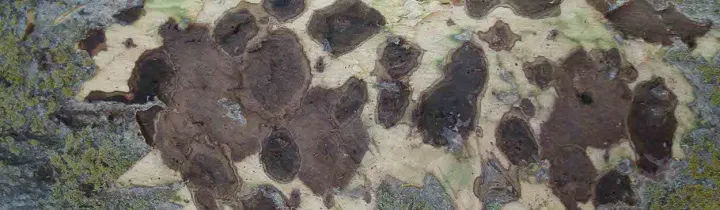
As the disease progresses, these areas develop into sunken, elongated cankers. Peeling back the bark in these spots reveals dark, necrotic tissue beneath, which is a definitive diagnostic feature.
The tree's canopy starts to thin, with leaves showing premature yellowing (chlorosis) and flagging (wilting). These crown symptoms typically start at the top and gradually spread downwards.
Severe infestations lead to the death of major branches. In the final stages, the entire trunk is girdled by multiple coalescing cankers, resulting in the death of the tree.
- Small beetle entry holes on the bark
- Sunken dark cankers on branches and trunks
- Premature yellowing and wilting of foliage
- Gradual crown dieback starting from the top
- Dark, necrotic lesions visible under the bark
Pathogen
The disease is caused by the fungus Geosmithia morbida. It lives in close association with the walnut twig beetle, Pityophthorus juglandis, which acts as the primary vector for transmission.
When the beetle tunnels into the tree's bark to feed and breed, it introduces the fungal spores into the phloem and cambium layers. Once inside, the fungus colonizes these tissues, forming cankers that disrupt nutrient transport.
The pathogen is highly specialized for Juglans species. Its primary mode of survival and dispersal is through the vascular and cortical tissues of the host, where it creates localized areas of cell death.
While the fungus is the biological cause of tissue necrosis, the interaction between the beetle and the fungus is what makes the disease particularly virulent and difficult to manage in natural environments.
Research indicates that Geosmithia morbida can survive in the galleries of the beetles, allowing the pathogen to persist even in wood that has been separated from the living tree for some time.
Conditions for development
The development of the disease is heavily dependent on the beetle's population density. Warmer temperatures favor higher beetle activity and more frequent colonization attempts on host trees.
Trees experiencing drought stress, root damage, or poor site conditions are more susceptible to beetle attacks, making them prime targets for fungal inoculation by P. juglandis.
Human activity is the most significant factor in long-distance dispersal. The movement of firewood, logs, and uncertified nursery stock from infected areas has been responsible for the disease's rapid spread.
High planting densities in orchards can facilitate the rapid movement of beetles between trees, leading to an exponential increase in the incidence of infection across a grove.
The fungus is most active during the growing season when the tree is physiologically active, which allows for faster colonization of the phloem tissue once the beetle has introduced the spores.
Why it matters
Thousand Cankers Disease is highly destructive to black walnut (Juglans nigra) and other susceptible walnut species. It poses a significant threat to timber production and native forest ecosystems.
The disease's economic impact is severe, resulting in the total loss of valuable hardwood timber and the collapse of nut-producing orchards, often requiring complete stand removal.
Because the disease kills trees relatively quickly, it causes massive disruption to natural landscapes and reduces biodiversity, as affected walnut species cannot survive once the disease is established.
Management is complicated by the fact that infected trees often do not show visible canopy symptoms until the infection is well-established, making early detection a significant challenge.
The pathogen significantly reduces the quality of wood, rendering it useless for traditional furniture or veneer applications, leading to complete financial losses for landowners and foresters.
Protection
Currently, there is no effective chemical cure for infected trees. The focus is entirely on management through quarantine, early detection, and strict movement controls.
Prevention involves prohibiting the movement of walnut wood products out of regulated areas. Public awareness campaigns are vital to prevent the unintentional spread of the beetle via firewood.
Sanitary measures include the rapid removal and destruction of symptomatic trees. Wood should be chipped to specific dimensions or burned on-site to ensure the destruction of the beetle and fungal spores.
Monitoring programs using pheromone-baited traps help track beetle populations. This allows managers to identify new outbreaks quickly and implement containment strategies immediately.
Maintaining tree health through proper irrigation and limiting physical damage to bark can help prevent localized stressors, though cultural practices cannot provide full immunity against this disease complex.
Discussion
No discussions yet — be the first.