
Fusarium wilt
Fusarium scirpi
Description
Symptoms
The first external symptoms often appear as yellowing of the lower leaves, which eventually spreads upwards. Affected leaves may curl and drop prematurely despite regular irrigation.
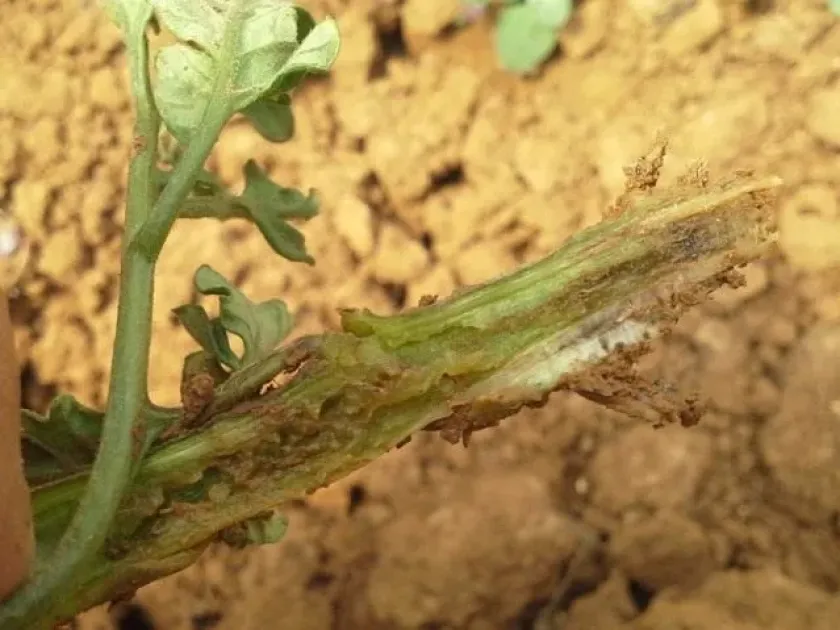
A cross-section of the stem or root reveals a characteristic browning or darkening of the vascular bundles. This tissue necrosis is a definitive clinical sign of vascular infection by Fusarium.
Under humid conditions, fungal sporulation may occur on the stems, visible as a white, pink, or light-colored cottony mycelial mat. This indicates a high level of colonization by the pathogen.
Root systems often show signs of decay, turning brown and becoming soft or necrotic. This reduction in functional root mass leads to stunted growth and poor performance of the entire plant.
In severe cases, plants wilt entirely during the heat of the day and may recover at night initially, but eventually, they collapse and die as the vascular damage becomes irreparable.
Pathogen
The causative agent of the disease is the fungus Fusarium scirpi, a member of the Fusarium genus. It is a persistent soil-borne pathogen that survives in plant debris and soil as resilient chlamydospores or mycelium.
The fungus invades the xylem (vascular system) of the host plant. Once established, it grows and colonizes the vessels, interfering with the transport of water and essential nutrients from the roots to the upper parts of the plant.
This disease is categorized as a vascular wilt. The production of fungal toxins further contributes to the systemic decline of the plant by poisoning the cells and causing metabolic disruption.
Biological resilience is a key feature of this pathogen, allowing it to persist in various environmental conditions and adapt to multiple host crops, making it a difficult adversary for growers.
Dissemination occurs through infected seeds, contaminated agricultural machinery, and irrigation water. The fungus can also spread via wind-borne spores produced on the surface of dying plants.
Conditions for development
Development of the disease is favored by high soil temperatures (between 20°C and 30°C) and sufficient moisture. These conditions stimulate the germination of fungal spores in the soil.
Stressed plants are significantly more susceptible to infection. Environmental factors like fluctuating weather, poor aeration, and physical root damage make it easier for the fungus to penetrate.
Soil pH plays a critical role in disease severity, with slightly acidic to neutral soils often favoring the growth of Fusarium scirpi. Nutrient imbalances, particularly excessive nitrogen, can promote vegetative growth at the expense of root resistance.
Poor soil drainage creates an anaerobic environment that weakens the plant roots and provides a pathway for fungal entry, leading to faster colonization of the plant's internal system.
Dense plant spacing restricts air circulation and keeps the humidity levels high around the crown of the plant, creating an ideal microclimate for the fungus to multiply and spread.
Why it matters
The economic impact of this disease is substantial due to yield loss and reduced crop quality. Infested fields often experience significant stand reduction, requiring replanting and increased input costs.
A major concern is the production of mycotoxins in affected grain or vegetables. These toxins pose serious risks to human and animal health, rendering the crop unmarketable or unsuitable for feed.
Yield loss can be catastrophic, with entire harvests lost if infection occurs early in the season. The reduction in the size and quality of the final produce significantly diminishes market value.
Fusarium species are known for their longevity in the field. Once the soil is infested, the pathogen can remain dormant for several years, severely limiting future crop rotation choices for farmers.
Post-harvest losses are also a critical issue, as produce infected in the field may continue to decay in storage, causing further spread and contamination of healthy produce in warehouse environments.
Protection
The most effective strategy is the use of resistant varieties and certified, disease-free seed. Seed treatments with systemic fungicides are essential to provide protection during the germination stage.
Implementation of long-term crop rotation is crucial. Avoid planting susceptible crops in the same area for at least 4 to 5 years to help decrease the population of the pathogen in the soil.
Cultural practices should focus on soil health, including good drainage and thorough incorporation or removal of crop residue to eliminate overwintering sites for the fungus.
Biological control using beneficial microbes like Trichoderma species can help suppress Fusarium populations in the soil and improve the overall resilience of the root system.
When an outbreak occurs, systematic application of fungicides may be necessary. Monitoring for early symptoms and immediately removing and destroying infected plants can help mitigate the spread.
Discussion
No discussions yet — be the first.