
Fusarium root rot
Fusarium pseudograminearum
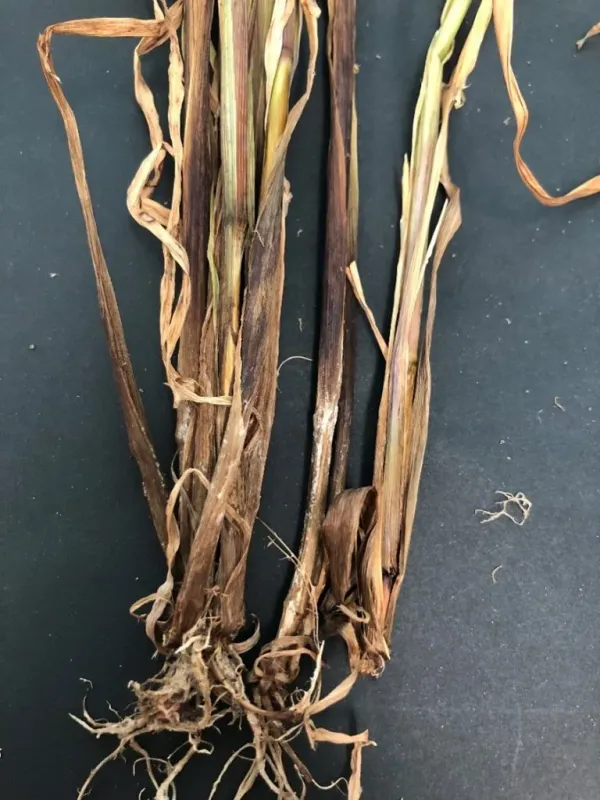
Description
Symptoms
The primary symptom of the disease is the browning and decay of the root system, which disrupts the plant's ability to absorb water and essential nutrients. In the lower stem section, a characteristic pinkish or whitish mold often forms, representing the fungus's sporulation.
Infected plants show significant stunting and poor development compared to healthy neighbors. A common sign is the premature death of lower leaves and overall yellowing of the stem, which can visually mimic early ripening of the crop.
At later growth stages, necrotic dark spots appear on the stems, spreading upward from the crown area. This tissue damage weakens the stem structure, frequently leading to lodging as the plant loses its physical integrity.
A classic sign during the heading stage is «whiteheads», where the ear becomes empty or contains shriveled, sterile grains. This happens because the fungal infection blocks the transport vessels, preventing nutrient movement to the grain.
The root system of infected plants becomes brittle and easily breaks off when pulled from the soil. Upon closer inspection, dark brown or black decay zones are clearly visible on the roots, indicating extensive tissue death.
Pathogen
The pathogen is a specialized fungus known as Fusarium pseudograminearum, belonging to the group of imperfect fungi. It is highly virulent and capable of surviving in the soil and on crop residues for long periods.
This organism acts as a facultative parasite, easily switching from a saprotrophic lifestyle on crop debris to an active attack on living tissues of cereal crops. Its mycelium penetrates deeply into the stem and root structures.
The fungus produces potent toxins, such as deoxynivalenol, which intoxicate the plant and suppress its immune response. These metabolites not only harm the plant but also significantly lower grain quality, making it unsafe for food or feed.
Dissemination within agricultural fields occurs primarily through infected seeds, contaminated soil, and plant residues remaining in the topsoil after harvest, which serve as a persistent source of inoculum.
A key biological feature of this pathogen is the formation of chlamydospores, which allow the fungus to survive adverse environmental conditions, including temperature fluctuations and prolonged drought, in the field environment.
Conditions for development
Development is heavily favored by dry autumn weather combined with high soil temperatures. These specific conditions create a window of opportunity for the pathogen to aggressively colonize the root systems of young cereal crops.
Soils with a neutral or slightly alkaline pH are most favorable for the mass multiplication of this fungal species. The temperature optimum for intensive mycelium growth ranges from 20 to 25 degrees Celsius.
Frequent violations of crop rotation, especially when susceptible crops like wheat or barley are grown repeatedly, lead to a massive buildup of the fungal inoculum in the soil, increasing the risk of disease outbreaks.
Poor soil aeration and compaction reduce the physiological vigor of the crop, making plants more susceptible to infection. Stressed plants cannot mount an effective defense against the invading Fusarium mycelium.
Physical damage to the root system caused by soil-borne pests, such as wireworms or nematodes, creates «entry gates» for the fungus, drastically accelerating the infection process compared to undamaged plants.
Why it matters
The primary impact is a substantial reduction in yield, which can decrease by 20-50% depending on the infection pressure. Severe outbreaks can lead to complete plant death at the seedling stage, resulting in sparse stands.
Beyond quantity loss, the disease severely degrades grain quality. Affected grains are often shriveled, have low test weight, and contain dangerous mycotoxins, which severely limit their market value and safety for consumption.
Winter hardiness is significantly reduced because the compromised root system cannot supply the plant with sufficient reserves to survive the winter. This often leads to crop loss and the need for spring reseeding.
The pathogen disrupts vital physiological processes, including photosynthesis and transpiration. The plant is forced to divert precious energy resources toward fighting the infection rather than developing healthy grain.
Economic damage includes the costs of managing the disease through chemical applications and the potential total loss of fields, which necessitates expensive remedial actions and impacts overall farm profitability.
Protection
The fundamental management strategy is the implementation of a rigorous crop rotation plan, including non-host crops. Returning susceptible cereals to the same field should be avoided for at least two to three years.
High-quality seed treatment with systemic fungicides is crucial to protect seedlings from primary infection during the most vulnerable early development stage. This ensures a healthy start for the crop.
Agronomic practices include deep tillage to incorporate crop residues, which accelerates their decomposition and reduces the fungal inoculum potential. Avoiding excessive nitrogen fertilization is also recommended to prevent overgrowth.
Maintaining optimal soil fertility and a balance of phosphorus and potassium strengthens cell walls, increasing natural resistance to fungal invasion. A well-nourished plant is more capable of limiting mycelium spread.
The use of resistant cultivars is the most efficient and eco-friendly control method. Ongoing breeding efforts focus on developing cereal varieties with genetic resistance to Fusarium pseudograminearum to minimize economic losses.
Discussion
No discussions yet — be the first.