
Kuroshio Fusarium wilt
Fusarium kuroshium
Description
Symptoms
The primary symptom is a rapid wilting of foliage, often starting on individual branches before spreading to the entire crown. The leaves turn yellow or brown and wither but frequently remain attached to the tree.
Examination of the bark reveals small entry holes made by ambrosia beetles. These holes are often accompanied by frass (wood dust) or localized sap exudation, which are classic signs of beetle infestation.
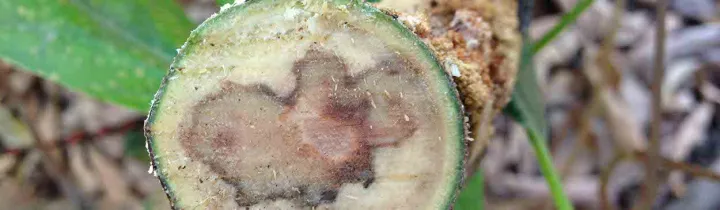
Cross-sections of affected branches or trunks typically show distinct dark staining of the sapwood. This internal discoloration indicates the spread of the fungus and the host's defensive reaction.
In advanced stages of the disease, the tree loses turgor pressure, the canopy thins significantly, and the bark may show signs of splitting. Death of the tree often occurs within a short period.
Definitive diagnosis requires laboratory isolation of Fusarium kuroshium from wood samples. Visual symptoms are indicative, but microscopic identification is necessary to distinguish it from other wilt-inducing fungi.
Pathogen
Kuroshio Fusarium wilt is caused by the pathogenic fungus Fusarium kuroshium. It is a specialized vascular pathogen that colonizes the xylem of host trees, effectively clogging the water-conducting tissues.
The biology of this pathogen is uniquely linked to ambrosia beetles. These beetles serve as vectors, carrying fungal spores into their galleries bored deep within the wood, which facilitates infection.
Once inside the tree, the fungus produces toxic metabolites that cause systemic damage. This results in the rapid death of the tree's internal vascular system and subsequent wilting.
Fusarium kuroshium is known for its high persistence in woody tissues. Even after the death of the host tree, the fungus can remain viable in logs, posing a continuous risk of transmission.
This pathogen belongs to a group of Fusarium species that specifically target woody hosts. Its symbiotic relationship with insects makes it a particularly efficient colonizer of healthy and stressed trees alike.
Conditions for development
Disease development is highly dependent on the activity of ambrosia beetle populations. The insects respond to chemical cues released by stressed or wounded trees, facilitating the spread of the fungus.
Temperature plays a critical role in the rate of fungal growth. Moderate temperatures are typically favorable for the rapid proliferation of Fusarium kuroshium within the woody vessels of the host.
Drought stress is a major predisposing factor. Trees suffering from water deficits are more susceptible to beetle attacks and show less resistance to the invading fungal pathogens.
Human activities are the primary cause of long-distance spread. Transporting infested firewood, timber, or nursery stock allows the pathogen to cross geographic barriers and establish new outbreaks.
High internal moisture levels in the wood, provided by the tree's remaining vascular activity, support the fungal mycelium until the host is completely colonized and dead.
Why it matters
Kuroshio Fusarium wilt is a highly destructive disease capable of killing mature trees within a single growing season. This leads to the rapid loss of woody biomass and biodiversity.
The damage is particularly severe in urban and suburban landscapes, where the death of large, mature trees causes significant aesthetic, environmental, and economic losses.
The accumulation of dead, standing wood in affected areas significantly elevates the risk of wildfires. This complicates management efforts and puts surrounding forest ecosystems at risk.
Economic impacts include the high costs of tree removal, safe disposal of infested wood, and the loss of property value associated with mature landscaping.
Because there is currently no cure for infected trees, the disease forces a strategy of eradication, leading to the permanent alteration of local landscapes and forest structures.
Protection
The cornerstone of management is the early detection and immediate removal of infested trees. Sanitation logging is essential to reduce the population of vectors and the source of fungal spores.
Strict quarantine measures on the movement of wood products are critical. Preventing the transport of infested logs is the most effective way to slow the spread of the disease to new regions.
Insecticide applications can be used to protect high-value specimen trees from beetle attacks, though this does not address the fungal infection if the tree is already colonized.
Maintaining tree vigor through proper irrigation and soil management can reduce susceptibility. Healthier trees are less likely to produce the specific chemical attractants that lure ambrosia beetles.
Monitoring programs using pheromone or attractant traps are necessary for the early detection of beetle activity, allowing for rapid response before a disease outbreak becomes widespread.
Discussion
No discussions yet — be the first.