
Fusarium blight
Fusarium equiseti
Description
Symptoms
The primary symptom of the disease is the development of root rot. Roots darken, turn brown, and lose their integrity. Eventually, the root system decays, hindering the plant’s ability to absorb water and nutrients.
Above-ground symptoms include wilting, chlorosis (yellowing) of lower leaves, and stunting. During the later stages of infection, plants may show symptoms of vascular browning, where the internal tissues become dark due to the presence of the fungus.
Under conditions of high humidity, a cottony or powdery mycelial mat may develop on the stems or at the base of the plant. This mat often appears white, cream, or light pink, indicating active spore production.
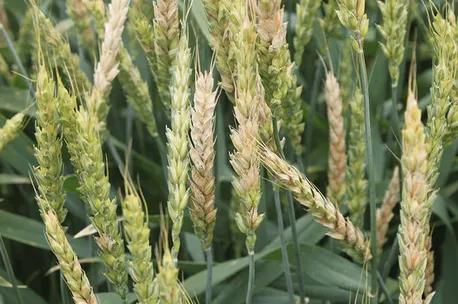
In cereal crops, the disease can manifest as head blight. Affected spikelets bleach prematurely, and in moist conditions, orange or pinkish spore clusters form on the glumes and rachis, significantly impacting seed development.
- Stunted growth and premature wilting
- Browning and rotting of root tissues
- Yellowing of lower leaves progressing upwards
- Visible fungal growth (mycelium) on affected plant parts
- Deformed, shriveled, and discolored seeds
Pathogen
The causative agent of this disease is the fungus Fusarium equiseti, a widely distributed soil-borne pathogen. It belongs to the class of Hyphomycetes and is known for its high adaptability to diverse environments.
This fungus acts as a facultative parasite. It thrives as a saprotroph on crop residues but can rapidly switch to a parasitic mode of life when it encounters weakened or stressed host plants, causing various decay processes.
The life cycle of Fusarium equiseti is characterized by the production of microconidia, macroconidia, and highly resilient chlamydospores. These survival structures allow the pathogen to persist in soil for many years, even in the absence of a host.
The pathogen spreads through the movement of contaminated soil, irrigation water, agricultural machinery, and infected seed material. Mycelial growth in the soil layer allows the fungus to move from plant to plant.
Identification of this species is complex due to its morphological plasticity. Molecular diagnostics are frequently employed by specialists to distinguish Fusarium equiseti from other related Fusarium species that inhabit agricultural fields.
Conditions for development
Fusarium equiseti development is favored by warm temperatures, generally within the range of +18°C to +26°C. However, the pathogen remains active across a broad spectrum of soil temperatures.
Excessive soil moisture is a critical driver of the disease. Waterlogged soil conditions facilitate the germination of chlamydospores and allow the mycelium to spread rapidly through the root zone.
Soil pH levels play a significant role in pathogen success. The fungus tends to show higher virulence in acidic to neutral soil environments, which is common in many agricultural regions with intensive fertilization practices.
Plant stress resulting from drought, excessive nitrogen fertilization, or mechanical damage from cultivation increases susceptibility. Any factor that weakens the plant's metabolic state creates an entry point for the infection.
The presence of soil-dwelling pests like nematodes or wireworms creates wounds in the root system, which serve as direct pathways for the fungus to colonize the host plant tissues effectively.
Why it matters
The disease causes significant economic loss by inducing seedling blight and pre-emergence damping-off, which often requires farmers to replant affected fields, increasing labor and material costs.
For established crops, the infection reduces the overall yield by impairing nutrient and water uptake. This leads to poor grain filling, low quality, and reduced weight of the harvested crop.
A major concern is the production of mycotoxins by the fungus. These toxins are hazardous to both humans and livestock, leading to severe health complications if contaminated grain enters the food or feed supply chain.
The persistence of the pathogen in the soil creates a long-term problem for land management. Fields once heavily infected require years of careful crop rotation to reduce the pathogen population to safe levels.
Marketable value is lost not only due to lower yields but also due to grain grading standards; infected batches are often downgraded or rejected by processing facilities due to contamination risks.
Protection
An effective control program starts with a rigorous crop rotation plan. Avoiding susceptible hosts for at least 3 to 4 years helps deplete the population of fungal spores in the soil.
Seed treatment with systemic fungicides is the most essential preventative measure. This protects the young plant during the crucial germination phase and prevents the fungus from colonizing the crown area.
Soil management, including proper liming to increase pH and improve aeration, can help create a less favorable environment for Fusarium species. Well-drained soils are less susceptible to the disease.
Sanitation practices such as deep plowing and the destruction of infected crop residues prevent the fungus from overwintering and building up its inoculum density in the surface soil layers.
Balanced fertilization programs, particularly those emphasizing phosphorus and potassium, boost plant health and structural resistance. Avoiding excessive nitrogen helps maintain balanced growth and reduces the susceptibility to fungal invasion.
Discussion
No discussions yet — be the first.