
Fusarium root rot
Fusarium concolor
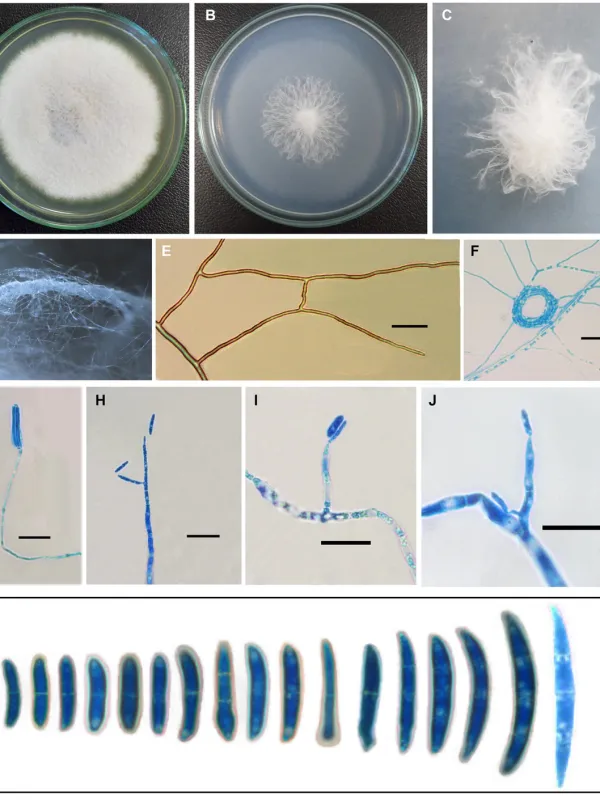
Description
Symptoms
Symptoms initially appear on seedling roots as brown or necrotic lesions. As the disease progresses, these lesions expand, often causing the entire root system to rot and turn dark, which severely limits the plant's capacity for water and mineral uptake.
Under conditions of high humidity, a mycelial mat—often white or light pink in color—can be observed on the crown or basal stem area. This fungal growth indicates that the pathogen is sporulating and actively spreading within the field environment.
Infected plants exhibit stunted growth, chlorosis of the lower leaves, and reduced overall vigor. During periods of drought, these weakened plants wilt much faster than healthy ones, leading to premature death of individual plants or patches within the field.
The root system becomes brittle, losing its integrity and frequently breaking during soil analysis. In some instances, the subcrown internode becomes discolored and necrotic, which is a classic diagnostic marker for Fusarium-related root rot.
- Necrotic browning of primary and secondary roots.
- Stunted plant development and reduced tillering.
- Pinkish or white fungal growth at the stem base.
- Premature yellowing and drying of foliage.
- Significant gaps in crop stands due to seedling mortality.
Pathogen
The causal agent of this disease is the soil-borne fungus Fusarium concolor, a member of the diverse Fusarium genus. This pathogen is highly adaptable and can survive in the soil for extended periods by forming chlamydospores or mycelium within decaying plant debris.
The fungus is characterized by its ability to act as a facultative parasite, meaning it can feed on organic matter in the soil and infect living plant tissues when conditions are favorable. It utilizes various extracellular enzymes to break down plant cell walls and colonize root tissues.
Dissemination of the pathogen occurs primarily through conidia, which are moved by water runoff, soil moisture, and mechanical activities. The fungus targets the root system and the base of the stem, effectively blocking the plant's vascular tissues and hindering nutrient transport.
Fusarium concolor is noted for its broad host range, infecting various cereal crops and grasses. Its ability to persist in the soil makes it a significant challenge for farmers in regions with high-intensity cultivation cycles.
The infection process starts when conidia germinate near the rhizosphere, influenced by root exudates. Once infection is established, the fungal mycelium colonizes the cortex and eventually the stele, leading to plant decline and eventual death if the infestation is severe.
Conditions for development
Optimal development for Fusarium concolor occurs within a temperature range of 18°C to 25°C. These temperatures, combined with moderate to high soil moisture, create an ideal climate for fungal activity and infection.
Poor soil structure and compaction contribute significantly to disease progression. When oxygen levels in the rhizosphere are low due to waterlogging, the plant's natural defense mechanisms are impaired, leaving it vulnerable to fungal colonization.
Soil pH levels also influence the pathogen’s virulence. Acidic soils tend to support higher levels of Fusarium activity, making proper liming an important tool in integrated disease management for sensitive crops.
Nutrient deficiency, particularly a lack of phosphorus and potassium, reduces the plant's ability to resist the infection. A balanced fertilization program helps maintain stronger tissues that can better withstand the pressure of soil-borne pathogens.
Intensive crop rotations with high frequencies of susceptible cereal species lead to the accumulation of inoculum in the soil. Without adequate intervals between susceptible crops, the fungal population levels increase, leading to higher disease pressure in subsequent seasons.
Why it matters
The primary economic impact of Fusarium root rot is the loss of stand density. Seedling blight reduces the number of plants reaching maturity, which translates into lower yield potential and uneven crop stands that are harder to harvest.
Infection compromises the plant's vascular health, resulting in poor nutrient translocation. This leads to reduced grain fill, lower kernel weight, and decreased overall grain quality, which significantly affects the profitability of the crop.
Furthermore, plants infected with Fusarium concolor may accumulate mycotoxins in the grain. These toxins present severe health risks to both humans and livestock, potentially rendering the harvested yield unusable for feed or food processing.
Root rot weakens the plant's overall resilience, making it more susceptible to environmental stressors and other opportunistic secondary pathogens. This synergistic effect can lead to catastrophic crop failure in severely infested fields.
The financial cost of managing this disease includes the need for early-stage intervention, such as re-sowing areas of high mortality, and the increased expenditure on high-efficacy systemic seed treatments to prevent future outbreaks.
Protection
Crop rotation is the foundation of management for Fusarium root rot. Integrating non-host crops into the rotation helps to reduce the survival of the pathogen in the soil and disrupts the disease cycle.
Seed treatment with broad-spectrum systemic fungicides is critical for providing a protective zone around the germinating seed. This allows the plant to establish a healthy root system before being challenged by soil-borne pathogens.
Proper agronomic practices such as ensuring optimal soil drainage and aeration can help create an environment less favorable to the fungus. Preventing waterlogging is one of the simplest yet most effective ways to mitigate risk.
Balanced fertilization, based on soil testing, ensures that crops have adequate nutrient levels to support robust immune responses. Maintaining optimal pH through liming can also suppress the growth of certain Fusarium species in the soil.
Sanitation practices, including the deep incorporation or removal of crop debris, help reduce the amount of inoculum available for the next season. Managing weeds that act as alternative hosts is also essential to keep the pathogen population suppressed.
Discussion
No discussions yet — be the first.