
Fusarium root rot
Fusarium compactum
Description
Symptoms
The earliest signs of the disease are often observed during the seedling or tillering stages. Affected plants typically show stunted growth, chlorotic yellowing of the lower leaves, and a general lack of vigor compared to healthy neighbors.
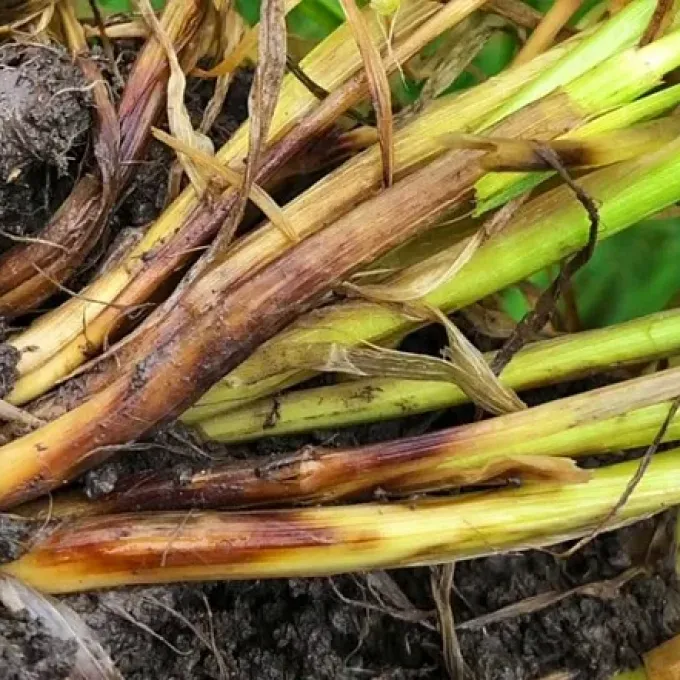
Upon closer inspection of the root system, one will notice a distinct browning and softening of the roots. In humid conditions, a visible mycelial growth (often white, pink, or orange) may appear on the roots and the base of the stem.
The base of the stem often exhibits necrotic lesions or dark brown streaks. This structural damage compromises the integrity of the stem, often leading to premature lodging even in the absence of severe wind or mechanical stress.
In cereal crops, the condition often manifests as "whiteheads." This occurs when the head fails to develop properly, leading to empty or shriveled grains because the plant cannot transport necessary nutrients to the grain due to root decay.
Internal examination of the stem base usually reveals a discoloration of the vascular bundles, confirming the systemic nature of the infection and the significant damage caused by the fungal colonisation.
Pathogen
The causative agent of this disease is the soil-borne fungus Fusarium compactum. It is a highly persistent pathogen capable of surviving in the soil for years by producing chlamydospores, which allow it to remain viable even under extreme weather conditions.
The fungus infects the host plant through the root system and the root crown. Once inside, it colonizes the vascular tissues and secretes mycotoxins, which disrupt the plant's metabolic processes and prevent the efficient transport of water and essential nutrients.
This species is known for its wide host range, primarily affecting cereals like wheat, barley, and maize. The infection is primarily spread through contaminated seeds, soil displacement, and crop residues that remain on the field after harvest.
The pathogen reproduces via conidia, which are easily transported by wind, rain splashes, or contaminated agricultural machinery. Upon landing on susceptible tissue or moist soil, these conidia germinate, initiating a new cycle of infection.
Fusarium compactum functions as a hemibiotroph; it begins its life cycle by feeding on living plant tissues and later acts as a saprophyte, decomposing dead plant material and completing its reproductive cycle on the remains.
Conditions for development
Disease progression is highly favored by fluctuating temperatures and high soil moisture. The fungus thrives most aggressively at temperatures between +15°C and +25°C, making early spring and wet autumns high-risk periods.
Continuous cropping, where the same host species are planted repeatedly in the same field, leads to a massive build-up of fungal inoculum. This persistent presence in the soil makes it increasingly difficult to avoid infection.
Nutrient deficiencies, particularly in potassium and phosphorus, significantly weaken a plant's natural defense mechanisms. Plants grown in poorly fertilized or nutrient-depleted soils are much more susceptible to fungal invasion.
Mechanical damage to the roots, often caused by soil pests such as wireworms, provides an easy entry point for the fungus. These wounds accelerate the rate at which the pathogen colonizes the vascular system of the host.
Poor field drainage and soil compaction contribute to anaerobic conditions that promote fungal growth while simultaneously stressing the plant, creating an ideal environment for the Fusarium compactum to overwhelm the crop.
Why it matters
The primary economic harm from Fusarium root rot is the thinning of the stand due to plant death, which often necessitates costly replanting. This loss reduces the density of the crop and creates gaps that are quickly filled by weeds.
The quality of the harvested grain is significantly impaired. The presence of mycotoxins produced by the fungus makes the grain unsafe for human consumption or animal feed, severely limiting its marketability.
Severe outbreaks can lead to yield losses ranging from 20% to 50%. Besides the direct loss of biomass, farmers face increased expenses for fungicides and additional labor required to manage the infected fields.
The pathogen's ability to survive in the soil for extended periods creates a long-term risk. Infected fields remain hotspots for future disease outbreaks, requiring strict management practices to break the infection cycle.
Because the disease often goes unnoticed until significant internal damage has occurred, recovery is typically impossible. This highlights the crucial need for preventative measures rather than reactive treatments.
Protection
Crop rotation remains the cornerstone of management. Alternating cereals with non-host crops like legumes or oilseeds disrupts the infection cycle and helps drive down the concentration of fungal spores in the soil.
Using high-quality, certified seeds treated with systemic fungicides is essential. Seed treatment provides critical early-season protection, safeguarding the plant during its most vulnerable stage of development.
Effective tillage practices, such as deep plowing to bury crop residues, help accelerate the decomposition of organic matter, which in turn reduces the survival rate of the fungus in the soil.
Optimizing plant nutrition by ensuring adequate levels of potassium and phosphorus strengthens the cell walls of the plants, making them more resilient against the penetration of fungal hyphae.
The use of biological control agents, such as beneficial bacteria (e.g., Bacillus subtilis) or antagonistic fungi, can create a protective barrier around the root zone, suppressing the growth and activity of Fusarium compactum.
Discussion
No discussions yet — be the first.