
Cotton fusarium wilt
Fusarium buharicum
Description
Symptoms
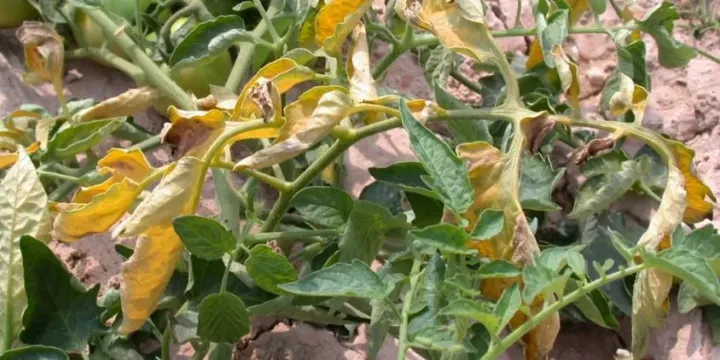
The first clinical signs of the disease include yellowing and curling of the lower leaves. As the infection progresses, these symptoms move upward through the canopy, leading to progressive wilting of the entire plant.
A definitive diagnostic sign is the browning or darkening of the internal vascular bundles. When a stem or petiole is cut crosswise, one can observe brown rings or streaks, indicating that the fungal growth has blocked the xylem vessels.
Infected plants show stunted growth and premature shedding of flower buds, blooms, and young bolls. Even under optimal irrigation, the plants fail to maintain turgor pressure and continue to wither, eventually leading to crop failure.
In high humidity, a white to pinkish mycelial growth may appear on the lower stems. This is the sporulation phase of the fungus, acting as a secondary source of inoculum that can quickly spread the disease to neighboring healthy plants.
The root system of a severely affected plant eventually turns dark and decays. These plants often die in patches, which expand over time, creating noticeable gaps or dead zones in the cotton field.
Pathogen
The causative agent of this disease is the soil-borne pathogenic fungus Fusarium buharicum, a member of the Fungi Imperfecti group. This pathogen is highly resilient due to its ability to form chlamydospores, which allow it to survive in the soil for several years despite adverse conditions.
The fungus typically enters the host plant through the root system, often capitalizing on minor mechanical damage or injuries caused by soil-dwelling pests. Once inside, the pathogen colonizes the plant's vascular tissue, effectively obstructing the flow of water and essential nutrients.
Infected seeds and contaminated soil serve as the primary reservoirs for the disease. Spore dispersal is facilitated by irrigation water, wind, farm machinery, and the movement of soil particles across the fields, which helps the fungus establish new infection sites.
A key biological trait of Fusarium buharicum is its ability to produce toxic metabolic by-products, known as fusariotoxins. These substances are systemic to the plant, causing widespread tissue damage and accelerating the characteristic wilting process.
Accurate identification of the pathogen in the field can be difficult because symptoms often mimic water stress or other vascular diseases. Laboratory isolation and microscopic analysis of conidia are usually required to confirm the presence of this specific Fusarium species.
Conditions for development
The development of Fusarium buharicum is favored by a combination of high soil temperatures (typically 25–30°C) and high soil moisture. These conditions are ideal for the rapid germination and colonization of host tissues.
Poor soil aeration and waterlogging create an environment that induces root stress, making plants significantly more susceptible to fungal infection. Oxygen-starved roots are less capable of mounting a defense against the invading mycelium.
Soil pH plays a critical role in the severity of the disease. Research indicates that the pathogen thrives in neutral to slightly alkaline soils, which are commonly used for intensive cotton cultivation.
The presence of root-knot nematodes and other soil pests increases disease susceptibility. By creating entry wounds, these pests facilitate the rapid entry of the fungus into the plant's vascular system, exacerbating the overall damage.
The accumulation of crop residues in the soil provides a perfect substrate for the fungus to persist and multiply. Fields with high organic debris content often exhibit higher disease incidence in consecutive seasons.
Why it matters
The economic impact of cotton Fusarium wilt is substantial, primarily due to yield reduction. Infected plants fail to produce fully developed bolls, significantly lowering the total weight of the harvested cotton.
The quality of the cotton fiber is severely compromised: the lint loses its strength, elasticity, and color, which leads to lower grading at processing facilities and reduced market returns for the farmer.
The disease causes a premature end to the plant's vegetative cycle. As a result, the fiber development process is cut short, leaving immature fibers that are less desirable for high-end textile manufacturing.
In heavily infested areas, the field becomes patchy, which complicates harvesting operations and reduces overall efficiency. In extreme cases, total crop loss requires replanting, adding substantial costs to the production budget.
The long-term persistence of the pathogen in the soil forces farmers to exclude infested fields from cotton production for several years, severely limiting crop rotation options and forcing costly land management changes.
Protection
The most effective strategy is the implementation of a proper crop rotation program. Cotton should not be planted in the same field for at least 4–5 years, alternating with non-host crops to starve the soil-borne pathogen.
Using resistant or tolerant cotton cultivars is essential. Genetic resistance provides the most reliable protection in areas where the soil pathogen population is known to be high.
Seed treatment with systemic fungicides is a standard preventative measure. This protects the vulnerable seedling stage, allowing the plant to establish a healthy root system before being challenged by potential soil infections.
Agronomic practices, such as deep plowing to invert the soil, help speed up the decomposition of infected plant debris and bury spores deeper in the soil profile, reducing the immediate infection risk.
- Optimize irrigation schedules to prevent soil waterlogging.
- Implement strict nematode management and pest control programs.
- Rogue and destroy highly infected plants to limit further spread.
- Apply balanced fertilization to improve plant vigor and natural resistance.
Discussion
No discussions yet — be the first.