
Fusarium root rot
Fusarium acuminatum
Description
Symptoms
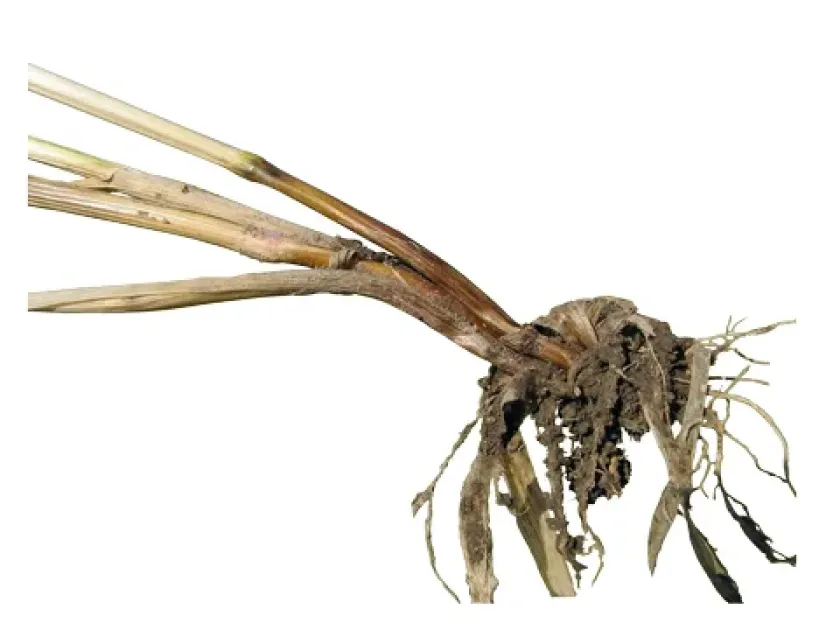
Initial symptoms are often observed as brown or reddish-brown lesions on the root tissues and the crown area. These lesions gradually darken as the fungal colonization progresses.
In the early stages, infected seedlings may show stunting, chlorosis of the lower leaves, or sudden wilting. Severe infections lead to the total collapse of the root system and death of the plant.
A distinctive sign in humid conditions is the presence of white or pink fungal mycelium growth on the surface of the infected crown or basal stem area.
Mature plants may exhibit signs of premature ripening or "white heads" in cereals, as the diseased root system fails to supply the necessary water and nutrients for grain filling.
- discoloration of roots and stems;
- seedling blight and stunted growth;
- wilting and leaf yellowing;
- presence of pinkish fungal growth;
- lodging of stems due to root rot.
Pathogen
The causal agent of this disease is Fusarium acuminatum, a soil-borne fungus that belongs to the Ascomycota division. It is a facultative parasite known for its versatility and ability to survive for extended periods in agricultural soils.
The fungus persists in the soil as mycelium, chlamydospores, or sclerotia embedded within plant debris. These survival structures allow it to withstand harsh environmental conditions and wait for a suitable host.
The pathogen is highly effective at exploiting stressed plants. It enters the root system via microscopic wounds or natural openings, initiating the infection process and disrupting the plant's vascular integrity.
During its growth, Fusarium acuminatum produces various secondary metabolites, including mycotoxins, which interfere with host plant physiology, nutrient transport, and metabolic functions.
Its broad host range includes various cereals, grasses, and broad-leaved crops, making it a significant challenge for complex crop rotation management systems.
Conditions for development
The development of Fusarium acuminatum is strongly favored by moderate temperatures, typically ranging from 15°C to 22°C (59°F–72°F), coupled with high soil moisture levels.
Environmental stress, such as fluctuating moisture levels, soil compaction, or poor drainage, creates ideal conditions for the pathogen. These stresses weaken the plant's natural defense barriers.
Continuous cropping of susceptible host plants encourages the build-up of the fungal inoculum in the soil. Without appropriate rotation, the disease pressure increases significantly over time.
Low soil pH can also influence the intensity of the disease, with many Fusarium species showing higher aggressiveness in slightly acidic environments.
Poor soil aeration inhibits root development, making it harder for the plant to overcome the impact of the fungus, leading to more severe symptomatic expression.
Why it matters
The primary damage caused by root rot is the significant reduction in plant population density, especially during the establishment phase, which often necessitates crop reseeding.
For surviving plants, the physiological damage results in reduced biomass, lower grain weight, and poor quality of the harvested yield, which may not meet industrial standards.
The presence of mycotoxins in the crop is a major concern for food and feed safety. Grains affected by Fusarium species can contain harmful levels of toxins that pose health risks.
Root rot reduces the plant's ability to resist secondary infections by other pests or pathogens, leading to a synergistic decline in crop health and productivity.
The economic impact involves not only lower yields but also increased input costs for fungicides and intensive management practices required to mitigate the disease's spread.
Protection
The cornerstone of management is the use of high-quality, fungicide-treated seeds. This creates a chemical barrier that protects the seeds during germination and early seedling growth.
Implementing effective crop rotation is essential. Rotating away from susceptible hosts for several years helps decrease the soil inoculum density to safer levels.
Good soil management practices, including improving drainage and implementing proper tillage, help to accelerate the breakdown of infected crop debris, reducing the survival of the fungus.
Balanced plant nutrition, particularly ensuring adequate potassium and phosphorus levels, strengthens the plant's structural resistance to fungal entry and colonization.
In-season monitoring and the application of foliar fungicides, when justified by environmental conditions and disease incidence, can help control the spread of the pathogen during the growing season.
Discussion
No discussions yet — be the first.