
Bladder wrack
Fucus vesiculosus
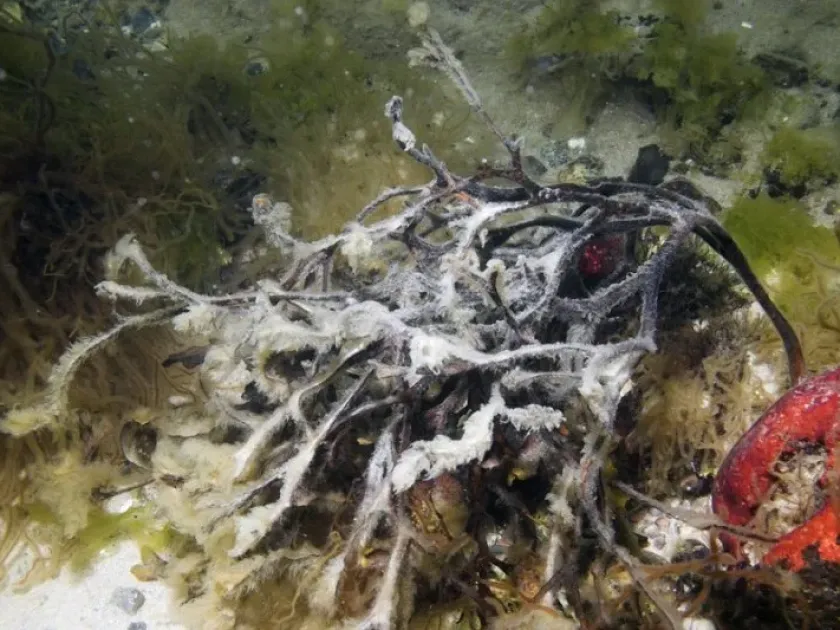
Description
Pathogen
It is important to clarify that Fucus vesiculosus (Bladder wrack) is not a plant disease or a pathogen. It is a multicellular brown alga from the Fucaceae family that inhabits coastal marine areas.
In agricultural practice, this organism does not infect crops; instead, it serves as a valuable raw material for the production of biostimulants and organic fertilizers.
This object is a marine macrophyte, and its misclassification as a "disease" lacks any biological or scientific foundation.
Its life cycle occurs exclusively in saltwater, making it impossible for it to function as a parasite for terrestrial agricultural crops.
Therefore, within the plant protection system, this species is considered solely as a source of beneficial bioactive substances.
Conditions for development
Bladder wrack is distributed throughout the intertidal zones of seas with temperate and cold climates, where regular tides occur.
For its active development, high water salinity, moderate temperatures, and a solid substrate for attachment are required.
The alga is resistant to temporary exposure to air during low tides due to its mucous layer, which prevents dehydration.
Lighting is a critical factor, which is why it is most commonly found in shallow waters where sufficient sunlight is available for photosynthesis.
The ecological stability of coastal zones, including the absence of heavy metal pollution, is crucial for the survival of this species.
Why it matters
As a marine plant, Bladder wrack causes no harm to agricultural crops as it lacks any phytopathogenic properties.
In agroecosystems, there is no risk of this species spreading, as it cannot survive in the soil-climatic conditions of arable land.
Its use in marine-based fertilizers is completely safe for plants and can promote healthy growth and soil conditioning.
The absence of invasive potential regarding field crops makes it an ecologically neutral object for professional agronomy.
The only theoretical risk is the high salt content if non-processed marine matter is applied directly to the soil, which requires prior composting.
Protection
Since Fucus vesiculosus is not a plant disease, no control measures or chemical protection against it are required in agriculture.
Conversely, agronomists utilize processing technologies to extract nutrients from this alga to create effective foliar and soil fertilizers.
Extracts of Fucus help plants increase their resistance to abiotic stresses such as drought, salinity, or frost.
It is recommended to use certified commercial products based on Fucus extracts that have been purified of excess marine salts.
In an agronomic context, prevention is irrelevant; focus should be placed on leveraging the biological potential of seaweed to improve crop yields.
Discussion
No discussions yet — be the first.