
Fomitopsidaceae
Fomitopsidaceae
Description
Symptoms
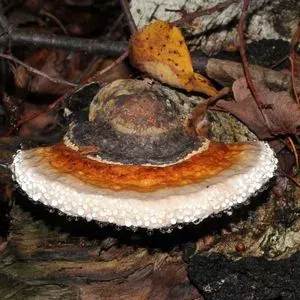
The primary symptom of infection is the appearance of perennial fruiting bodies on trunks or stumps, typically hoof-shaped or resupinate. They often exhibit vivid colors, ranging from orange-red to dark brown with a distinct, light-colored margin.
The internal wood affected by Fomitopsidaceae acquires a characteristic brown color, indicating the degradation of cellulose. The wood tissue becomes brittle and fractures into small cubes or prismatic fragments when subjected to minimal mechanical pressure.
At later stages of the disease, dense mycelial mats or cords may appear on the surface of the infected areas or beneath the bark. In areas of severe decay, the bark loses its elasticity, dries out, and cracks, revealing the dense white fungal mycelium underneath.
Reduced vigor is manifested by the yellowing or premature shedding of needles and leaves. The crown becomes sparse, and apical growth slows down due to the impairment of vascular tissues in the decaying trunk.
Diagnostic field assessment often involves tapping the trunk; a dull sound indicates internal hollowing or soft rot, confirming that the fungal mycelium has severely compromised the heartwood.
Pathogen
The Fomitopsidaceae family comprises a group of basidiomycetous fungi that are highly specialized wood-decay organisms. From an agronomic and silvicultural perspective, they are classified as both parasites and saprotrophs capable of causing significant destruction to woody tissues.
The primary type of disease associated with this family is brown rot. The fungal mycelium penetrates the tree trunk through bark wounds, broken branches, or root systems, where it actively decomposes cellulose and hemicellulose components of the wood.
One of the most notable representatives of this family is the red-belted conk (Fomitopsis pinicola), which affects a wide variety of coniferous and deciduous tree species. Its mycelium can persist in dead wood for long periods while waiting for optimal environmental conditions to sporulate.
Biologically, these fungi are xylotrophs that efficiently break down lignin and polysaccharides within the cell walls. This metabolic process alters the chemical composition of the wood, leading to a complete loss of structural integrity.
The life cycle involves the formation of basidiocarps (fruiting bodies) which serve as the source of spore dispersal. These spores are wind-borne over long distances, facilitating the rapid colonization of new forest stands or fruit orchard plantings.
Conditions for development
The development of Fomitopsidaceae fungi is directly dependent on substrate moisture and ambient temperature. Optimal conditions for spore germination occur during prolonged rainy periods when the bark of the host remains damp for extended durations.
Fresh wounds, frost cracks, sunscald, or mechanical damage caused by maintenance equipment are the primary entry points for the infection. These damaged areas provide the necessary access for spores to reach the vulnerable sapwood layers.
Stand density plays a significant role in pathogen spread. Overcrowded plantings restrict airflow and retard moisture evaporation, creating a microclimate perfectly suited for spore germination and mycelial colonization of the bark surface.
Old-growth stands or neglected orchards with natural branch senescence provide constant access to nutrient-rich substrates, supporting the longevity of the fungal population. Stressed trees lack the chemical defenses to inhibit these pathogens.
Temperature ranges between +15 and +25 degrees Celsius are most favorable for active mycelial growth and the formation of new fruiting bodies. During winter, activity decreases, but the mycelium remains viable within the wood, ready to resume growth in spring.
Why it matters
The main impact is the reduction of timber quality, as brown rot renders wood unusable for construction or industrial processing. Infected trunks lose structural strength and are highly prone to snapping during high winds.
The disease leads to the gradual decline and eventual death of the tree, which necessitates urgent sanitary logging in parks or orchards. Infestation of the root system almost invariably leads to the total loss of the host plant.
Fomitopsidaceae pose a significant threat to fruit-bearing crops, particularly in older orchards where the inoculum pressure is historically higher. These fungi can readily spread from wild forest trees to cultivated varieties, causing localized dieback.
Economic losses include costs for removing hazardous trees, loss of orchard yields, and the need for expensive phytosanitary reclamation of the site. Infected areas may remain unsuitable for replanting for many years.
Biological harm is further exacerbated by the attraction of secondary pests, such as bark beetles and wood-boring insects, which colonize decaying trees and significantly accelerate the death of the stand.
Protection
The primary control measure is the timely sanitary cleaning of the site, removing deadwood, fallen branches, and stumps that serve as reservoirs for spores. Infected trees must be removed completely, including the root system, to eliminate subsurface sources of infection.
All mechanical bark injuries resulting from pruning or soil cultivation must be immediately sealed with grafting wax or antiseptic pastes to prevent pathogen entry. This effectively blocks the primary pathways for fungal colonization.
Disinfecting tools after working with an infected tree is mandatory. Using alcohol-based or copper-based sanitizers ensures that fungal particles are not transferred to healthy plants during maintenance activities.
Maintaining optimal stand density and providing balanced soil nutrition is essential. Trees with robust physiological health and adequate micronutrient levels demonstrate significantly higher resistance to wood-decaying fungal infections.
If fruiting bodies are discovered, they should be carefully harvested before spore release and incinerated off-site. In severe cases, preventive systemic fungicide treatments may be applied to vulnerable wounds to protect the exposed wood from new infestations.
Discussion
No discussions yet — be the first.