
Fomitiporia mediterranea
Fomitiporia mediterranea
Description
Symptoms
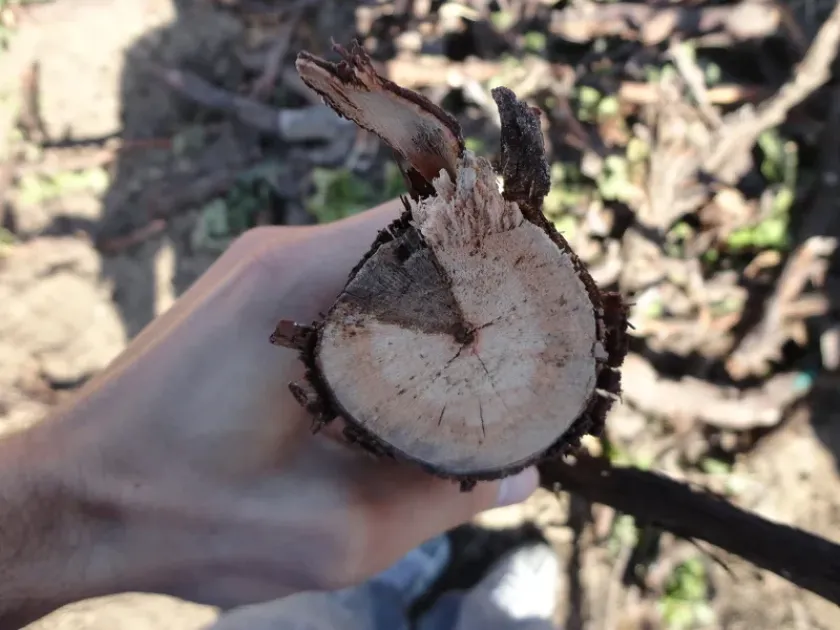
The main sign of infection is deep degradation of the wood, which becomes light-colored, spongy, and loses its mechanical strength. Inner parts of the trunk eventually become fragile.
On the surface of old wood or at pruning wound sites, fungal fruiting bodies may form. They appear as hard, woody, brownish growths with a porous hymenium layer.
In infected grapevines, specific leaf symptoms often appear, known as "tiger striping." The leaf blade develops chlorotic spots between the veins, which eventually turn necrotic.
Sudden vine collapse (apoplexy) is a critical symptom of advanced disease stages. The plant can perish within a single growing season, especially during hot and dry weather.
Cross-sections of arms or trunks, upon careful inspection, reveal a characteristic marbled appearance of the wood, alternating with zones of brown necrosis and white rot.
Pathogen
The causal agent of this disease is the wood-decaying fungus Fomitiporia mediterranea, which belongs to the class Agaricomycetes. This pathogen causes white rot of the wood and is a primary component of the grapevine trunk disease complex.
The fungus leads both a saprotrophic and parasitic life, infecting the xylem of perennial plants. It is capable of surviving for long periods in dead wood, spreading via spores carried by air currents.
The pathogen penetrates the plant mainly through fresh wounds caused by pruning or mechanical damage to the bark. The infection progresses slowly, gradually destroying the structural integrity of the wood fibers.
Unlike many other fungal species, Fomitiporia mediterranea exhibits high resistance to various climatic factors. Its biology is closely associated with the degradation of lignin and cellulose within the host's tissues.
This fungus is considered one of the most destructive agents leading to necrosis and structural decay of the trunk, causing irreversible changes in the vine's physiology.
Conditions for development
Fungal development is closely tied to temperature, with moderately warm conditions being optimal for mycelial growth. High humidity during pruning periods facilitates active spore germination.
Weather conditions are the main dispersal factor, as precipitation promotes the release of basidiospores from fruiting bodies. Wind carries these spores over long distances, infecting new vineyards.
Violation of agricultural practices, such as pruning during wet weather, significantly increases the risk of infection. Fresh wounds without protection remain open gateways for the pathogen.
The age of the vineyard plays a critical role: older vineyards with many accumulated wounds are more susceptible to colonization by this fungus than young nursery plants.
Lack of sanitary pruning and leaving infected wood in the field create a constant reservoir of infection, leading to the accumulation of spores within the agroecosystem.
Why it matters
The main danger lies in the irreversible destruction of the plant's vascular system. This disrupts the transport of water and nutrients, which gradually exhausts the entire organism.
The yield of infected plants declines rapidly. Berries may fail to ripen, lose quality, or drop, and the vine eventually loses its ability to bear fruit.
Fomitiporia mediterranea contributes to the shortening of the productive life of vineyards. Infected plantations often have to be uprooted earlier than planned.
Economic damage includes the cost of constant monitoring, the necessity of replacing dead vines, and the loss of high-quality commodity production.
Infection can lead to the complete death of the plant within a few years, making this disease one of the most destructive factors in modern viticulture.
Protection
Prevention is the main control method, as effective systemic treatments for deep wood decay are currently limited.
- Pruning during dry weather to reduce the risk of infection through fresh cuts.
- Thorough disinfection of tools between each vine, especially when signs of the disease are present.
- Immediate removal and burning of heavily infected plant parts to reduce the inoculum load.
- Isolation of pruning wounds using special grafting waxes or fungicidal pastes immediately after work.
- Planting only healthy, certified nursery material that is free from wood fungal infections.
It is important to manage the overall health of the plants, avoiding excessive nitrogen fertilization, which makes tissues more susceptible to pathogen penetration.
Regular monitoring of plantations for the appearance of fungal fruiting bodies allows for the early detection of disease hotspots and the implementation of containment measures.
Discussion
No discussions yet — be the first.