
Tinder fungus
Fomes fomentarius
Description
Symptoms
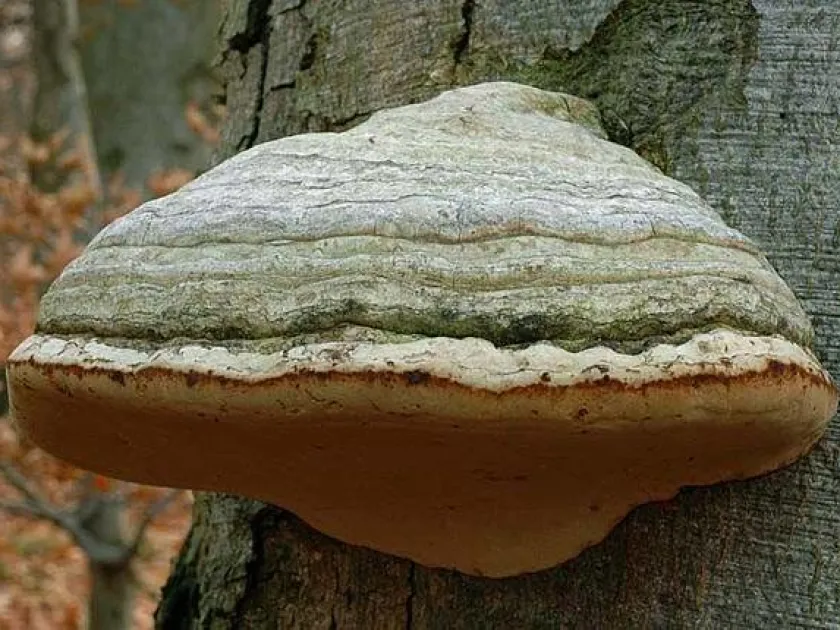
The most distinctive symptom is the presence of hard, woody, bracket-like fruiting bodies (conks) on the bark of infected trees. These conks are often gray or brown and display concentric growth rings.
Internally, the wood undergoes a transformation known as white rot. The infected wood loses its structural strength, becomes soft, and often exhibits thin black lines separating zones of decay.
Visible signs of decline include thinning of the canopy, premature leaf drop, and the death of individual branches. In advanced stages, the tree trunk may develop deep cracks or cavities.
The bark near the fungal growth may show signs of peeling or cracking. In some cases, the entire tree may appear stunted or unhealthy before the fruiting bodies become visible.
- Hard, hoof-shaped fruiting bodies on the trunk.
- White, fibrous, softened wood (white rot) inside.
- Canopy thinning and branch dieback.
- Deep fissures or cavities in the main stem.
Pathogen
The causal agent is the wood-decay fungus Fomes fomentarius, which belongs to the Basidiomycota phylum. It produces perennial, hoof-shaped fruiting bodies that grow on the trunks of deciduous trees.
The mycelium of this fungus penetrates deep into the wood, secreting enzymes that decompose lignin and cellulose. This process leads to the degradation of the tree's internal structure over several years.
The pathogen spreads through spores released from the underside of the fruiting bodies. These spores are wind-dispersed and infect trees primarily through wounds, frost cracks, or dead branches.
It acts as both a parasite and a saprotroph, meaning it can continue to feed on the wood even after the tree has died. This adaptability makes it a persistent threat in both forests and orchards.
The biological success of Fomes fomentarius is due to its ability to colonize large volumes of wood efficiently and tolerate varying environmental conditions.
Conditions for development
This fungus thrives in environments with high humidity and moderate temperatures. Shaded areas with poor air circulation are particularly susceptible to fungal colonization.
Mechanical injuries are the primary entry point for infection. Damage caused by heavy machinery, frost cracks, or improper pruning allows the fungal spores to establish contact with the inner wood.
Tree stress, whether from drought, nutrient deficiency, or insect damage, significantly increases susceptibility. A weakened tree lacks the defensive reserves to prevent mycelial spread.
The ideal temperature for active growth ranges between 18°C and 25°C. However, the fungus is highly resilient and can survive through cold winters, remaining latent until conditions improve.
Poor woodland or orchard management, characterized by the accumulation of woody debris and sick trees, promotes the spread of spores and increases the risk of infection for neighboring healthy trees.
Why it matters
The primary damage caused by Fomes fomentarius is the severe degradation of wood. This results in the loss of mechanical stability, making infected trees hazardous and prone to sudden collapse.
For forestry and arboriculture, this fungus causes significant economic losses by reducing the timber quality and shortening the lifespan of affected trees.
In orchards, the presence of this pathogen leads to reduced fruit production and eventual mortality of the infected plant. Once the core of the tree is colonized, recovery is impossible.
The progressive nature of the decay means that an infected tree will eventually become a liability. It poses a risk to surrounding infrastructure and human safety in parks or residential areas.
Furthermore, the fungus acts as a persistent reservoir of inoculum. By remaining in dead wood, it ensures the continued presence of the disease in the ecosystem.
Protection
Effective control starts with sanitation: removing and destroying infected trees and pruning branches showing signs of fruiting bodies to limit spore spread.
Proper wound management is essential. All pruning cuts should be kept clean and treated with antifungal agents or specialized tree wound dressings to prevent pathogen entry.
Maintaining tree vigor through proper irrigation and nutrient management is a key preventative strategy. A healthy, robust tree is better equipped to compartmentalize wounds and resist fungal invasion.
Regular inspections of tree trunks are crucial for early detection. Finding and removing early-stage fruiting bodies can sometimes extend the life of the tree significantly.
In woodland settings, avoiding mechanical injury to the stems of standing trees is a critical prophylactic measure. Protecting the bark is the best defense against infection.
Discussion
No discussions yet — be the first.