
Flammulina velutipes
Flammulina velutipes
Description
Symptoms
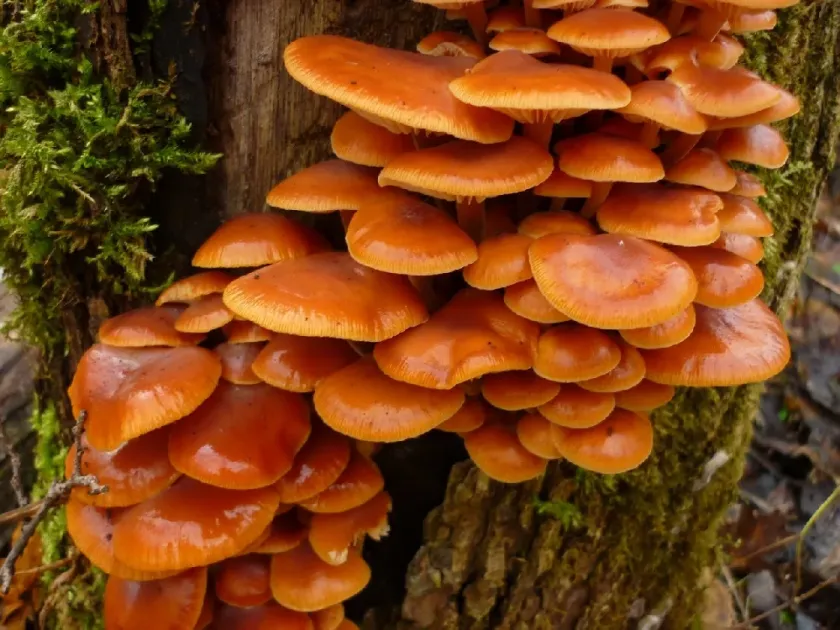
The most prominent sign of an advanced infection is the appearance of clusters of yellow-orange mushrooms (fruiting bodies) emerging from the bark or cracks in the trunk. This indicates that the internal decay is already well-established.
The wood affected by the fungus displays signs of white rot. The internal structure becomes soft, spongy, and brittle, often causing the tree to lose its natural mechanical strength.
External symptoms in the tree include reduced vigor, premature yellowing of leaves, leaf drop, and the drying out of major branches. In severe cases, the bark may peel or crack at the site of fungal growth.
Inside the wood, one can often observe dark, narrow lines known as zone lines, which delineate the regions where the fungus has colonized the timber.
Trees infected for a long time are at high risk of structural failure, potentially collapsing during windstorms because the heartwood is no longer able to support the weight of the canopy.
Pathogen
Flammulina velutipes, commonly known as the velvet shank, is a saprotrophic and facultatively parasitic fungus. In forestry and horticulture, it is recognized as a significant wood-decay pathogen that targets weakened or injured deciduous trees.
The fungus enters the tree through wounds, frost cracks, pruning cuts, or broken branches. Once established, the mycelium penetrates deep into the sapwood and heartwood, utilizing cellulose and lignin as primary food sources.
The lifecycle involves a slow, persistent colonization of the host's woody tissue. As it feeds, the fungus disrupts the tree's internal transport mechanisms, gradually compromising its structural integrity and physiological health.
Flammulina velutipes is notable for its exceptional cold tolerance. Unlike many other wood-decay fungi, it remains metabolically active at low temperatures, allowing it to continue wood degradation during the autumn and winter months.
This fungus is found worldwide, affecting a wide variety of tree species including willow, poplar, elm, and various fruit trees like apple and pear, especially when the host is under environmental stress.
Conditions for development
Development is heavily dependent on high humidity and the availability of exposed wood. The fungus thrives in damp, shaded environments with poor air circulation.
Fruiting bodies typically appear during the cool season, with optimal development occurring between 5 and 15 degrees Celsius. This allows the fungus to disperse spores when other competitors are less active.
Spores are dispersed by wind, rain splashes, and insects. Once these spores land on an open wound, they germinate and begin the colonization process almost immediately.
Trees that are already weakened by drought, improper maintenance, or previous pest attacks are significantly more susceptible to successful infection by F. velutipes.
The presence of nearby decaying stumps or fallen woody debris acts as a constant reservoir for fungal spores, facilitating the spread of the infection throughout a garden or forest area.
Why it matters
The primary threat is the hidden nature of the decay. By the time the fruiting bodies are visible, the tree may have already suffered extensive internal damage, making it a liability in any landscape.
For fruit orchards, the infection leads to reduced yields, lower fruit quality, and diminished overall growth. It limits the economic lifespan of the trees and reduces farm productivity.
The weakened state of the tree makes it highly vulnerable to secondary pathogens and wood-boring insects, which accelerates the decline and ensures the death of the host plant.
In addition to agricultural losses, the potential for sudden tree failure poses a safety risk to humans and property, necessitating expensive removal operations.
The fungus is a difficult-to-manage pathogen because it can survive in the soil and on dead roots for extended periods, making it hard to eradicate from a site once it has become established.
Protection
Effective management begins with good orchard hygiene. Maintaining tree vigor through proper watering, fertilization, and site maintenance is the best defense against fungal infection.
All pruning cuts and physical wounds should be treated immediately with appropriate wound dressings or sealants to prevent the entry of spores into the exposed sapwood.
Sanitation is critical. Dead trees, severely infected limbs, and rotting stumps must be removed and destroyed (preferably by burning or deep disposal) to eliminate the source of spores.
- Sterilize all pruning equipment between trees using a disinfectant solution.
- Regularly inspect the bark for cracks and treat any potential entry points for pathogens.
- Use copper-based fungicides on major pruning wounds to provide a protective barrier.
When a tree shows extensive fruiting body production, it is often past the point of recovery. In such cases, the tree should be removed entirely, including the root system, to protect surrounding healthy specimens.
Discussion
No discussions yet — be the first.