
Flammulina rot
Flammulina
Description
Symptoms
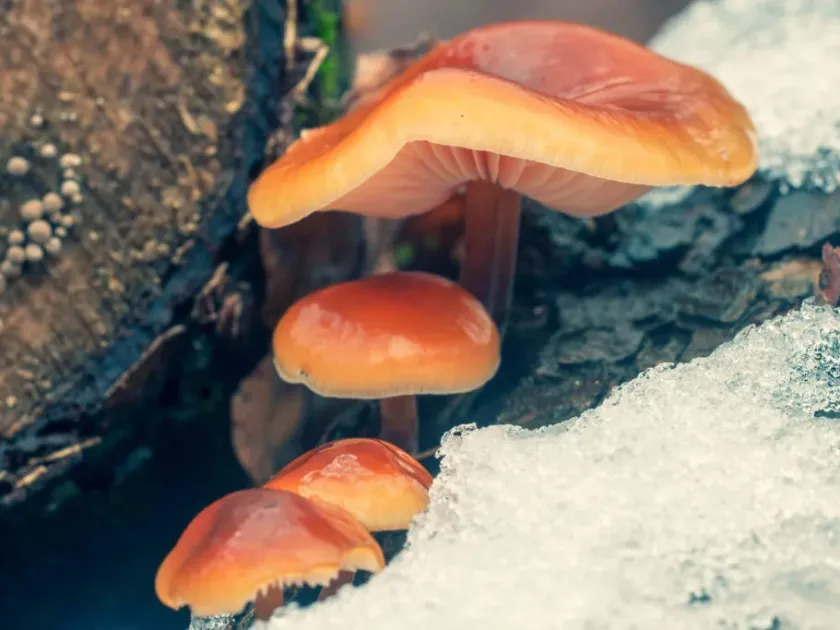
The primary visual sign is the emergence of dense clusters of orange-yellow mushrooms on the lower trunk, roots, or large branches of the affected tree.
Signs of systemic infection include leaf yellowing, early leaf drop, and the drying of individual branches. The bark often appears cracked, sunken, or peeling in the areas where the fungus is active.
When the bark is removed from an infected site, white fan-shaped mycelial mats can be observed on the wood surface. The wood itself becomes light-colored, soft, and brittle, losing its load-bearing capacity.
The formation of internal cavities or hollows in the trunk is a common sign of advanced rot, often resulting in structural instability and the risk of tree failure during storms.
A distinctive mushroom smell around the base of the tree and the presence of various wood-boring insects are secondary indicators that the tree's health is severely compromised.
Pathogen
The causative agent of this disease is the fungus Flammulina velutipes, commonly known as the velvet shank. It is a wood-decay fungus that acts both as a parasite on weakened trees and a saprotroph on dead wood.
The fungus penetrates the wood through wounds, pruning cuts, or frost cracks, colonizing the sapwood and heartwood. It breaks down the structural components of the wood, leading to white rot.
The fungal mycelium spreads throughout the tree, gradually weakening its internal structure. In winter, it produces orange-yellow fruiting bodies that release airborne spores, facilitating the infection of new hosts.
The pathogen is highly resistant to cold temperatures, which allows it to remain active during seasons when other fungi are dormant. It can persist in decaying stumps and logs for many years.
Spread is primarily achieved through spores carried by wind and rain, as well as through direct contact between healthy and infected tissues in dense stands or orchards.
Conditions for development
The main factor for infection is the presence of physical wounds or environmental damage, such as sunscald, frost cracks, or improper pruning wounds that do not heal correctly.
High humidity and moderate temperatures provide optimal conditions for spore germination and mycelial growth. Poorly ventilated areas with thick foliage are particularly susceptible to infection spread.
Trees that are weakened by soil nutrient deficiencies, drought stress, or competition with other plants are far less capable of mounting an effective defense against the fungal invasion.
Neglecting the removal of dead stumps or decaying wood within the garden creates a permanent source of inoculum, significantly increasing the risk to healthy trees in the vicinity.
Failure to disinfect pruning equipment when moving from tree to tree is another major factor that contributes to the transmission of fungal diseases within orchards and parklands.
Why it matters
The most dangerous consequence of Flammulina rot is the rapid structural degradation of the tree's wood, which makes the tree hazardous and prone to falling without warning.
The disease causes a significant decline in tree vigor, leading to reduced growth rates and poor fruit production. Over time, it destroys the tree's vascular system, leading to its death.
Infected trees serve as infection hubs for the entire local area. Spores produced by the fungus can infect other nearby trees, leading to a wider epidemic if not managed properly.
Economic damage is substantial, particularly in orchard management, where the loss of mature trees represents years of lost investment and productivity.
The aesthetic value of trees in public parks and residential landscapes is severely reduced, and the cost of removal is often very high due to safety concerns.
Protection
Proactive prevention is the best control strategy. This includes proper pruning techniques and immediate treatment of all wounds with professional-grade sealants or fungicides.
Sanitation is critical; all dead branches and infected wood must be pruned away and destroyed. Removing old stumps from the vicinity of healthy trees prevents the buildup of the fungus.
Improving tree vitality through balanced fertilization and adequate irrigation helps trees maintain their natural defenses against wood-decay pathogens.
If fungal fruiting bodies appear, the area should be surgically treated by removing the decay down to sound wood, followed by sterilization with appropriate fungicides.
- Use copper-based fungicides on cuts.
- Ensure tools are sterilized with alcohol between trees.
- Avoid damaging the bark during lawn maintenance.
- Regular inspections of tree trunks for cracks.
Discussion
No discussions yet — be the first.