
Flammulaster granulosus
Flammulaster granulosus
Description
Pathogen
Flammulaster granulosus is a basidiomycete fungus belonging to the Inocybaceae family. It primarily functions as a saprotroph, decomposing organic matter, but can colonize weakened living trees under specific environmental conditions.
The fungus develops a mycelial network that penetrates wood, utilizing enzymatic activity to break down complex polymers like cellulose and lignin. This process is essential in natural nutrient cycling but harmful to commercial forestry.
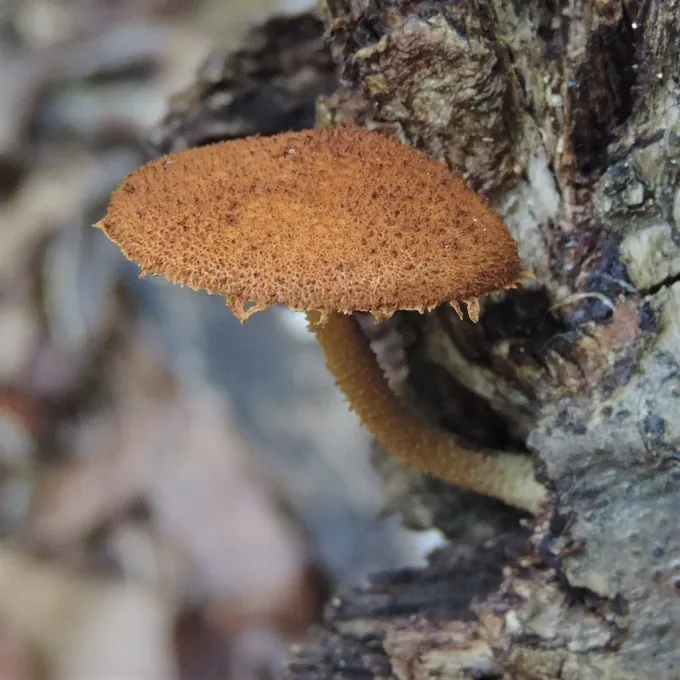
The fungus is characterized by the production of small, granular, brownish fruiting bodies. These mushrooms are the primary source of spore dispersal, allowing the pathogen to spread across wooded areas.
Unlike specialized agricultural pathogens, Flammulaster granulosus is an opportunistic colonizer. It thrives in neglected habitats where wood debris is abundant, using such areas as a base for expansion.
Its biological cycle is resilient, as the mycelium can remain dormant in woody tissue for extended periods, waiting for optimal humidity to initiate the growth of new sporocarps.
Conditions for development
High moisture levels are the primary driver for the development of Flammulaster granulosus. The fungus prefers environments where the wood surface remains damp for prolonged periods, typical in shaded or poorly ventilated areas.
Stagnant air and canopy congestion increase the relative humidity, creating an ideal microclimate for fungal proliferation. This is particularly noticeable in dense plantations or unmanaged woodlots.
Physical injuries to the bark caused by heavy machinery, wildlife, or severe weather create entry points. Once the internal wood is exposed, the fungus can penetrate the heartwood or sapwood.
The temperature range for optimal mycelial growth is typically between 15°C and 25°C. During the cooler seasons, the fungus slows its growth but remains present in the substrate, ready to reactivate when temperatures rise.
Soil quality indirectly affects susceptibility; trees stressed by drought, nutrient deficiencies, or soil compaction show reduced defense mechanisms, making them prone to colonization by opportunistic fungi.
Why it matters
The fungus causes structural timber decay, significantly reducing the density and mechanical strength of the wood. This poses a safety risk, as trees may develop limb breakage or trunk failure.
The systemic spread of the mycelium disrupts the tree's vascular system, hindering the transport of water and nutrients to the crown. This results in reduced vigor, foliage loss, and eventual decline.
Infested trees often become attractive targets for secondary wood-boring pests, such as bark beetles. These pests exacerbate the physical damage, leading to the rapid death of the host plant.
In nursery settings, the presence of this fungus can lead to inventory losses, as affected saplings are unsuitable for sale or long-term transplanting. The loss of marketability is a significant economic concern.
The presence of rot also decreases the value of the timber for further industrial applications. Decayed wood is brittle and unsuitable for high-quality construction or carpentry work.
Protection
Sanitation is the most effective defense strategy. This involves the removal of deadwood, fallen branches, and decaying stumps from the immediate vicinity of healthy trees to eliminate the inoculum source.
Regular pruning of affected branches, followed by the application of protective wound dressings, prevents the fungus from gaining a foothold in the internal tissues of the tree.
Improving the site conditions, such as thinning crowded stands to promote air circulation, reduces the humidity levels that the fungus requires for active colonization.
Protective fungicides can be applied to the bark of valuable trees to create a chemical barrier against spore germination during high-risk seasons.
- Disinfect pruning tools between trees to prevent cross-contamination.
- Maintain tree health through balanced fertilization and adequate hydration.
- Conduct annual inspections to detect early signs of fungal fruiting bodies.
- Remove and destroy severely infested woody material by burning or burying it.
Discussion
No discussions yet — be the first.