
Description
Symptoms
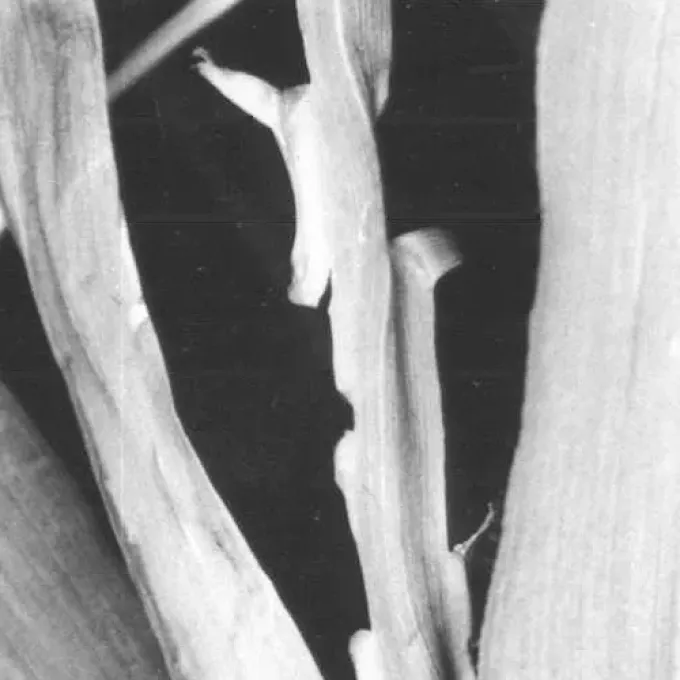
The most distinctive symptom is the appearance of small, elongated galls on the underside of leaves and along the leaf veins, which are indicative of abnormal tissue growth.
Infected plants exhibit severe stunting with significantly shortened internodes, giving them a distinct bushy or grass-like appearance compared to healthy crops.
The leaves often turn a dark, dull green and become stiff or brittle. In advanced stages, the terminal bud may die, leading to the proliferation of secondary, malformed shoots.
Stems become distorted and bent, and the plant fails to reach its normal maturity height. This structural damage prevents the proper development of the entire plant.
A "fan-like" leaf arrangement is commonly observed, where the apical leaves grow in a bundled, abnormal fashion due to the stress exerted by the viral infection.
Pathogen
Fiji disease is caused by the Fiji disease virus (FDV), a member of the Reoviridae family. It is a double-stranded RNA virus that specifically targets grasses.
The virus is transmitted by planthoppers of the genus Perkinsiella. These insects acquire the virus by feeding on infected plants and remain infectious for their entire lifespan.
Once inside the plant, the virus multiplies within the phloem tissues, effectively blocking the translocation of nutrients and causing systemic physiological collapse.
Primary dissemination occurs through the transport of infected plant material, specifically cane cuttings, which allows the virus to move across geographic regions.
Sorghum and several species of wild grasses act as alternative hosts, maintaining the virus in the environment even when sugarcane is not actively growing.
Conditions for development
The spread of Fiji disease is closely linked to the lifecycle and migration patterns of Perkinsiella planthoppers, which thrive in warm, humid conditions.
Risk increases significantly when planting new fields near older, infected plantations, as planthoppers can easily migrate and transmit the virus to healthy seedlings.
Failure to maintain crop rotation or allowing infected crop debris to remain in the soil provides a persistent reservoir for the virus and insect vectors.
High planting density can facilitate the rapid movement of planthoppers from plant to plant, accelerating the onset of a field-wide epidemic.
Environmental stress, such as water deficit or poor soil nutrition, compromises the plant's resistance, making it more vulnerable to successful viral inoculation.
Why it matters
The disease causes substantial economic losses by reducing both the biomass and quality of the harvest. Yield reductions can be catastrophic in susceptible varieties.
In sugarcane production, Fiji disease drastically lowers sucrose content, making the harvest unsuitable for standard sugar extraction processes.
Sorghum crops suffer from stunted growth and reduced grain production, impacting both food security and animal feed availability.
Because the disease is systemic and persistent, infected plants cannot be cured, necessitating the destruction of entire blocks of crops to stop spread.
The cost of managing Fiji disease involves not only the loss of crop value but also significant expenditures for nursery hygiene and pest control programs.
Protection
The primary control strategy is the use of certified, disease-free planting material derived from tissue culture and meristem-tip propagation techniques.
Monitoring planthopper populations is essential. Applying insecticides during peak activity periods can reduce the rate of viral transmission within a field.
Rogueing, or the systematic removal and destruction of symptomatic plants early in the season, is crucial for limiting the spread of the virus to healthy individuals.
- Planting resistant or tolerant cultivars as the first line of defense.
- Enforcing strict quarantine measures for the transport of plant materials.
- Managing weed hosts and eliminating crop residues after harvesting.
Field hygiene, combined with long-term agricultural planning and strict phytosanitary surveillance, remains the only reliable method for long-term Fiji disease management.
Pathogens and affected parts
Affects crops · 1
Discussion
No discussions yet — be the first.