
Carbon fungus
Faerberia carbonaria
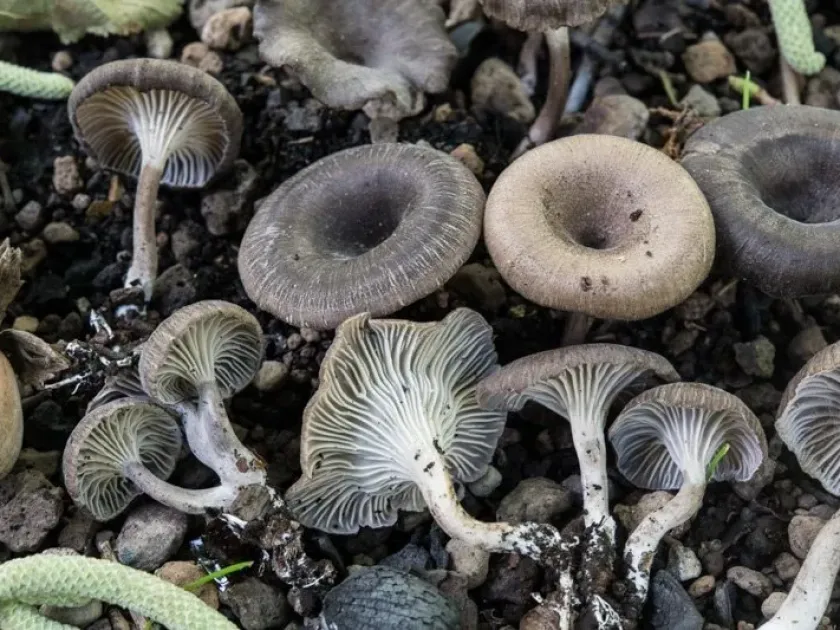
Description
Symptoms
The most visible symptom of an infection is the development of a dense, coal-black soot-like layer on affected plant tissues. This layer consists of masses of fungal spores that accumulate on stems, leaves, or roots.
Affected tissues typically lose their turgor and become soft or mushy. The enzymatic degradation process leads to a distinct discoloration, turning the plant tissue dark brown or black, resembling charred material.
Initial infection often manifests as small, irregular dark spots on the plant surface. As the infection progresses, these spots coalesce into larger patches, eventually covering entire sections of the stem or foliage.
Plants suffering from the pathogen display progressive wilting. Since the fungus disrupts the transport of water and nutrients, the plant loses its ability to sustain its growth, leading to premature leaf drop and stunting.
A diagnostic sign during active growth is a mild, earthy, or musty fungal smell. Microscopic examination of the affected tissue reveals the dense network of hyphae permeating the host's intercellular spaces.
Pathogen
The disease is caused by the fungus Faerberia carbonaria, a member of the Basidiomycota phylum. While primarily known as a saprotroph, it can exhibit pathogenic characteristics under high-stress conditions for the host plant.
The fungus is characterized by its specific basidiocarps, which frequently develop on decaying plant matter. These structures release spores that travel through air currents to colonize nearby vegetation when conditions are suitable.
The mycelium of this fungus is remarkably persistent, allowing it to survive in soil and organic debris for extended periods. This survival mechanism ensures that the pathogen remains present in the environment even after the growing season ends.
Biochemically, the fungus employs a complex system of extracellular enzymes to break down cellulose and lignin. This process weakens the structural integrity of the host plant, facilitating deeper invasion by the fungal hyphae.
In modern agricultural science, the presence of Faerberia carbonaria is often interpreted as an indication of excessive moisture accumulation and poor sanitary conditions in the field or greenhouse environment.
Conditions for development
High relative humidity and stagnant air are the primary catalysts for Faerberia carbonaria development. The pathogen thrives in environments where moisture remains trapped on plant surfaces for long periods.
Moderate temperatures ranging between 15°C and 22°C provide the optimal conditions for spore germination and mycelial growth. Fluctuating temperatures leading to heavy morning dew often trigger outbreaks.
Densely planted areas with poor ventilation are highly susceptible to the disease. Without sufficient airflow, moisture levels within the canopy remain high, creating an ideal incubation chamber for the fungus.
Accumulation of dead organic matter on the soil surface serves as a primary source of inoculum. This organic debris provides the necessary nutrients for the fungus to establish itself before spreading to living tissues.
Inadequate light exposure can also contribute to the disease by weakening the plant's natural physiological resistance. Etiolated plants have softer cell walls, which are more easily penetrated by the fungal hyphae.
Why it matters
The primary damage caused by Faerberia carbonaria is a significant reduction in overall plant vigor and biomass. The energy expended by the plant to combat the infection leads to lower yields.
Severe infestations can result in the rapid death of plant organs, particularly in crops with succulent stems. This leads to substantial economic losses, especially if the marketable parts of the plant are compromised.
The fungus acts as a gateway for secondary infections. By weakening the plant’s epidermal barriers, it facilitates the entry of opportunistic bacteria, which can accelerate the total decay of the plant material.
In addition to direct losses, the quality of stored produce is heavily affected. Fruits or vegetables harvested from infected plants are prone to post-harvest decay, significantly shortening their shelf life.
Economic losses also accumulate due to the cost of intensive control measures, including the application of fungicides and the need for extra labor to remove infected plant parts and sanitize the area.
Protection
Effective management begins with proper cultural practices, such as maintaining optimal planting density to promote air circulation. Avoiding overcrowding is the most effective preventative measure against fungal outbreaks.
Sanitation is critical; all dead plant matter should be removed from the field or greenhouse at the end of every cycle. Keeping the area free of debris removes the overwintering sites for the pathogen.
When necessary, targeted fungicide applications can be used to suppress fungal growth. It is essential to rotate different classes of chemicals to prevent the development of resistant fungal strains.
Regulating irrigation is crucial. Drip irrigation, which avoids wetting the leaves and stems, significantly reduces the risk of infection. Watering should be done in the morning to allow for rapid drying during the day.
Promoting overall plant health through balanced nutrition and the use of biostimulants improves the plant's resistance. A robust immune system allows the plant to naturally limit the expansion of the fungal colony.
Discussion
No discussions yet — be the first.