
Amber jelly roll
Exidia saccharina
Description
Symptoms
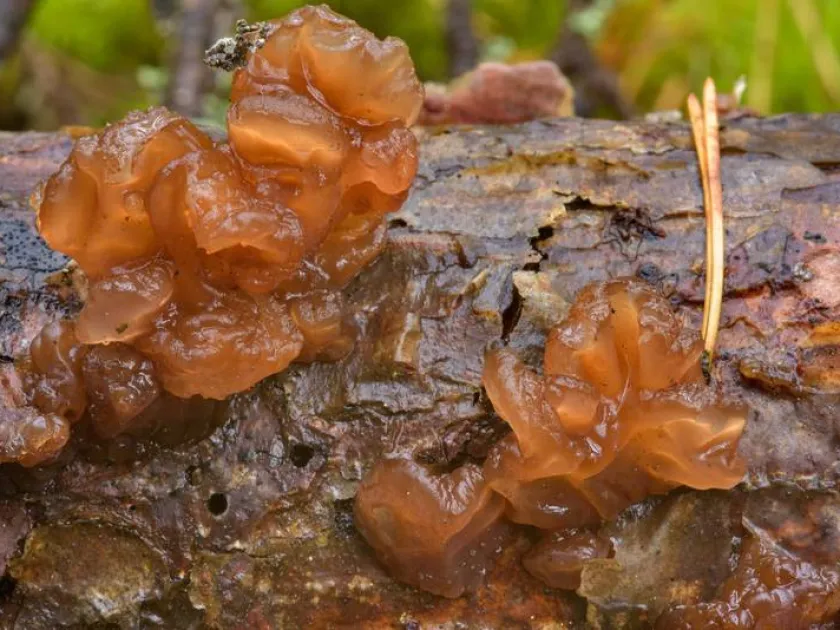
The most visible symptom is the formation of gelatinous, brain-like fruiting bodies on the surface of bark or wood. These structures are typically amber, reddish-brown, or dark brown.
When moist, the fruiting bodies appear shiny and jelly-like, often looking like globs of resin or sugar, which is why the species is colloquially named the amber jelly roll.
Under dry conditions, these fruiting bodies shrink significantly. They turn into hard, dark, or nearly black crusts that may blend into the texture of the host tree's bark.
Evidence of wood decay is often present beneath these colonies, where the wood tissue becomes softened, discolored, and structurally compromised due to enzymatic degradation.
The presence of these structures is most common around old wounds, broken branches, or on stumps where the moisture content is sufficient to support fungal growth.
Pathogen
The causative agent is the fungus Exidia saccharina, a member of the Auriculariaceae family. It is a wood-rotting fungus that primarily acts as a saprotroph on dead or decaying coniferous wood.
The fungus develops a network of mycelium that penetrates the woody tissue. It secretes enzymes that break down cellulose and lignin, effectively recycling dead organic matter in forest ecosystems.
Its life cycle involves the production of spores that are dispersed by wind and splashing rain, allowing the fungus to find new substrates for colonizing and nutrient absorption.
It is well-adapted to surviving fluctuating environmental conditions, thanks to its ability to transition between active growth and a resistant dormant state.
Biological studies show that the fungus is particularly specialized in utilizing the resinous and woody residues typical of pine and spruce environments.
Conditions for development
The development of Exidia saccharina is heavily dependent on moisture. It thrives during periods of frequent rainfall, high humidity, and overcast skies that prevent the wood from drying out.
Cooler temperatures are generally preferred, making spring and autumn the seasons of maximum fruiting body activity and spore dissemination.
The fungus requires a suitable host substrate, which includes dead wood, stumps, or branches of coniferous species. Accumulated logging slash creates a perfect breeding ground.
Poorly ventilated forest stands or shaded areas with high humidity provide the microclimate necessary for the fungus to establish and spread effectively.
Mechanical injuries to healthy trees can also provide an entry point if the tree is already stressed or if the wound remains chronically damp.
Why it matters
The primary harm caused by this fungus is the acceleration of wood decomposition. While it performs a natural role as a decomposer, it reduces the economic value of timber.
The fungus can degrade the structural integrity of wood, making it brittle and friable. This reduces the suitability of the wood for construction or industrial manufacturing purposes.
In residential or park landscapes, the presence of these fungi on trees indicates significant structural weakness or decline, posing potential safety hazards from falling branches.
It serves as a indicator species that the surrounding wood is decaying, which might invite other, more aggressive pathogens that can harm living tree tissues.
Large-scale presence in forest stands signifies an accumulation of deadwood that may need to be managed to prevent the overall infection pressure from rising.
Protection
The best control method is proactive forest sanitation. Removing deadwood, windfalls, and logging residues helps eliminate the substrate required for the fungus to thrive.
Proper pruning techniques are essential to ensure that tree wounds heal quickly. Treating large wounds on ornamental trees with appropriate sealants can prevent fungal entry.
Improving stand aeration through strategic thinning can lower local humidity levels, making the environment less hospitable to the development of fungal fruiting bodies.
Infected wood should be removed and disposed of correctly, preferably away from healthy forest zones, to reduce the concentration of spores in the air.
While chemical fungicides are rarely used in large-scale forestry, they might be considered for high-value ornamental trees where early signs of fungal decay are detected.
Discussion
No discussions yet — be the first.