
Euantennariaceae
Euantennariaceae
Description
Symptoms
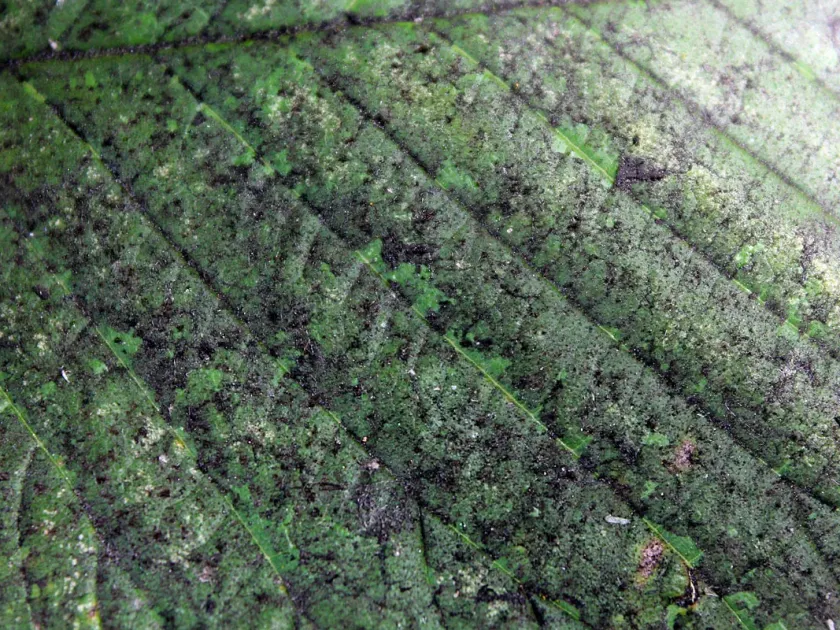
The primary symptom is the appearance of a dark, soot-like or dusty coating on leaves, shoots, and sometimes fruits, which can be rubbed off by hand.
Initially, the mold appears as isolated dark spots, but under favorable conditions, these colonies merge to cover entire leaves and stems in a thick black layer.
The presence of this mold blocks light and stomata, preventing normal photosynthetic activity and resulting in a loss of plant vitality and aesthetic value.
Affected leaves may turn yellow, curl, or drop prematurely, indicating serious physiological stress caused by the fungal layer on the leaf surface.
Visual identification often reveals the presence of honeydew-producing insects on the undersides of leaves, which serves as a crucial diagnostic indicator.
Pathogen
Euantennariaceae is a family of fungi that are well-known in plant pathology as agents of sooty mold, which grow epiphytically on the surface of plants.
These fungi do not penetrate internal plant tissues but thrive on the surface, utilizing the honeydew secreted by sucking insects as their primary nutrient source.
Common associated pests, which facilitate the colonization of these fungi, include aphids, scale insects, whiteflies, and psyllids that excrete sugary honeydew.
The mycelium of Euantennariaceae is typically dark olive, brown, or black, creating the characteristic "sooty" visual appearance on leaves and stems.
Dissemination of the pathogen occurs primarily through wind, rain splashes, or insects that carry spores from infected host plants to healthy tissue.
Conditions for development
High humidity and warm temperatures are the most critical environmental factors that promote the growth and rapid spread of Euantennariaceae on plants.
The presence of honeydew is an essential prerequisite; without the sugar-rich excretions from aphids or scale insects, the fungus cannot establish itself.
Poor aeration in dense plantings or greenhouse environments creates a stagnant microclimate that accelerates the development of fungal colonies.
Prolonged rainy periods facilitate the distribution of spores across the canopy, allowing the infection to cover large areas of the plantation quickly.
Lack of monitoring for pest outbreaks at early stages allows the population of sucking insects to build up, inevitably leading to a sooty mold outbreak.
Why it matters
The main harm caused by sooty mold is the suppression of photosynthesis, leading to reduced plant growth and lower yields in both agricultural and horticultural crops.
Infested produce loses marketability due to the unsightly dark coating, which requires extra labor and cost to clean before it can be sold to consumers.
Plants covered in mold become weakened and more susceptible to secondary pathogens and environmental stress, leading to overall health deterioration.
In nurseries, severe infestation can damage the aesthetic quality of ornamental plants, making them unsuitable for sale and leading to significant economic loss.
Persistent coverage of the plant surface hinders natural defense mechanisms, making the plant more vulnerable to further attacks by pests and diseases.
Protection
The most effective strategy to prevent Euantennariaceae is the systematic control of honeydew-producing insects using targeted insecticides.
Implementing good agricultural practices, such as proper pruning and thinning of tree canopies, improves airflow and reduces humidity, preventing mold establishment.
Copper-based fungicides can be used to treat existing mold and inhibit the growth of new mycelium on the surface of plant parts during the growing season.
Maintaining spatial isolation between plant blocks and monitoring for early pest signs significantly limits the spread of the infection within the field.
- Mechanical washing of foliage with mild soap solutions for smaller gardens.
- Regular monitoring for aphids, scales, and whiteflies to stop the honeydew source.
- Sanitary pruning of branches heavily coated with fungal growth to stop spread.
Discussion
No discussions yet — be the first.