
Erythricium spot
Erythricium laetum
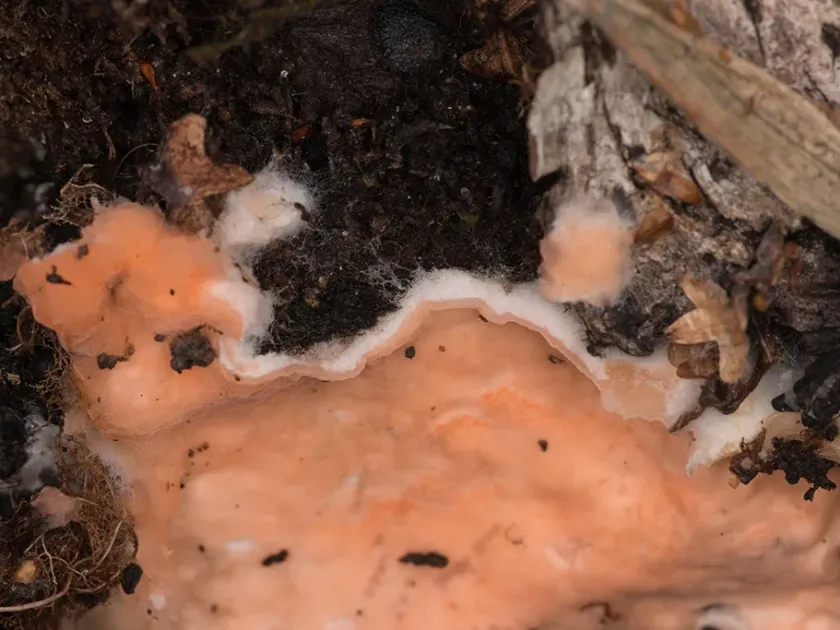
Description
Symptoms
The primary symptom of Erythricium spot is the development of irregular necrotic lesions on the leaves, which often display distinct pinkish or reddish-brown coloration. These spots are indicative of the metabolic activities of the fungus within the plant tissue.
Over time, the affected areas become dry, brittle, and take on a grayish-brown hue. A characteristic chlorotic halo often surrounds the necrotic spots, indicating the movement of pathogen-derived toxins into the adjacent healthy tissue.
In conditions of high humidity, a thin, web-like fungal growth may appear on the surface of the lesions. This growth is typically pinkish or whitish and represents the mycelium of the pathogen as it emerges from the host plant.
As the infection progresses, individual spots tend to coalesce, leading to extensive tissue death. This causes premature leaf senescence and shedding, which severely compromises the plant's structural and physiological integrity.
Diagnosis requires careful observation, as the symptoms can sometimes be confused with other common fungal leaf spots. Laboratory verification is recommended to confirm the presence of Erythricium laetum in uncertain cases.
Pathogen
The disease is caused by the fungus Erythricium laetum, a member of the Basidiomycota phylum. This pathogen is specialized in invading plant tissues through the enzymatic breakdown of the host cell wall structure.
The life cycle involves the production of spores that are easily disseminated by wind and splashing water. These spores serve as the primary inoculum for new infections in both agricultural and wild plant populations.
The pathogen can persist in crop residues and soil, allowing it to survive adverse conditions until a new host becomes available. This ability to overwinter makes it a persistent challenge in areas with continuous cultivation.
Erythricium laetum relies on high moisture environments for successful colonization. Its growth is optimized by the interplay of temperature and surface humidity, which facilitates spore germination and mycelial spread.
The host range is relatively broad, affecting a variety of plants. It thrives particularly well on crops that are planted at high densities, which allows the fungus to exploit the microclimate within the canopy.
Conditions for development
The onset and severity of Erythricium spot are heavily dependent on environmental conditions, particularly periods of extended rainfall and high atmospheric humidity. These conditions are critical for the pathogen to successfully infect its host.
Poor airflow, often resulting from excessively dense planting, creates a favorable microclimate for the disease. If foliage remains wet for extended periods due to dew or rain, the pathogen can spread rapidly through the plant stand.
Mechanical injuries, whether caused by agricultural machinery or insect herbivory, create entry points for the fungus. Plants with damaged protective layers are significantly more susceptible to successful infection compared to healthy ones.
Nitrogen-rich fertilization can lead to a lush, succulent growth that is physically more vulnerable to attack. Maintaining a balanced nutrient regime is essential for producing tougher, more resistant plant tissue.
An optimal temperature range of 18°C to 25°C fosters the most aggressive phase of the disease cycle. Fluctuations outside of these conditions may slow down the disease, but will not eliminate the pathogen from the environment.
Why it matters
The economic impact of the disease is largely due to the reduction of photosynthetic area. The loss of functional leaf surface directly limits the plant's ability to produce energy, which negatively affects total biomass and yield.
Affected plants often show stunted growth and a general decline in vigor. This loss of vitality reduces the crop's competitiveness and overall quality, making it less suitable for market requirements.
Early leaf drop, caused by severe infection, stresses the plant and leaves it susceptible to secondary stressors, such as drought or frost damage. This can lead to long-term decline in perennial plant health.
In addition to yield loss, the infection can necessitate increased inputs for fungicides and labor, which directly impact the profit margins of agricultural operations.
The disease complicates the management of susceptible crops, often requiring producers to prioritize resistant varieties and stringent preventative measures to avoid significant financial losses.
Protection
Integrated pest management starts with crop rotation, which is the most effective way to break the disease cycle. Rotating away from susceptible hosts for several years starves the pathogen of its required substrate.
Post-harvest sanitation, including the thorough removal and destruction of infected plant debris, is vital. Minimizing the amount of inoculum remaining in the field significantly lowers the risk of re-infection the following season.
Balanced fertilization, particularly adequate potassium and phosphorus levels, helps maintain structural integrity and boosts the plant's natural immune response to fungal pathogens.
When environmental conditions favor disease, the application of systemic fungicides can be highly effective. These should be applied preventatively or at the first sign of symptoms, following all label recommendations.
Pruning, thinning, and proper weed control improve air circulation, allowing the foliage to dry more quickly after rain or irrigation. This simple physical modification of the microclimate is a powerful tool against Erythricium spot.
Discussion
No discussions yet — be the first.