
Erythriciosis
Erythricium
Description
Symptoms
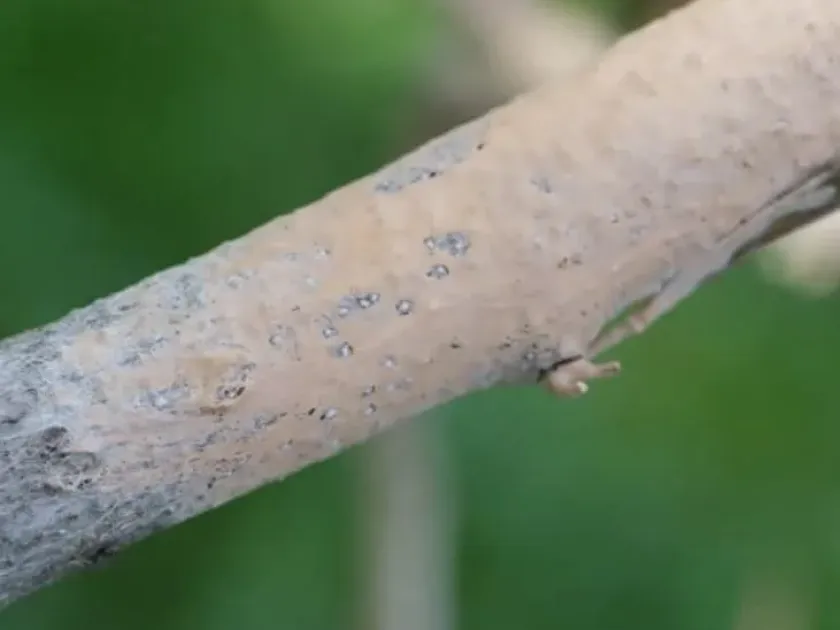
The primary visual symptom is the emergence of a pink or salmon-colored film on branches or stems, which gives the infection its common name: pink disease.
As the infection progresses, the bark underneath the mycelial mat becomes necrotic, often splitting and creating deep, longitudinal cracks or ulcers in the wood.
Affected branches begin to show signs of wilt, as the fungal growth blocks the flow of moisture, leading to leaf chlorosis and eventual premature leaf drop.
Severe infestations result in the progressive dieback of the crown, as the structural integrity of the branches is compromised, eventually leading to tree death.
During humid weather, small pustules containing masses of fungal spores appear on the infected areas, indicating active sporulation and the high risk of further spread.
Pathogen
The disease is caused by fungi belonging to the Erythricium genus, most notably Erythricium salmonicolor, which is a known basidiomycete pathogen affecting woody plants.
The pathogen is characterized by the formation of distinctive mycelial mats or films on the surface of the bark, which can manifest as pale pink or orange-salmon colored patches.
As a specialized parasite, it utilizes enzymatic degradation to penetrate the plant's outer tissues, reaching the cambium and xylem where it disrupts vital water and nutrient transport.
Reproduction is facilitated through the production of basidiospores and conidia, which are efficiently dispersed by splashing rain and air currents, allowing for rapid colonization of healthy tissues.
The fungus is highly resilient and capable of overwintering as dormant mycelium within the bark fissures, ensuring its survival until favorable growth conditions return.
Conditions for development
Erythriciosis development is heavily dependent on high humidity and rainfall, which provide the necessary moisture for spores to germinate and colonize the bark.
Poorly ventilated planting sites and overly dense canopy structures create an ideal microclimate, trapping moisture and allowing the fungus to thrive undisturbed.
Mechanical injuries, such as pruning wounds, storm damage, or pest-induced entry points, provide easy access for the pathogen to invade the inner layers of the tree.
Plants under physiological stress, often due to improper nutrition or poor soil aeration, exhibit a higher susceptibility to successful fungal colonization.
Extended periods of moderate temperatures paired with frequent rain events are the most dangerous conditions for the initiation and spread of the infection in orchards.
Why it matters
The disease causes significant damage to perennial woody crops by interfering with systemic sap flow, which severely weakens the plant's metabolic processes.
Economic losses arise from the necessity of extensive pruning or the complete removal of infected trees, significantly impacting the productivity of the orchard.
The loss of major scaffold branches affects the canopy structure, reducing the overall fruit-bearing surface and the tree's long-term health and vitality.
In regions with high rainfall, the disease can reach epidemic proportions, threatening not just individual plants but entire plantations if left unmanaged.
Compromised branches are more prone to secondary wood rot and breakage during inclement weather, exacerbating the physical damage caused by the pathogen.
Protection
The most effective strategy is rigorous sanitation, involving the timely pruning and destruction of infected branches to remove the source of inoculum.
Improving airflow through selective thinning of the canopy helps reduce localized moisture levels, thereby inhibiting the fungus's ability to establish itself.
Applying copper-based fungicidal sprays during dormant seasons is a standard preventative measure to protect bark surfaces from new spore infections.
Good agricultural practices, including balanced fertilization and immediate treatment of any mechanical wounds, are essential to maintain strong plant immunity.
Systemic fungicides may be employed in high-pressure scenarios, provided that the application is integrated with cultural controls to ensure long-term disease suppression.
Discussion
No discussions yet — be the first.