
Powdery mildew of pea
Erysiphe pisi
Description
Symptoms
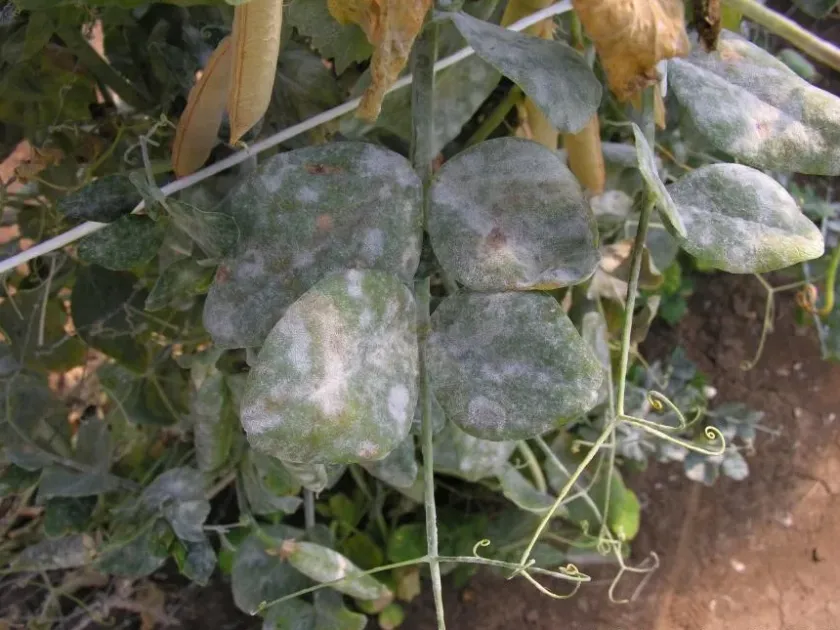
Powdery mildew of pea is characterized by the appearance of a white, powdery fungus growth on leaves, stems, and pods.
In the early stages, the infection appears as small, irregular white spots that gradually spread to cover the entire plant surface.
As the disease progresses, infected leaves turn yellow, then brown, and eventually wither and die due to tissue necrosis.
Small, black, spherical structures called cleistothecia often appear within the white fungal mat during the later stages of the infection.
The premature death of leaves and stems significantly stunts the development of the pods and weakens the plant's overall structure.
Pathogen
The causative agent of this disease is the obligate parasitic fungus Erysiphe pisi, which belongs to the Erysiphaceae family.
The fungus absorbs nutrients from the host plant by inserting specialized feeding structures known as haustoria into the plant epidermal cells.
It overwinters primarily in the form of cleistothecia on infected crop debris or in the soil, surviving until the next season.
Secondary spread occurs through the production of conidia, which are easily disseminated by wind currents throughout the pea fields.
The pathogen is highly host-specific, primarily infecting pea crops and some other related legume species.
Conditions for development
The development of powdery mildew is strongly favored by warm, dry weather conditions followed by high humidity at night.
Dew formation on the leaf surface provides the necessary moisture for the rapid germination of conidia and successful plant infection.
Dense planting patterns reduce air circulation within the canopy, creating a humid microclimate that accelerates fungal growth.
Plants subjected to nutrient imbalances, such as excessive nitrogen levels, are often more susceptible to colonization by the pathogen.
The continuous cultivation of peas in the same area without proper rotation increases the primary inoculum load in the field.
Why it matters
The primary damage is caused by the reduction of the photosynthetic leaf area, which limits the energy available for seed development.
Pods infected by the fungus often fail to fill properly, resulting in shriveled, lightweight, and low-quality seeds.
Premature senescence of the vines leads to a shortened grain-filling period, drastically lowering the total seed yield.
In cases of severe outbreaks, yield losses can range significantly, sometimes exceeding 30 to 50 percent of the potential harvest.
The quality of harvested peas is often compromised, making them less suitable for human consumption or processing markets.
Protection
Practicing long-term crop rotation is essential, ensuring a gap of several years between planting legumes in the same field.
The use of resistant or tolerant pea varieties is the most sustainable and cost-effective strategy to mitigate the impact of the disease.
Effective management of crop residues through tillage helps reduce the initial inoculum level by burying the fungal structures.
Fungicide applications are recommended at the first sign of infection to protect the crop during its most vulnerable growth stages.
Maintaining balanced soil fertility, particularly adequate potassium levels, helps improve the natural defense mechanisms of the plants.
Discussion
No discussions yet — be the first.