
Powdery mildew of honeysuckle
Erysiphe lonicerae
Description
Symptoms
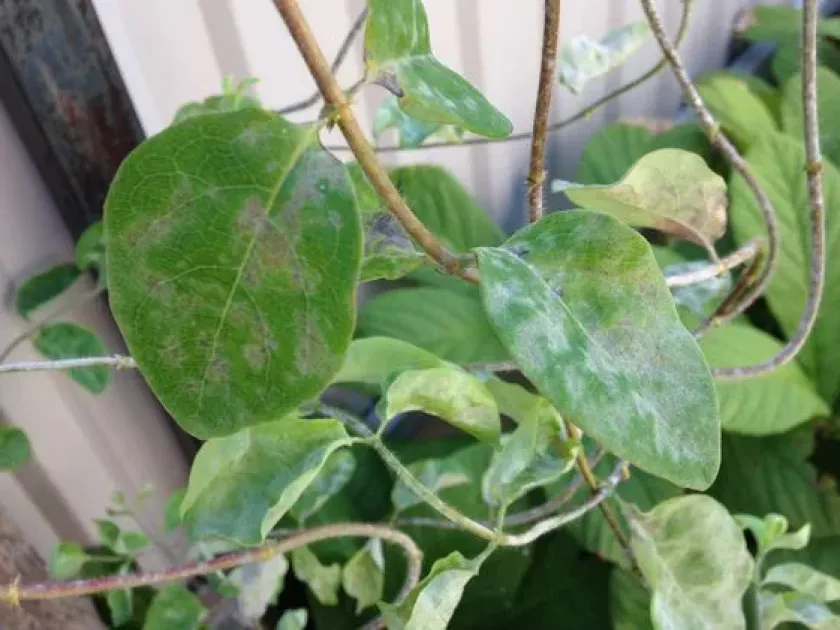
The most recognizable symptom is the appearance of a dusty, white powdery coating on the surface of leaves. Initially, this manifests as isolated spots that eventually coalesce, covering entire leaf surfaces in a felt-like mycelial layer.
As the infection progresses, leaves may become distorted, curled, or chlorotic (yellowed). Severe infestations lead to premature leaf drop, which weakens the plant by reducing the photosynthetic surface area available for energy production.
Young, growing shoots are particularly susceptible and often display signs of stunting or curling due to the presence of the fungus. The mycelial cover can restrict normal stem elongation and overall development.
The fruit can also be affected, developing a grayish-white coating that ruins their appearance and texture. Heavily infected berries often become unpalatable, dry up, or rot prematurely on the bush.
- White powdery spots on the foliage.
- Curled and discolored leaves.
- Stunted growth of new shoots.
- Fungal growth covering the berries.
- Early leaf senescence and abscission.
Pathogen
The causative agent of this disease is the obligate parasitic fungus Erysiphe lonicerae. This specialized pathogen targets various species of honeysuckle, obtaining its nutrients directly from the living plant tissues.
The fungus exists primarily as an ectoparasite, forming a dense white mycelium network on the surface of leaves, shoots, and fruit. It inserts specialized structures called haustoria into the plant's epidermal cells to extract sugars and minerals.
Reproduction occurs via conidia, which are produced in massive numbers on the white fungal mat. These asexual spores are easily dispersed by wind and splashing water, allowing the fungus to spread rapidly across entire plantations.
The disease overwinters as chasmothecia (fruiting bodies) within the debris of fallen leaves or in the crevices of the shrub's bark. When spring temperatures rise, these structures release ascospores, which initiate the first cycle of infection.
Because the fungus is highly host-specific, it can effectively cycle within honeysuckle populations, creating a persistent threat in home gardens and nursery settings if left untreated.
Conditions for development
Powdery mildew thrives in environments with warm temperatures and high relative humidity. The fungus is most active when conditions fluctuate, typically between 18°C and 25°C, with high nocturnal humidity levels.
Poor air circulation, often caused by overly dense planting or lack of pruning, creates stagnant microclimates where humidity levels remain constantly high, greatly favoring fungal spore germination and colonization.
Plants receiving high amounts of nitrogen fertilizers tend to produce lush, succulent growth. These soft tissues are much easier for Erysiphe lonicerae to penetrate, making such plants more susceptible to rapid infection.
While some believe dry weather prevents fungal diseases, powdery mildew is actually stimulated by dry days followed by nights with heavy dew, as the moisture on the leaves facilitates the infection process.
Lack of garden hygiene significantly contributes to the disease's spread. Infected plant debris left on the ground under the shrubs provides a direct source of inoculum for subsequent growing seasons.
Why it matters
The primary impact of powdery mildew is a significant loss in vigor and overall productivity. Chronic infections reduce the plant's ability to store reserves, leading to a smaller fruit harvest in the following year.
By causing premature defoliation, the disease negatively affects the shrub's winter hardiness. Plants that lose their foliage too early in the summer are unable to harden off properly, leading to susceptibility to winter frost damage.
For commercial growers, the disease results in economic losses due to the increased costs of fungicide applications and the devaluation of produce. Infected fruit is almost always rejected by retailers.
The aesthetic value of honeysuckle, often grown as an ornamental, is severely compromised by the unsightly white coating and stunted growth, making it an undesirable plant in well-maintained garden landscapes.
Weakened plants are prone to secondary attacks by other pests and pathogens. Once established, the mildew can become a permanent stress factor that slowly degrades the health of the entire shrub.
Protection
The best long-term strategy involves selecting resistant varieties of honeysuckle. Breeding programs have introduced cultivars that exhibit natural immunity or tolerance to common powdery mildew strains.
Proper pruning is essential to improve airflow and sunlight penetration within the shrub canopy. Removing the oldest branches and maintaining a clean structure helps prevent the accumulation of moisture and humidity.
Strict sanitation measures, such as raking and destroying all fallen leaves in the autumn, drastically reduce the fungal inoculum available for the next spring. Keeping the area under the shrub clean is crucial.
For organic management, sprays containing beneficial bacteria (like Bacillus subtilis) or sulfur-based products are highly effective. These should be applied at the first sign of mildew to prevent further spread.
Chemical fungicides should be used as a last resort and strictly in accordance with local regulations. Always verify the pre-harvest interval to ensure that the chemical residues are safely degraded before berries are consumed.
Discussion
No discussions yet — be the first.