
Powdery mildew of horse chestnut
Erysiphe flexuosa
Description
Symptoms
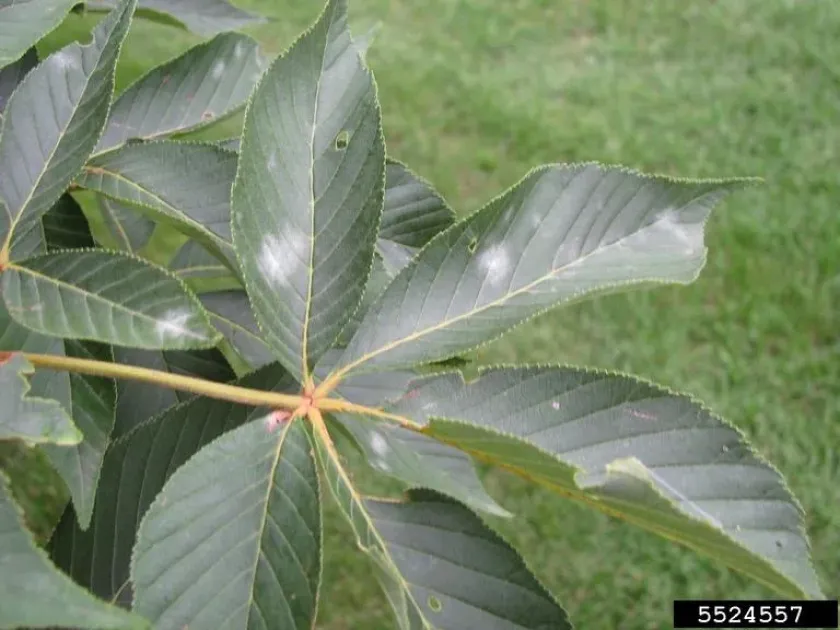
The primary symptom is the appearance of a white, felt-like fungal growth on the surface of the leaves. This powdery layer usually starts in small patches and eventually spreads to cover the entire leaf surface.
As the infection progresses, the fungal mycelium becomes thicker and develops a dull grey appearance. Within the mycelium, tiny black fruiting bodies called cleistothecia often appear, signaling the maturation of the fungus.
Leaves affected by this disease often exhibit chlorosis, curling, and early necrosis at the margins. Severe infections cause the foliage to wither and drop long before the natural autumn senescence.
Young shoots may become stunted, twisted, or distorted due to the high density of fungal growth, which restricts normal plant tissue development.
In advanced stages, the tree appears visibly unhealthy, with a greyish, dusty coating on the foliage that significantly impairs its ornamental value in urban landscapes.
Pathogen
The disease is caused by the fungus Erysiphe flexuosa, an obligate parasite that specifically targets members of the Aesculus genus, particularly the common horse chestnut.
The fungus reproduces asexually through conidia, which are airborne spores that can spread rapidly throughout a canopy or even between nearby trees during windy weather.
Erysiphe flexuosa overwinters in the form of cleistothecia, which are resistant structures found in fallen leaves or crevices of the tree bark, allowing the pathogen to persist from one season to the next.
The fungus uses specialized structures called haustoria to penetrate the epidermal cells of the host, allowing it to extract nutrients directly from the living plant tissue.
This specific interaction between the host and the pathogen ensures that the fungus remains highly effective at colonizing susceptible trees whenever environmental conditions become favorable.
Conditions for development
Powdery mildew thrives in warm, temperate conditions with temperatures typically ranging from 18 to 25 degrees Celsius, often coinciding with periods of high humidity.
Lack of proper airflow is a major factor promoting disease development. Trees planted in dense groups or those with untrimmed, thick canopies are significantly more susceptible to infection.
High relative humidity levels, even in the absence of rainfall, provide enough moisture for spore germination and rapid colonization of the leaf surfaces.
Urban environments, characterized by restricted airflow and heat island effects, often create the perfect microclimate for Erysiphe flexuosa to flourish on city street trees.
Periods of rapid spring growth followed by warm, dry weather are particularly conducive to the rapid spread of the powdery mildew outbreak across the foliage.
Why it matters
The accumulation of the fungal layer on the leaves acts as a barrier to sunlight, significantly reducing the tree's ability to perform photosynthesis and produce energy.
Premature leaf drop causes long-term stress, as the tree loses its primary food-producing organs, leading to reduced growth rates and diminished vigor in subsequent years.
Repeated annual infections weaken the overall immune system of the horse chestnut, making it much more susceptible to secondary pest attacks and environmental stressors like drought or frost.
In aesthetic settings such as public parks and botanical gardens, the disease severely detracts from the visual appeal, often requiring expensive intervention to restore health.
In extreme cases, persistent infection can result in the dieback of terminal branches, leading to a distorted canopy structure and potential decline of the entire tree specimen.
Protection
Effective management begins with strict sanitation: gathering and destroying all fallen leaves during autumn is critical to remove the primary source of overwintering inoculum.
Pruning to improve air circulation within the canopy is an essential cultural practice that reduces the humidity levels around the foliage, making the environment less hospitable to the fungus.
Chemical control involving systemic fungicides (such as triazoles) is recommended when symptoms are detected early to prevent the fungus from spreading throughout the entire tree.
Biocontrol agents and specific horticultural oils can also be utilized as preventative measures to protect the foliage without the use of harsh synthetic chemicals.
- Ensure proper tree spacing to prevent rapid pathogen spread.
- Avoid excessive nitrogen fertilizers that trigger soft, susceptible growth.
- Water the tree at the base rather than overhead to keep leaves dry.
- Choose resistant cultivars if planting in areas prone to powdery mildew.
Discussion
No discussions yet — be the first.