
Powdery mildew of hazelnut
Erysiphe corylacearum
Description
Symptoms
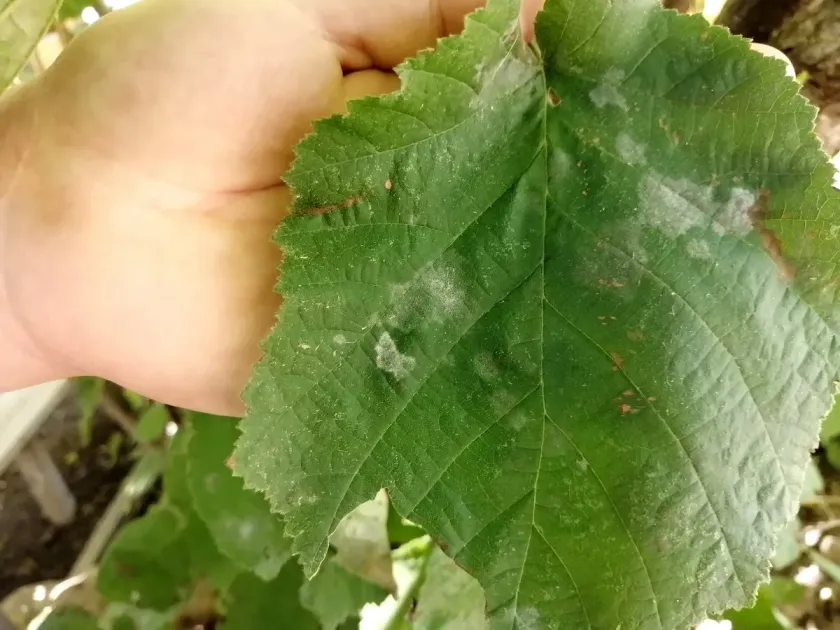
The most visible symptom is the appearance of white, dusty spots on the surface of leaves, which are actually dense mats of fungal mycelium and spores.
As the infection progresses, these spots expand and coalesce until the entire leaf surface appears as if it has been dusted with flour.
In advanced stages of the disease, tiny black dots—the developing chasmothecia—may be visible within the white mycelial mass on the leaf surface.
Infected leaves lose their healthy green color, become brittle, curl significantly, and eventually fall off the branches prematurely.
Young shoots may also become covered in this white growth, leading to stunted growth, deformation, and potential necrosis of the terminal buds.
Pathogen
The causal agent of this disease is the ascomycete fungus Erysiphe corylacearum, which is a highly specialized plant pathogen.
As an obligate parasite, this fungus depends entirely on living hazelnut tissue to obtain the nutrients required for its life cycle and reproduction.
The pathogen typically survives the winter in the form of chasmothecia, which are small, dark fruiting bodies found on fallen leaves under infected trees.
In spring and summer, the fungus produces conidia, which are wind-dispersed spores that spread the infection from the leaf litter to new vegetative parts.
The fungal mycelium grows on the plant surface, anchoring itself with haustoria that penetrate the epidermal cells to extract nutrients from the host.
Conditions for development
Powdery mildew development is strongly favored by periods of warm temperatures combined with high atmospheric humidity or high moisture levels.
While the fungus does not require direct water on the leaf to germinate, humid conditions and limited airflow are ideal for the rapid spread of spores.
The optimal temperature range for the rapid colonization of hazelnut tissues by the fungus is generally between 18 and 25 degrees Celsius.
Orchards with dense tree spacing or inadequate pruning suffer from poor air circulation, which prevents the foliage from drying out after rainfall.
Excessive use of nitrogen fertilizers can also stimulate the growth of soft, succulent plant tissues that are more susceptible to rapid fungal infection.
Why it matters
The disease significantly impairs the plant's photosynthetic capacity, as the fungal mat physically blocks sunlight from reaching the leaf tissue.
Premature leaf drop reduces the overall energy reserves of the tree, which can drastically decrease its winter hardiness and yield potential for the next season.
Severe infestations weaken the trees, making them more vulnerable to secondary pests and environmental stresses like drought or heatwaves.
Fruit development is negatively affected, often resulting in smaller, underdeveloped nuts and premature nut drop, which causes economic loss for the grower.
Persistent infections over several years can lead to the gradual decline of the hazelnut orchard, causing branch dieback and reduced tree longevity.
Protection
Effective management of powdery mildew in hazelnut orchards requires an integrated strategy combining physical sanitation and chemical applications.
Pruning is a primary cultural practice, as it improves canopy ventilation and allows for better spray penetration during fungicide applications.
Strict orchard hygiene, including the removal and destruction of fallen leaves in autumn, is crucial to eliminate the primary sources of wintering inoculum.
Chemical control usually involves the application of systemic fungicides, such as triazoles or strobilurins, during the periods of highest infection pressure.
- Frequent scouting of orchards to identify early symptoms and take immediate action.
- Preventive applications of sulfur-based fungicides to inhibit spore germination.
- Maintaining optimal plant spacing to promote healthy air circulation.
- Balancing fertilization programs to avoid overly succulent and susceptible growth.
Discussion
No discussions yet — be the first.