
Convolvulus powdery mildew
Erysiphe convolvuli
Description
Symptoms
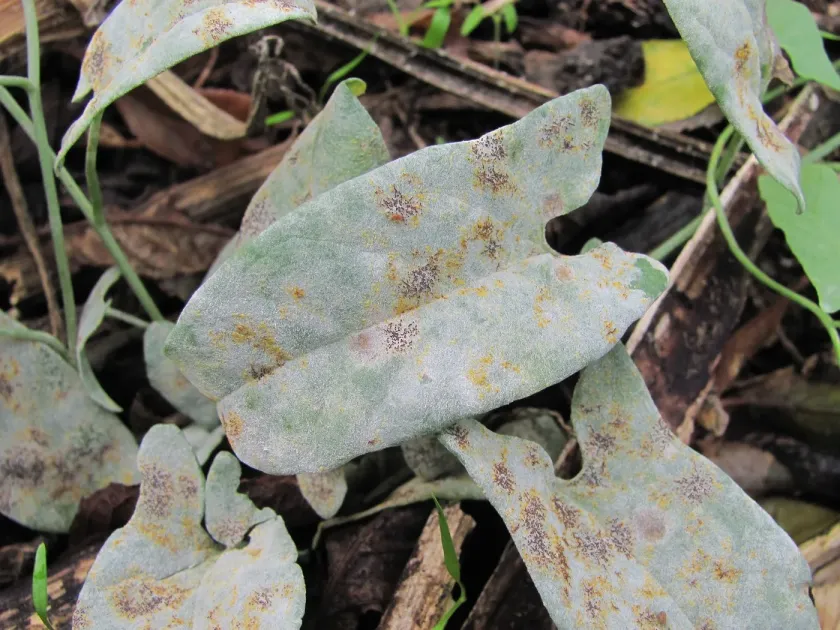
The primary symptom is the appearance of white, powdery spots on the foliage, stems, and petioles of the plant.
As the infection progresses, the powdery patches expand and coalesce, eventually covering entire leaf surfaces in a dense white mat.
In later stages, the mycelium may look grayish, and tiny black, pepper-like dots (cleistothecia) appear scattered across the infected area.
Infected leaves often show signs of chlorosis, curling, and distortion as the fungus disrupts the plant's normal physiological processes.
Severe infestations cause premature leaf senescence and drying, leading to significant foliage loss and plant stress.
Pathogen
The disease is caused by Erysiphe convolvuli, an obligate biotrophic fungus that belongs to the order Erysiphales.
This pathogen strictly depends on the living tissue of its host plant, specifically targeting members of the Convolvulaceae family.
The fungus develops an extensive mycelial network on the plant surface, extracting nutrients through specialized structures called haustoria.
The disease cycle is driven by the production of abundant conidia, which spread via wind currents to infect neighboring leaves and plants.
In adverse conditions or at the end of the season, the fungus produces cleistothecia, which serve as overwintering structures on plant debris.
Conditions for development
Development of this powdery mildew is favored by warm, dry daytime temperatures paired with cool nights and high relative humidity.
Optimal growth occurs between 20°C and 25°C, as these conditions maximize sporulation and germination rates of the fungal spores.
Dense vegetation or low-light environments prevent proper air circulation, creating stagnant microclimates that promote rapid spread.
While powdery mildew does not require liquid water on leaves to infect, high ambient humidity is crucial for the pathogen’s life cycle.
Plants suffering from drought or nutritional imbalances are significantly more susceptible to infection compared to healthy, well-maintained specimens.
Why it matters
The fungus acts as a nutrient sink, depriving the host of energy and metabolites essential for growth and reproduction.
Reduced photosynthetic activity due to mycelial coverage significantly stunts plant development and flower production.
Infection degrades the overall aesthetic value of the plant, often rendering it unsightly for gardens and landscapes.
Persistent infestations weaken the plant's structural integrity, making it more prone to secondary attacks from other pathogens or pests.
The disease can rapidly spread within a local ecosystem, turning the affected plant into a major source of inoculum for other susceptible species.
Protection
The most effective management strategy starts with rigorous sanitation, including the removal and destruction of all infected plant materials.
Proper spacing and pruning improve light penetration and air movement, which are critical in minimizing the humidity around the foliage.
Fungicidal treatments, including sulfur-based products or systemic triazoles, are effective when applied at the first onset of symptoms.
- Rotate chemical classes to prevent the fungus from developing resistance.
- Maintain plant vigor through balanced fertilization and adequate irrigation.
- Apply biological fungicides containing Bacillus subtilis for organic management.
Consistent monitoring and timely application of protective sprays can effectively suppress the pathogen and prevent epidemic outbreaks.
Discussion
No discussions yet — be the first.