
Elm powdery mildew
Erysiphe clandestina
Description
Symptoms
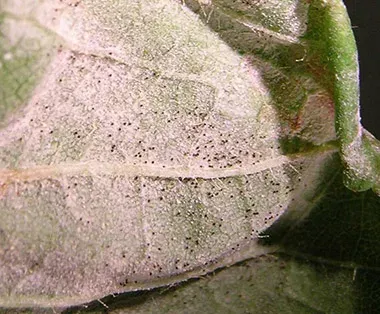
The most recognizable symptom is the appearance of a dusty, white-to-gray fungal growth on the leaves. This white mycelium often starts in small patches before covering the entire leaf blade.
Leaves affected by the disease may exhibit curling, distortion, and stunted development. The white powdery coating is initially easy to wipe off but becomes more persistent as the colony matures.
As the season progresses, the presence of black, microscopic cleistothecia becomes visible within the white mycelial mats. This indicates that the fungus is maturing and preparing to survive the winter.
Severe infections lead to chlorosis and premature senescence of the foliage. Eventually, affected leaves turn brown, become brittle, and drop from the tree long before the autumn season.
In addition to foliage, the pathogen can colonize succulent young shoots. This leads to the deformation of the shoot tips and may cause localized necrosis, which disrupts the tree's vertical growth.
Pathogen
The causal agent of elm powdery mildew is the fungus Erysiphe clandestina. It is an obligate parasite, meaning it requires living host tissue to complete its life cycle and survive.
The fungus produces a superficial mycelium that grows on the surface of leaves. It attaches to the host cells using small organs called haustoria, which draw nutrients directly from the plant tissue.
During the growing season, the fungus reproduces asexually by producing abundant conidia (spores). These spores are easily dispersed by wind and rain, leading to rapid secondary infections on nearby foliage.
In autumn, the fungus produces sexual reproductive structures known as cleistothecia. These appear as minute, black, pepper-like dots on the leaf surface, which serve as the overwintering stage of the pathogen.
Erysiphe clandestina primarily targets species within the Ulmus (elm) genus. It is widely distributed in temperate regions, frequently impacting both native forests and ornamental urban landscapes.
Conditions for development
Favorable environmental conditions include warm, humid weather. The fungus thrives at temperatures between 18°C and 25°C, where spore germination is most prolific.
Poor air circulation within the tree canopy is a significant risk factor. Densely packed branches trap moisture, creating a localized humid microclimate that promotes fungal sporulation and growth.
Succulent plant growth resulting from heavy nitrogen fertilization is highly susceptible to attack. Young tissues have thin cell walls, which allow the fungal haustoria to penetrate with minimal resistance.
Shade-grown trees often lack the vigor to resist infections compared to trees in full sunlight. Environmental stress from drought or soil compaction also renders elms more prone to infestation.
Fluctuating temperatures between day and night, combined with heavy evening dew, create the perfect conditions for the disease to spread rapidly through a stand of elm trees.
Why it matters
The primary damage is the inhibition of photosynthesis. The opaque fungal layer acts as a barrier, limiting the sunlight reaching the leaf cells and interfering with carbon dioxide exchange.
Reduced photosynthetic capacity leads to a depletion of carbohydrate reserves. This weakens the tree's overall vigor, making it less capable of producing defensive compounds against pests and wood-boring insects.
Early leaf drop significantly impacts the tree's physiological state before the winter dormancy period. This can result in increased cold injury to buds and younger branches during freezing months.
In urban and landscape settings, the cosmetic damage is severe, as the white coating and deformed foliage ruin the aesthetic appeal of the trees, leading to their devaluation.
Repeated yearly infections can lead to branch dieback and an overall thinning of the canopy. Over time, the cumulative impact of powdery mildew can contribute to the decline of specimen trees.
Protection
- Improve air circulation by pruning dense or crossing branches within the canopy.
- Remove and destroy all fallen, infected leaf litter to reduce the primary inoculum for next spring.
- Apply balanced fertilizers, emphasizing phosphorus and potassium, to harden plant tissues.
- Utilize appropriate fungicides when the disease pressure is high, specifically targeting early stages.
- Select and plant elm cultivars known for their genetic resistance to powdery mildew.
Systemic fungicides, particularly those in the triazole group, are highly effective when applied at the onset of infection to stop mycelial growth and spore production.
Preventive maintenance is crucial. Keeping trees healthy through proper watering and mulching helps them withstand minor infections without long-term physiological impact.
Proper spacing during the initial planting phase is a long-term strategy to prevent overcrowding and maintain the airflow necessary to inhibit fungal proliferation.
In cases of heavy infestation, multiple applications of fungicides may be necessary during the period of active shoot growth, following label instructions and environmental guidelines.
Discussion
No discussions yet — be the first.